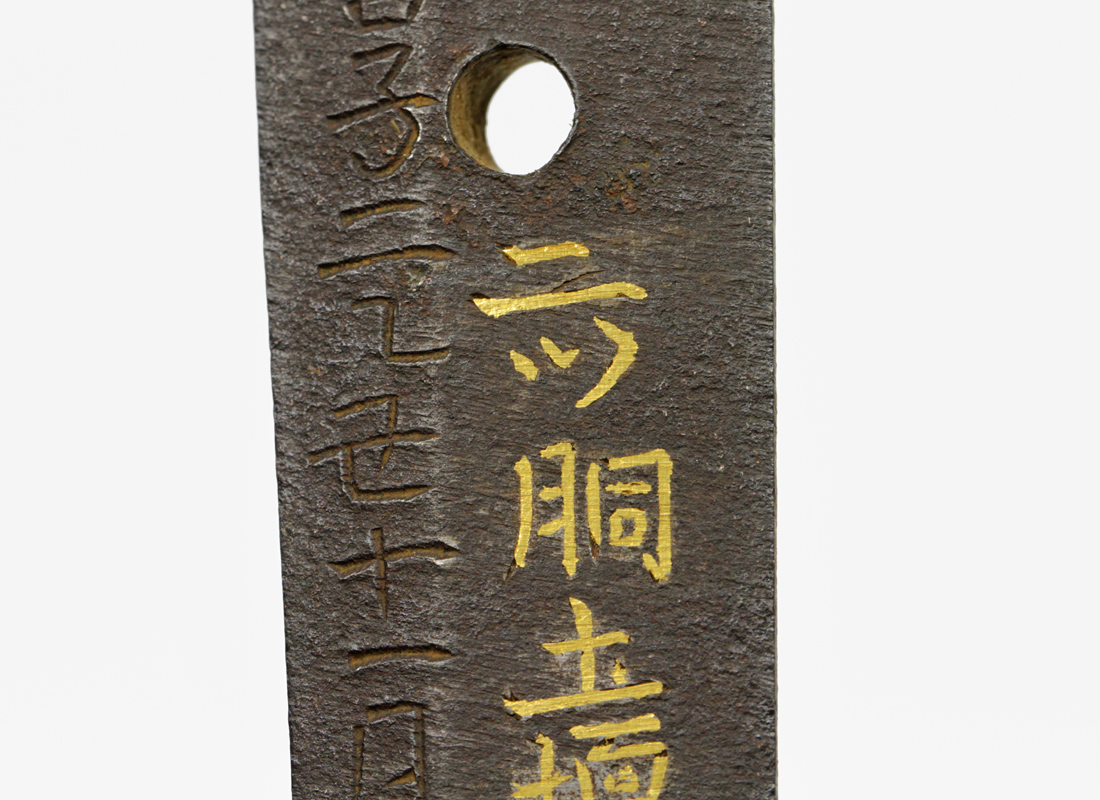
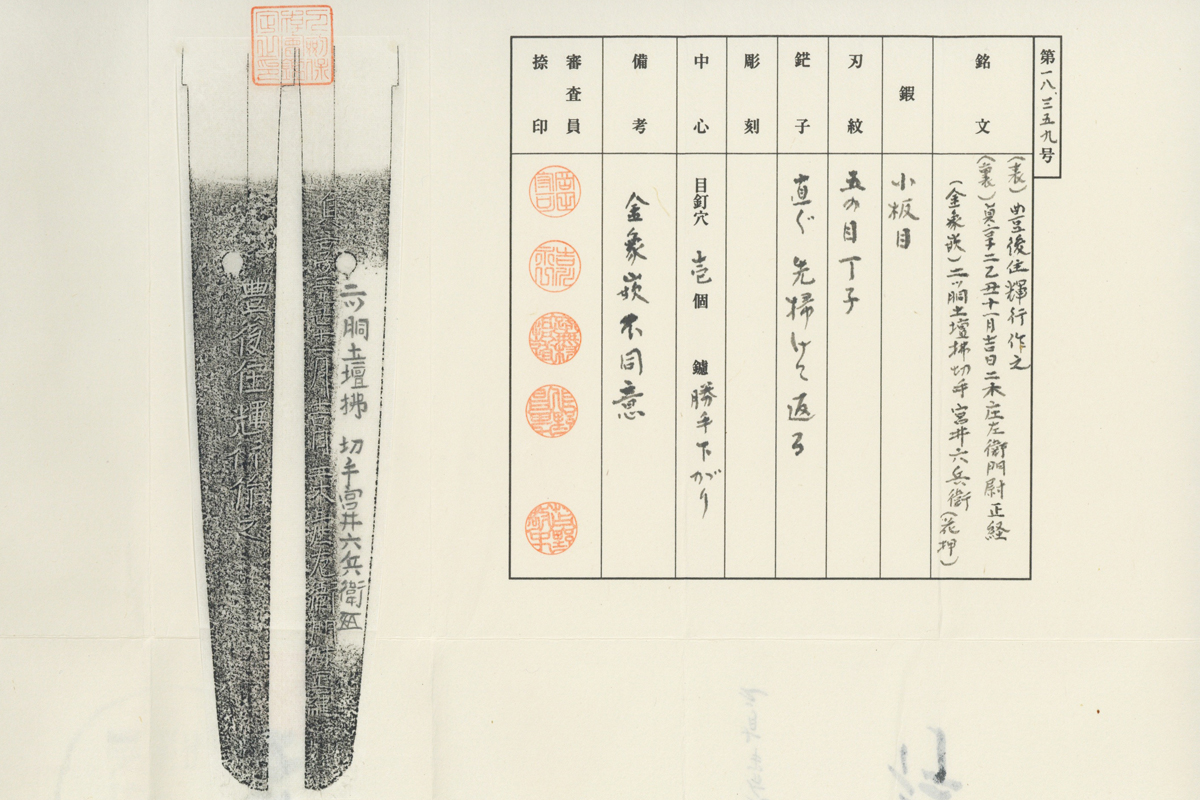
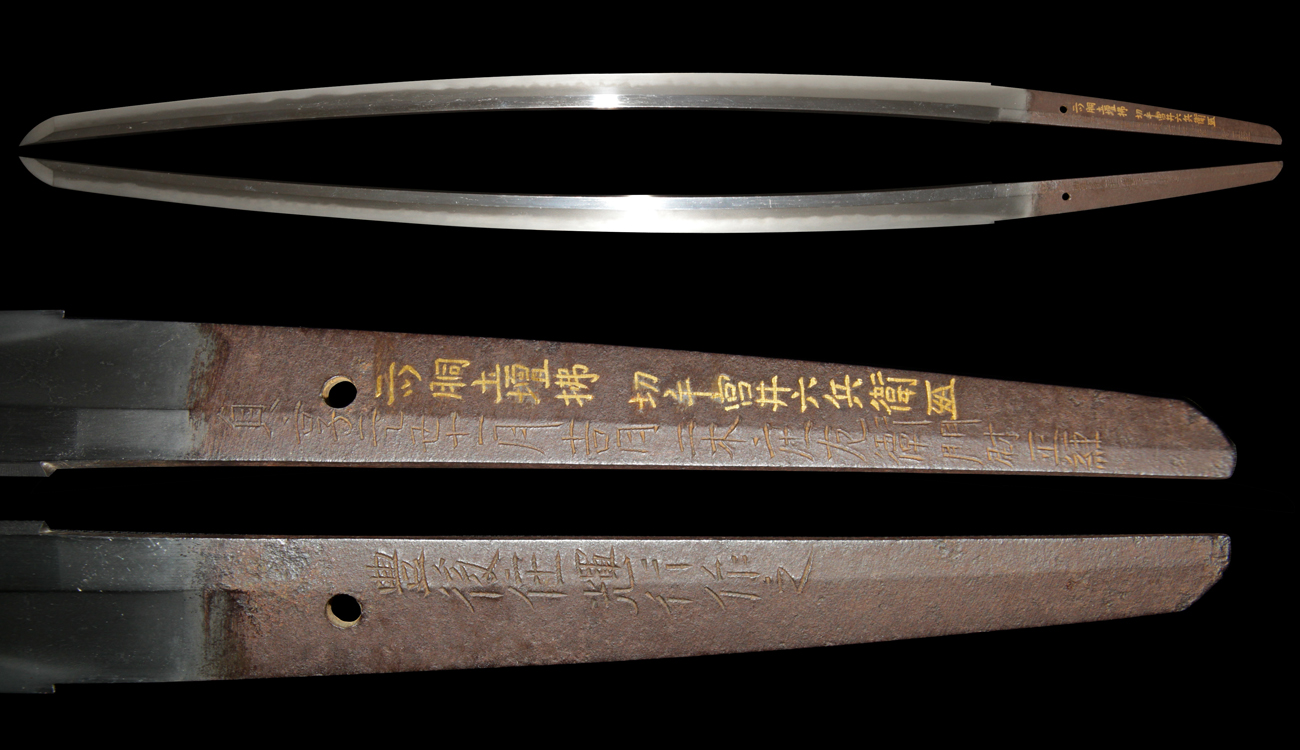
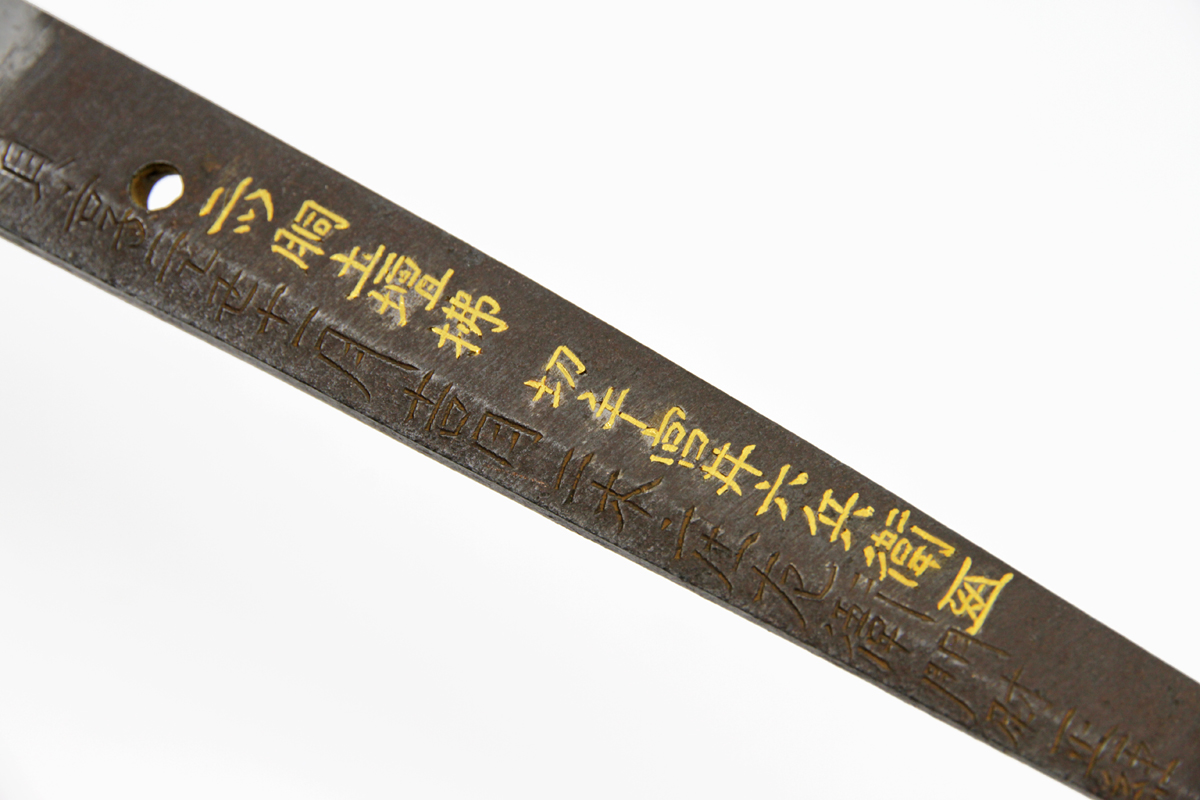
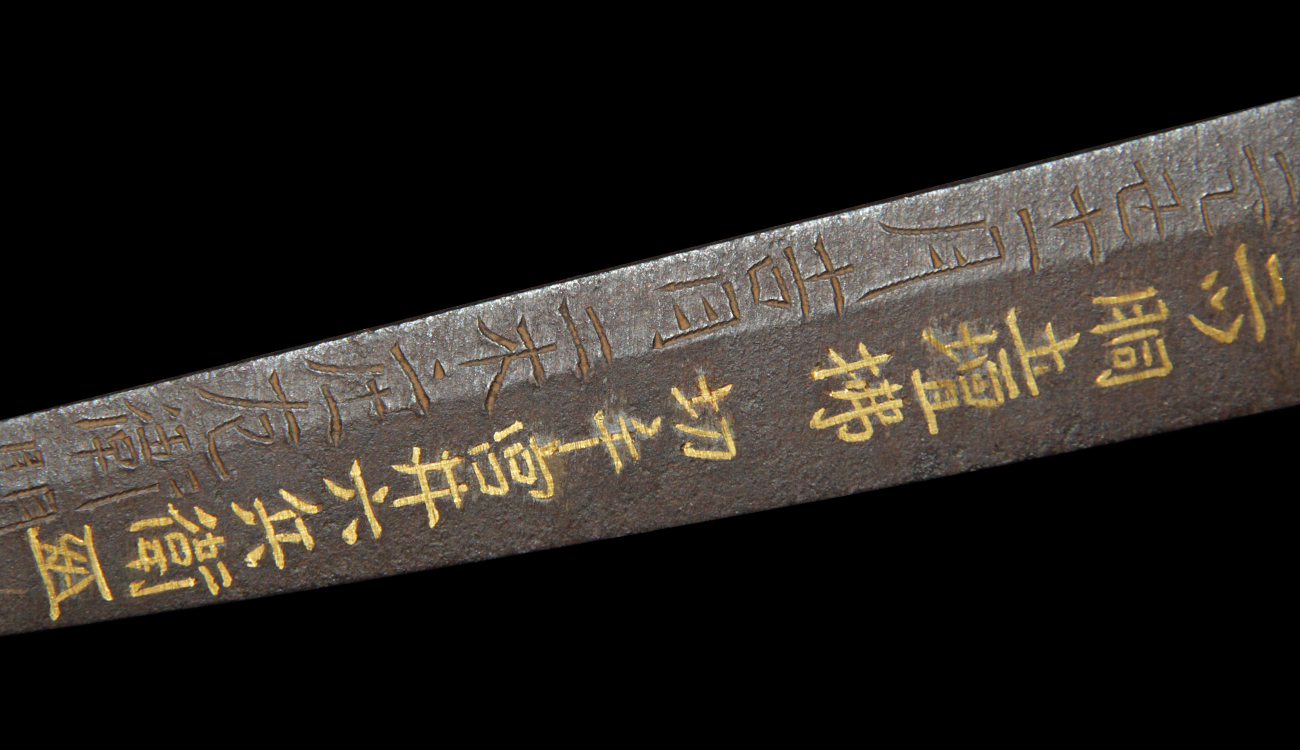
Plenty of writing is found on the Nakago (tang), I’ll explain it in detail so please bear with me. Complete signature reads “Bungo Sumi Teruyuki Saku – Jokyo Ni Otosushi Ju-Ichi Gatsu Kickijitsu Niki Shozaemon Jo Masatsune – Futatsu-Do Dotan Barai Kirite Miyai Rokubei (Kao)“. The first portion “Bungo Sumi Teruyuki Saku” is the name of the smith which translates “Teruyuki of Bungo province has made this“. He was a 2nd generation smith active in the later 1600’s AD, the line of Teruyuki’s were a successful line in Bungo Japan active throughout Edo period that spanned 4 generations. The 2nd portion of the signature “Jokyo Ni Otosushi Ju-Ichi Gatsu Kickijitsu Niki Shozaemon Jo Masatsune” translates “On 1685AD, 11th month (November) Lucky day this item was made for Shozaemon Masatsune“. Not only does it record the date in which it was made it also has the owners name inscribed which is something very personal that we almost never see. We rarely get to know the original owners of these items and to have the owners name adds much value historically. This could have either been a gift made for Shozaemon Masatsune or Masatsune could have gone to the Smith Teruyuki to personally commission this piece. Lastly is the final portion in gold inlay which adds the most value, in gold it reads “Futatsu-Do Dotan Barai Kirite Miyai Rokubei (Kao)” which translates “2 Body cutting test to the Dotan by Miyai Rokubei with personal seal”, so to clarify the blade successfully cut through the 2 bodies into to the ground beneath by the Test Cutter Miyai Rokubei, and he finishes off with his personal seal at the bottom. We see cutting tests but it is less common to see the testers names so this tells us a lot of history about this piece.

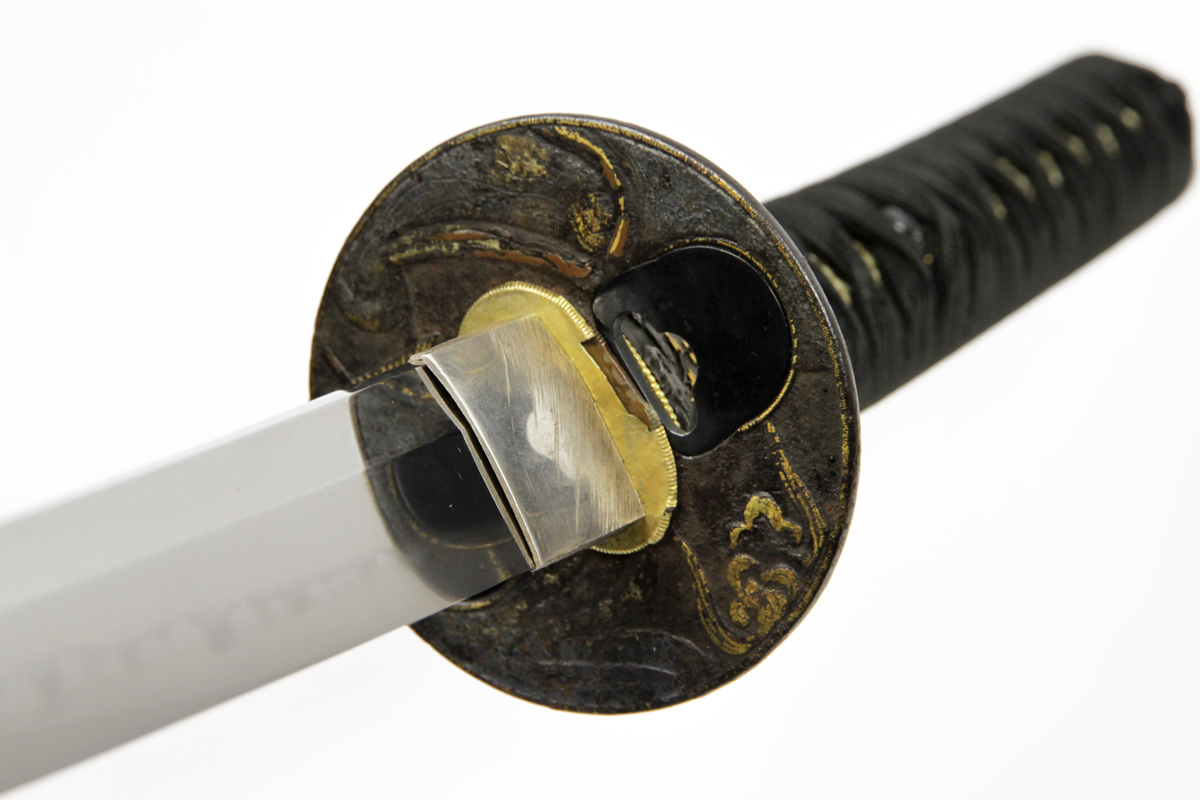
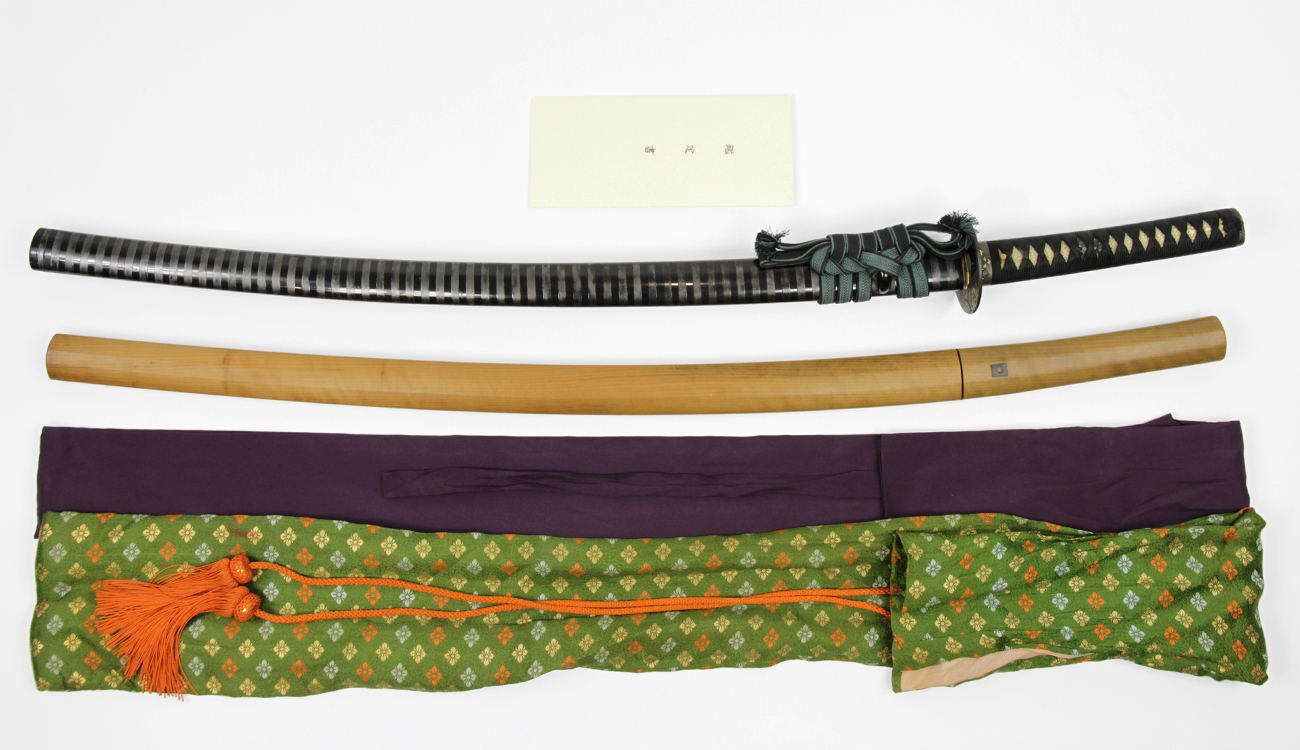

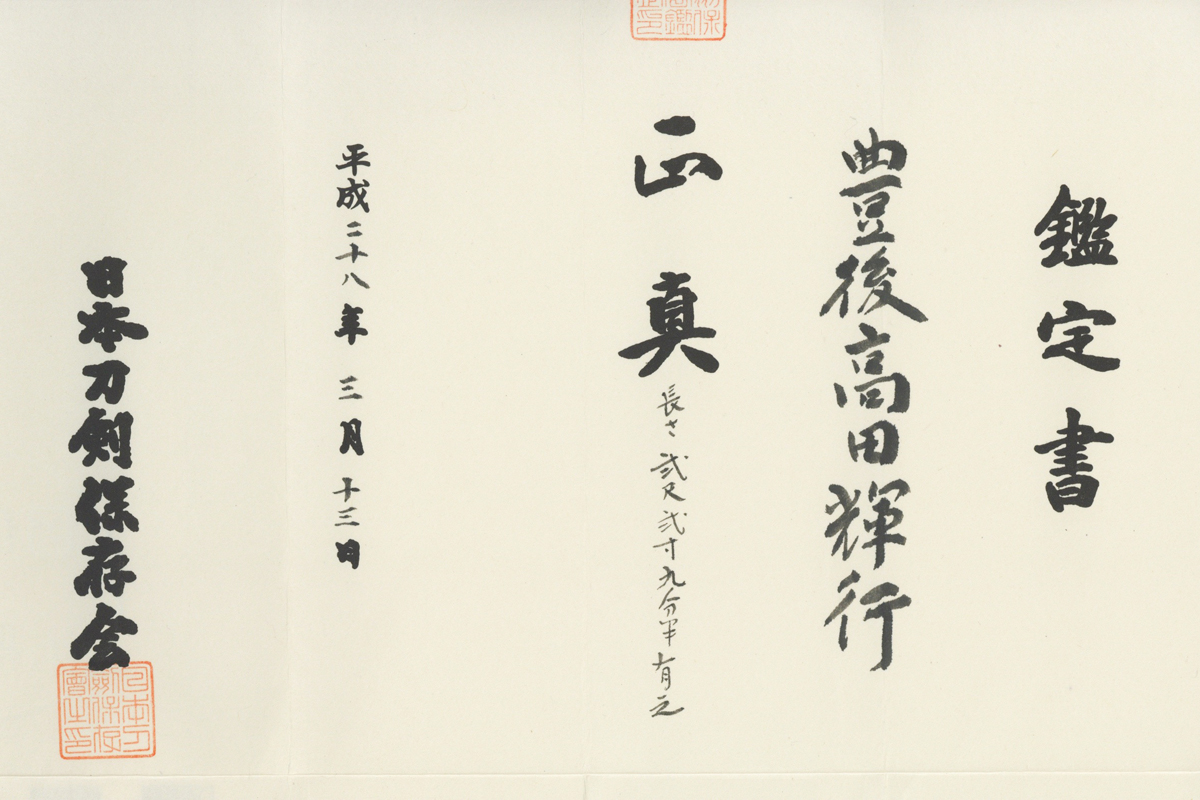
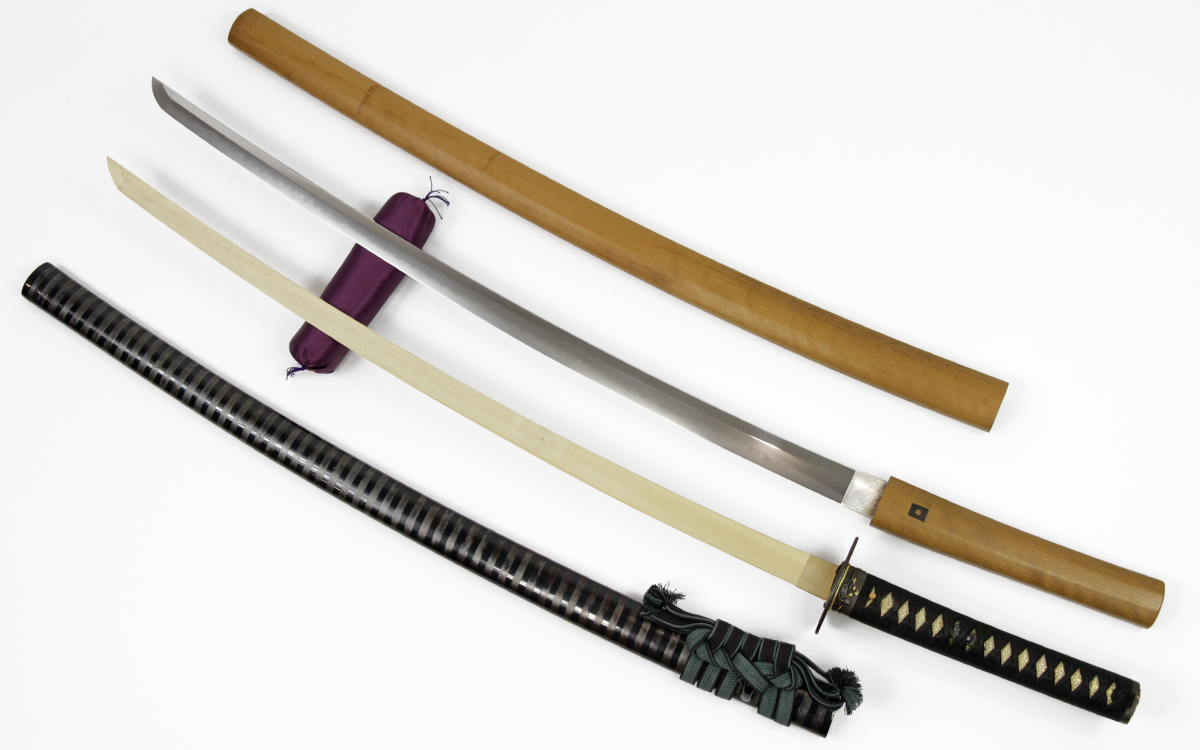
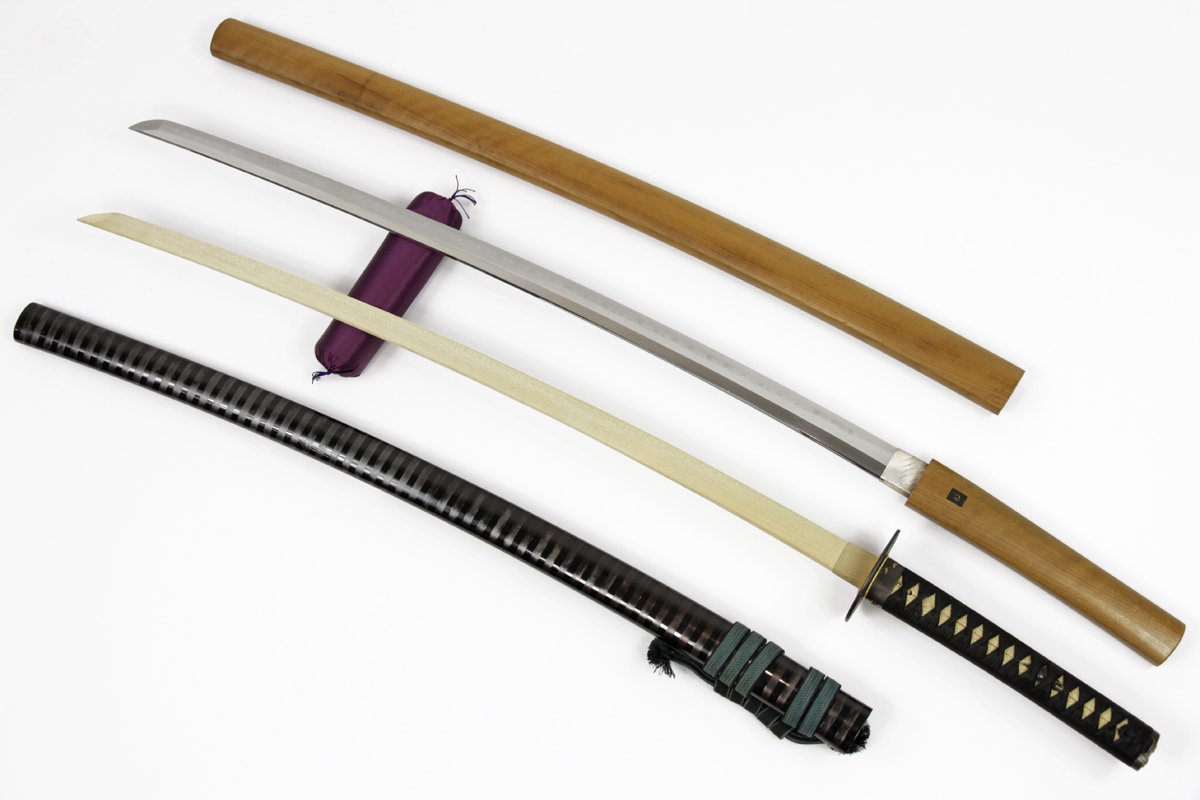
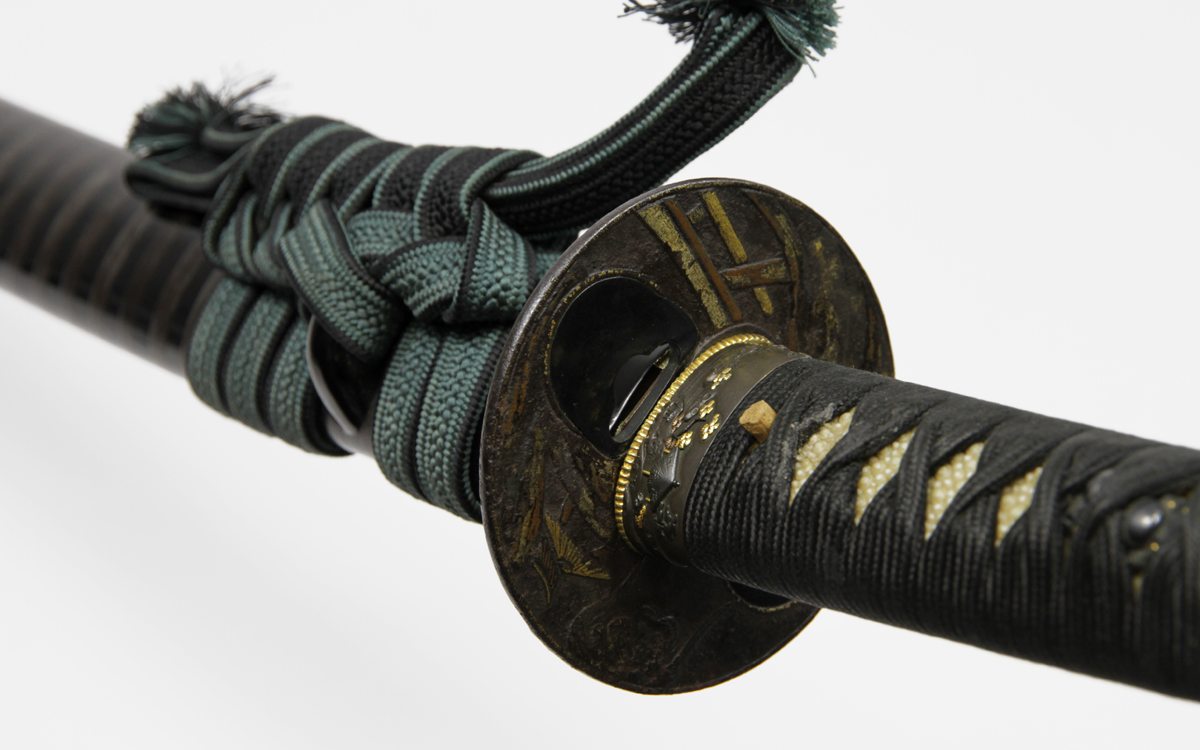
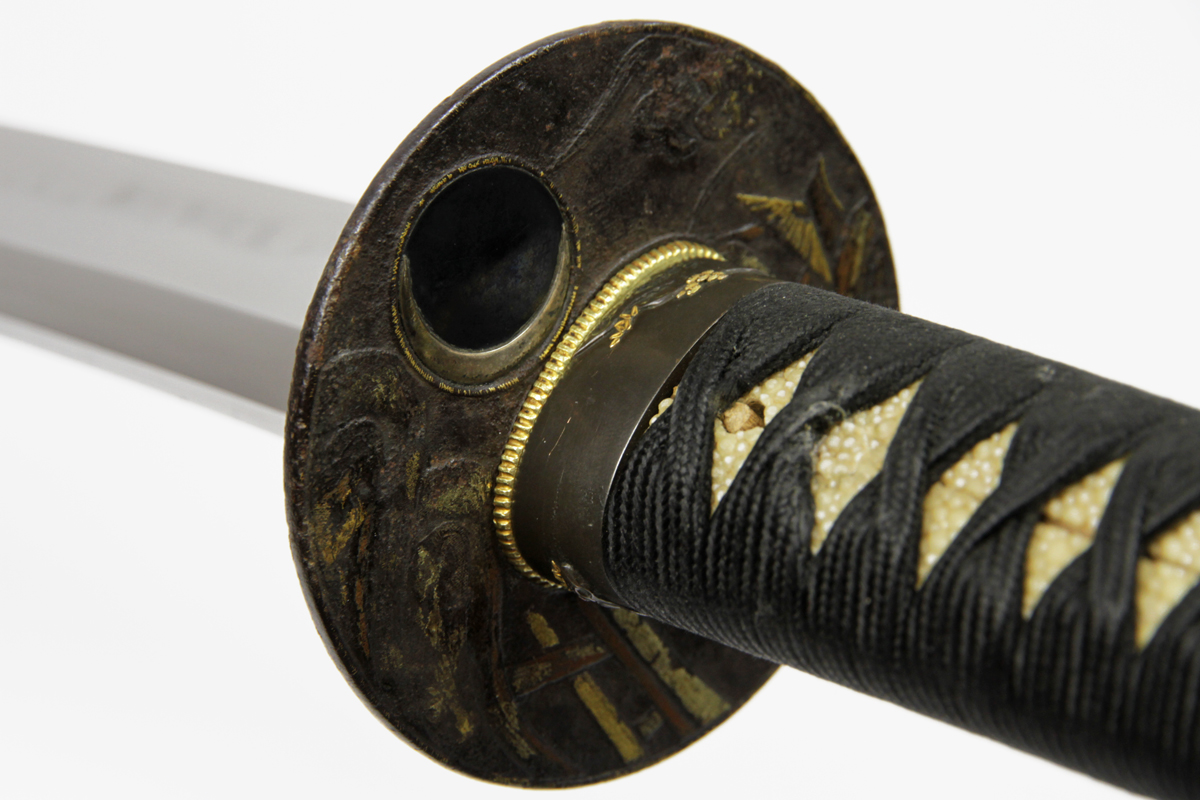
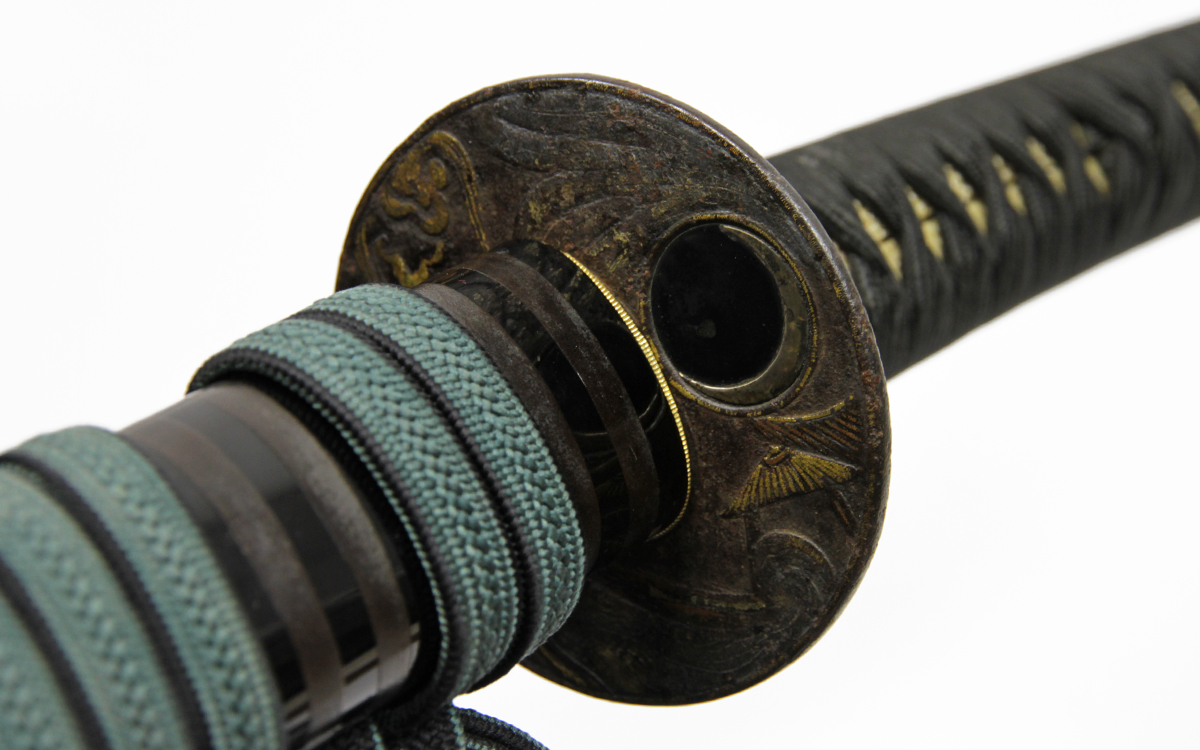
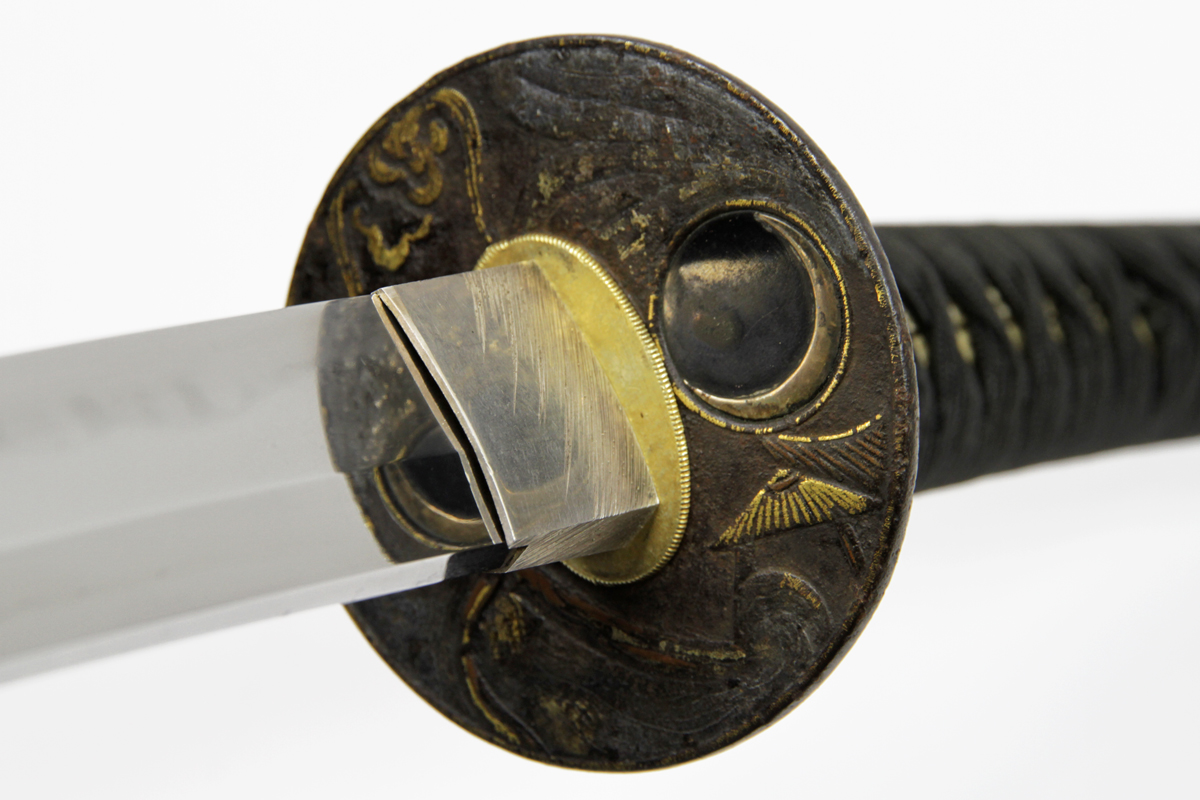
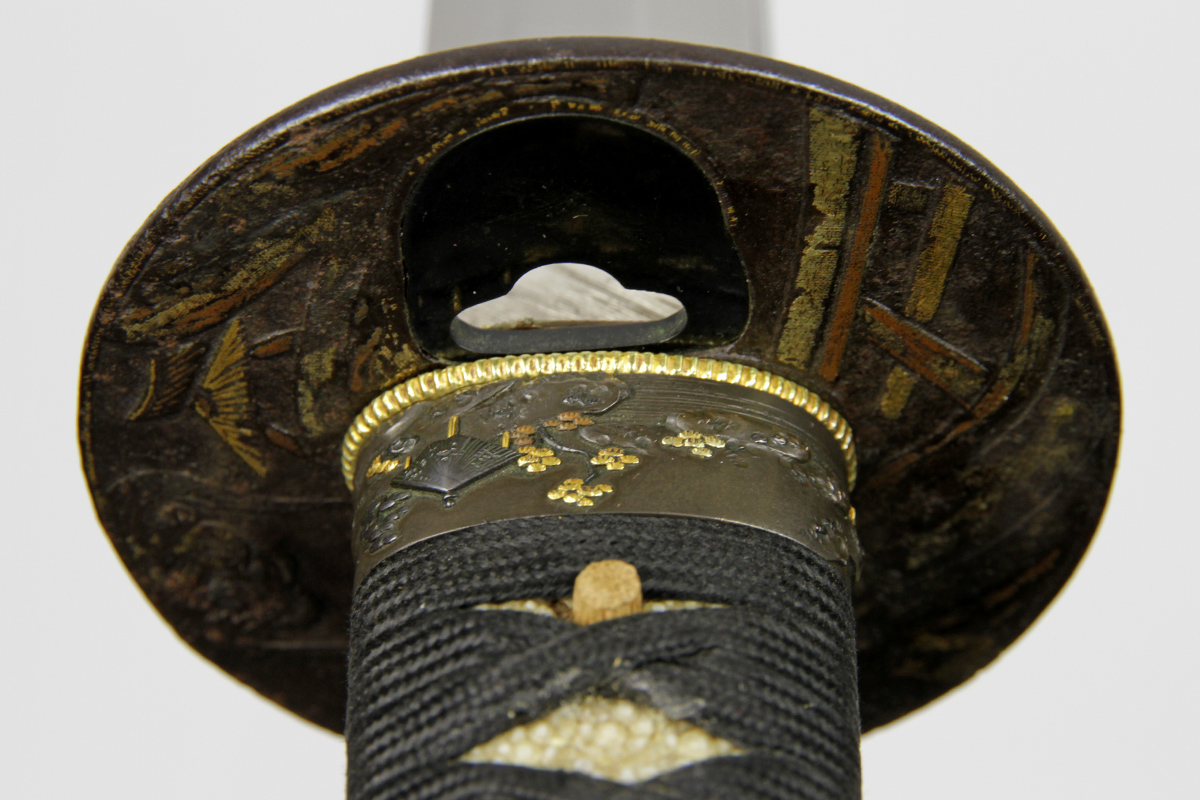
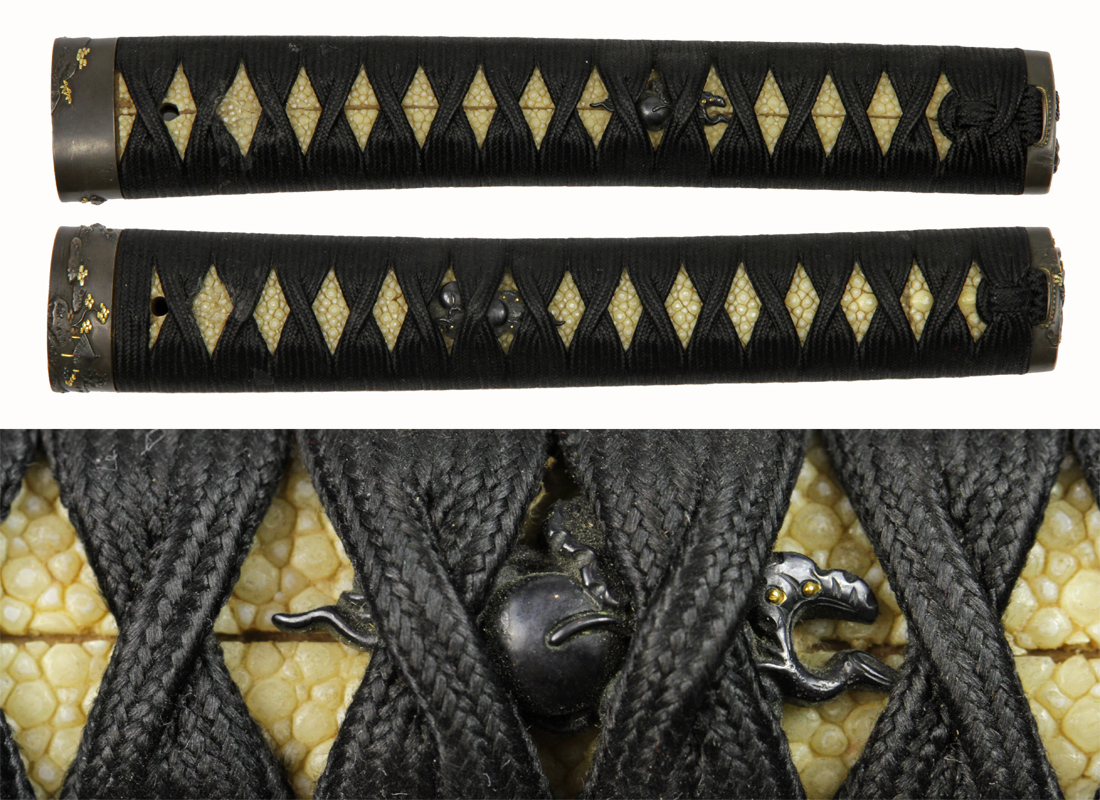
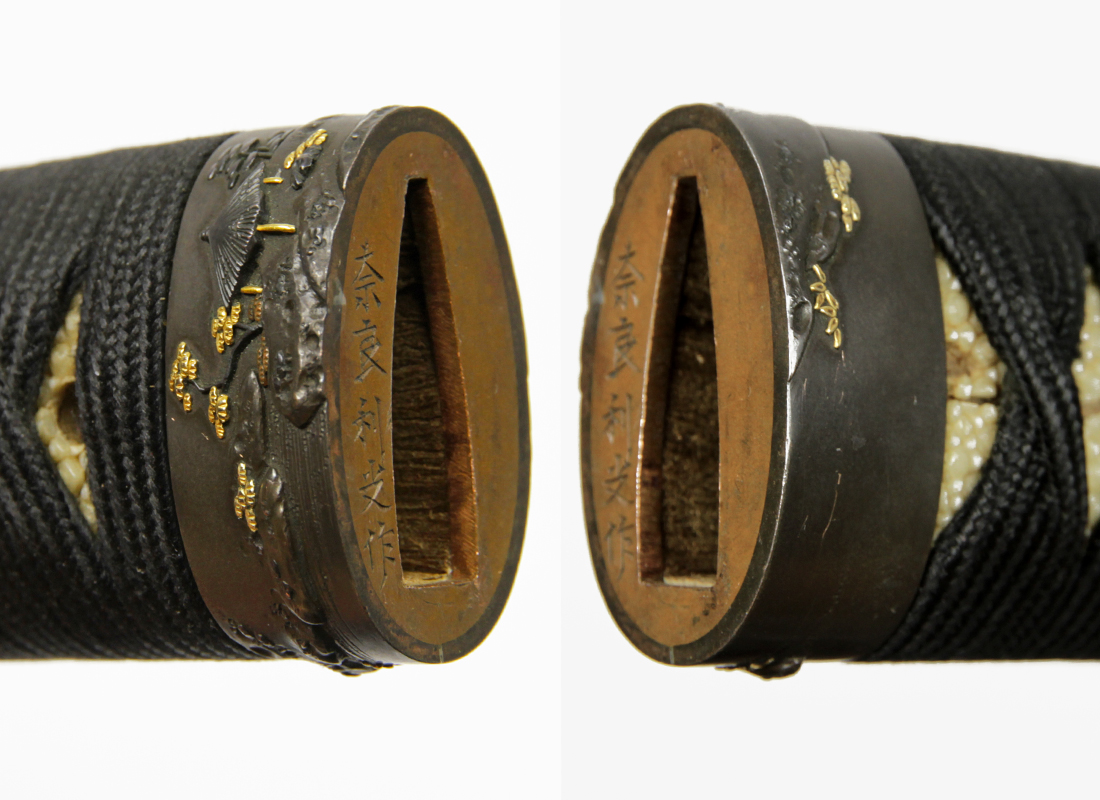
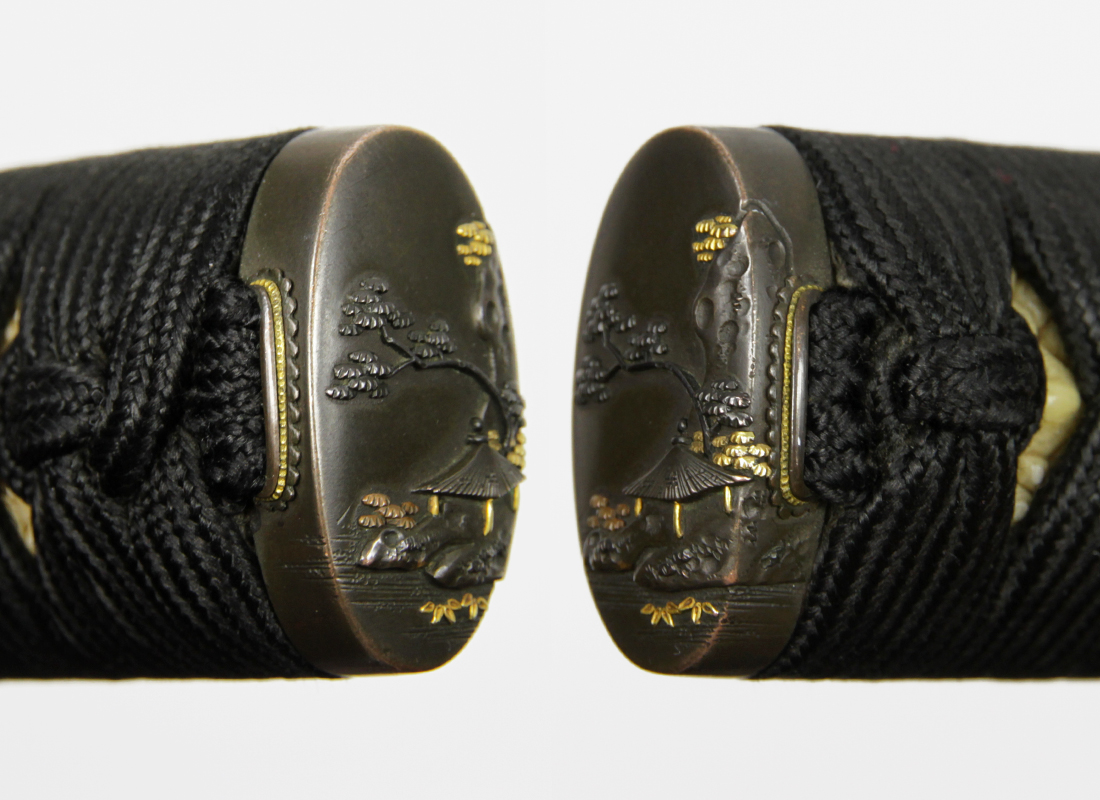
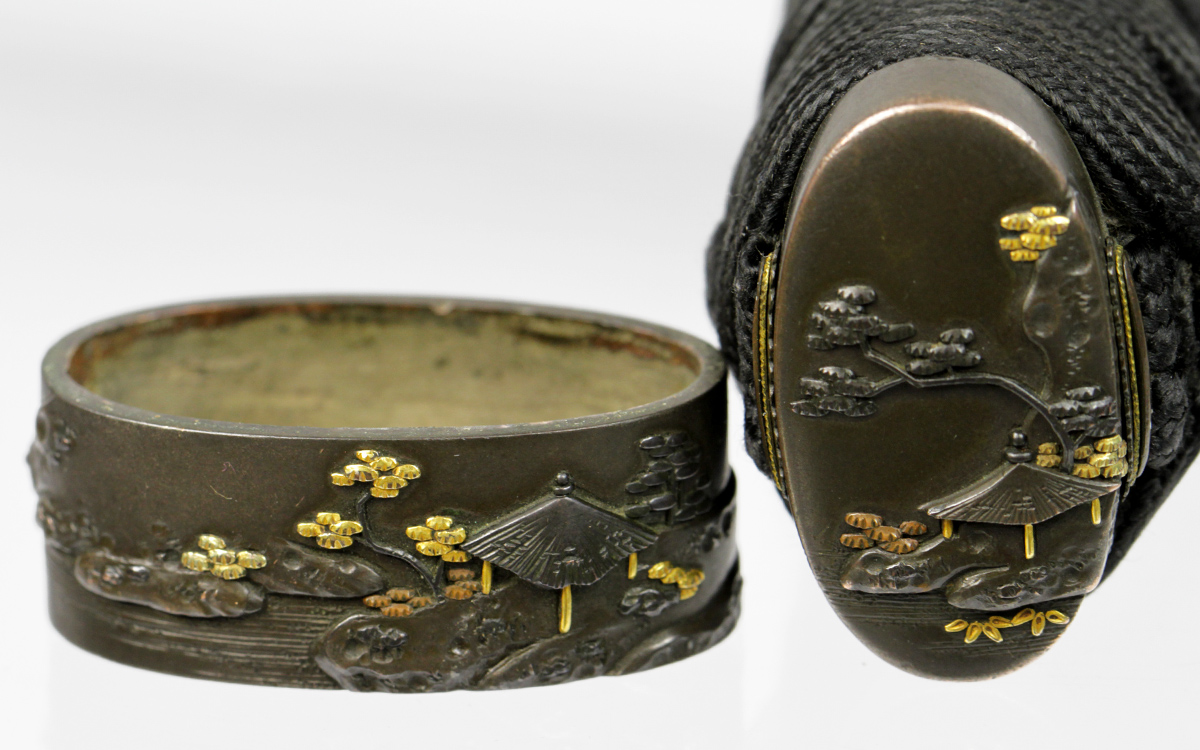
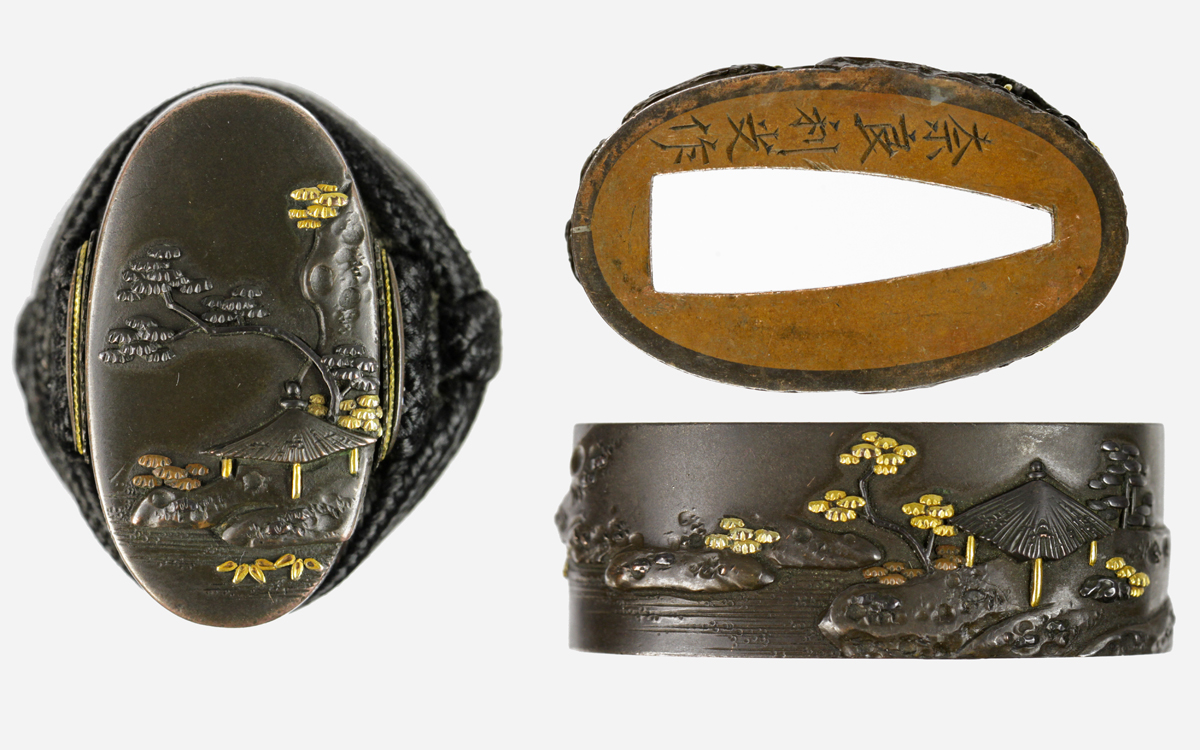
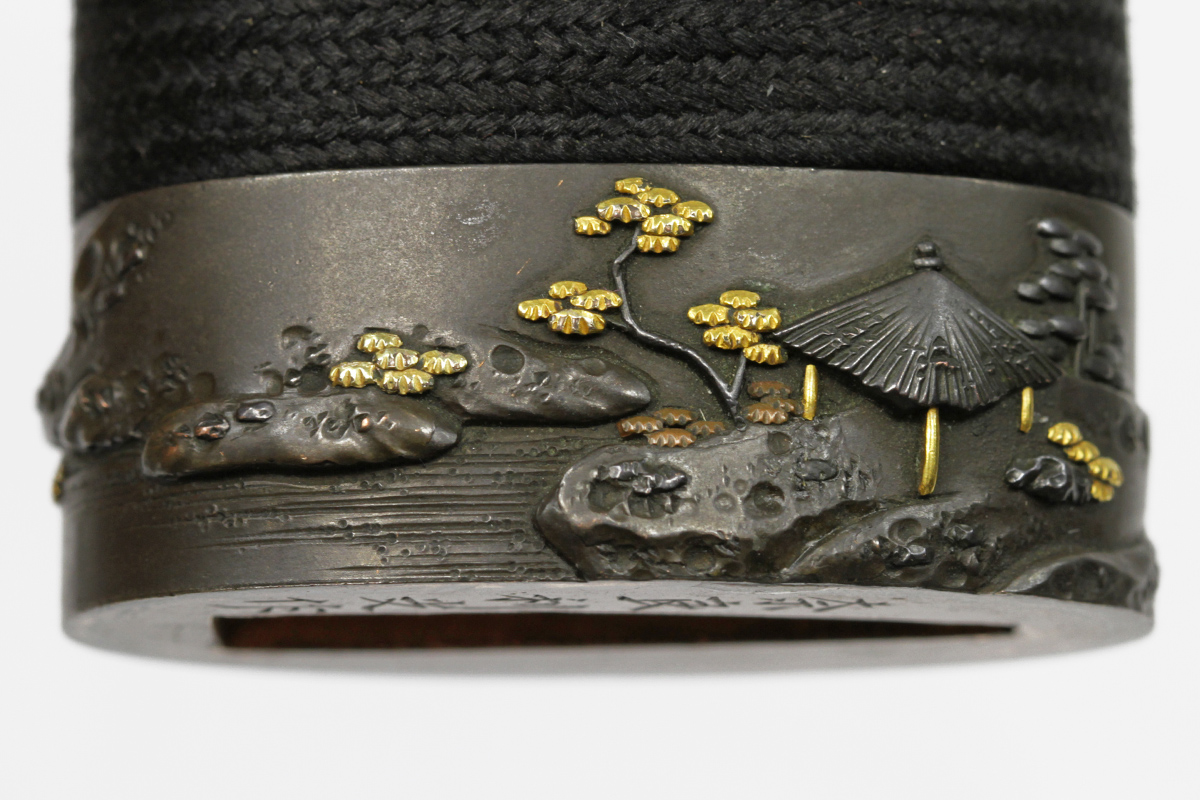
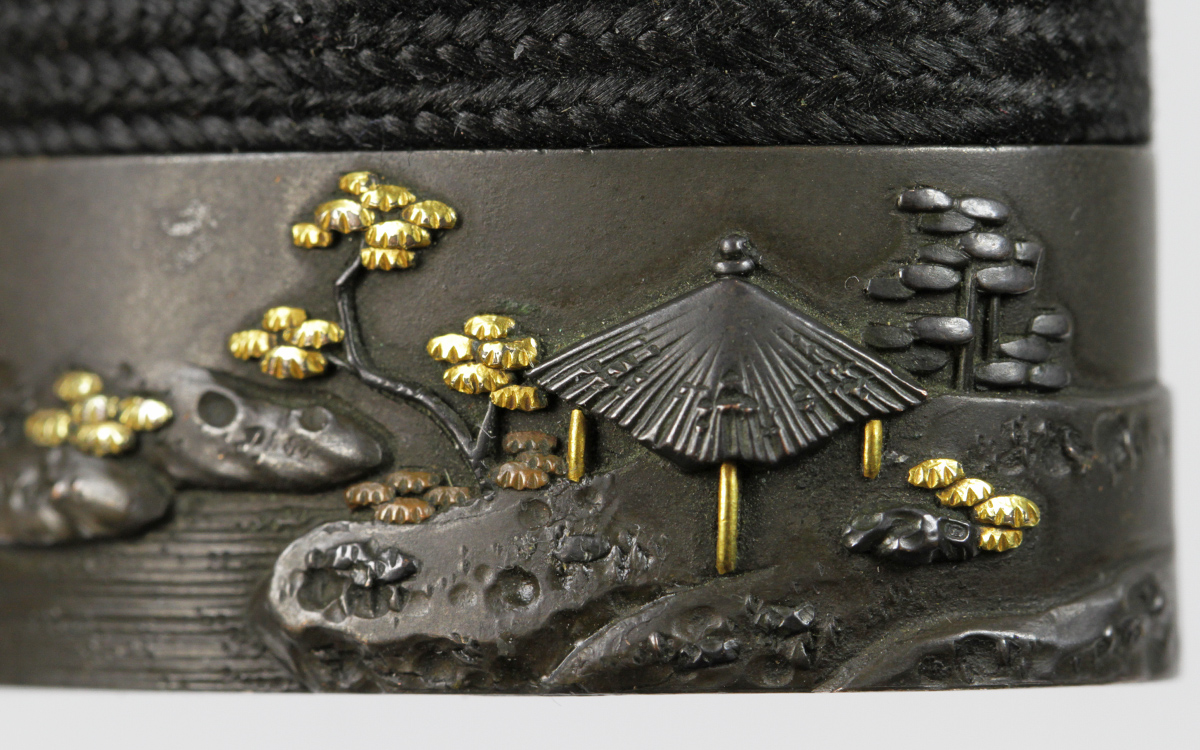
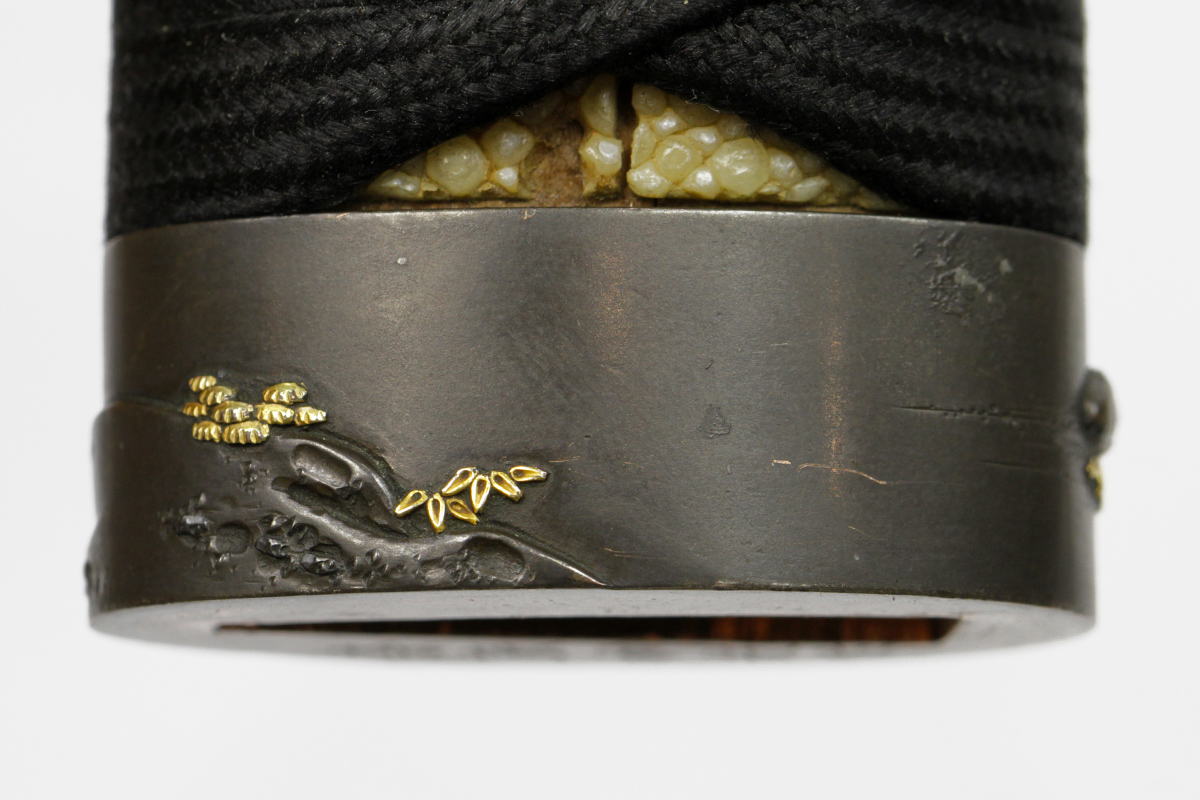
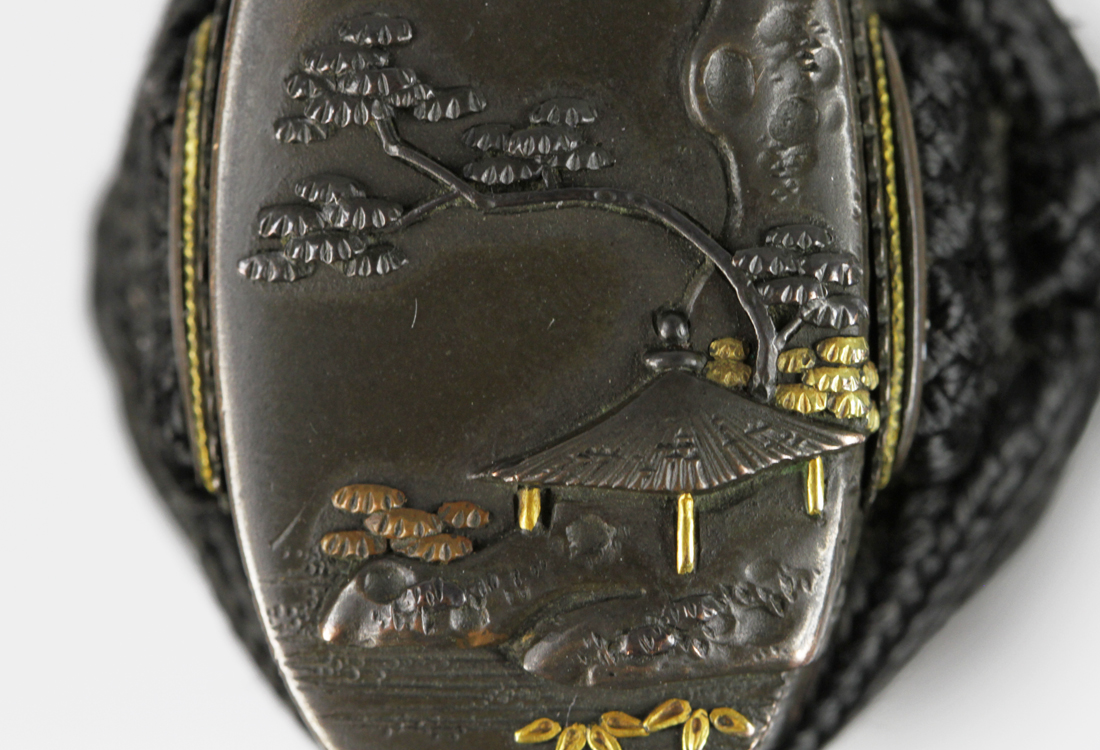
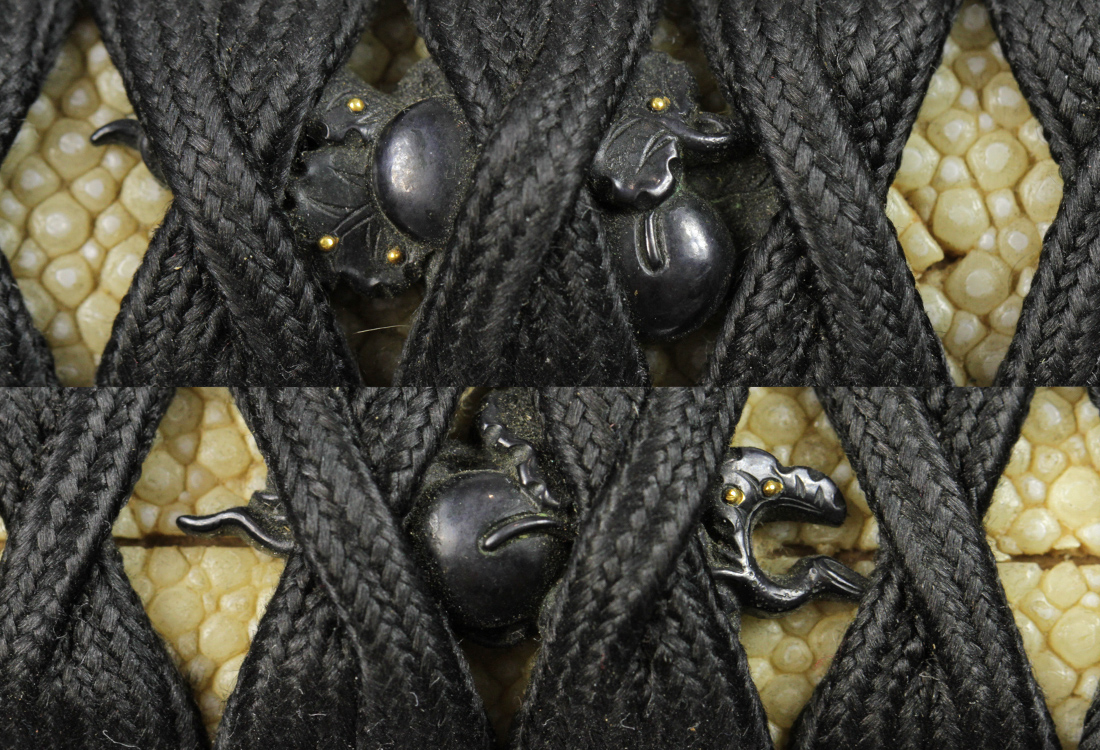
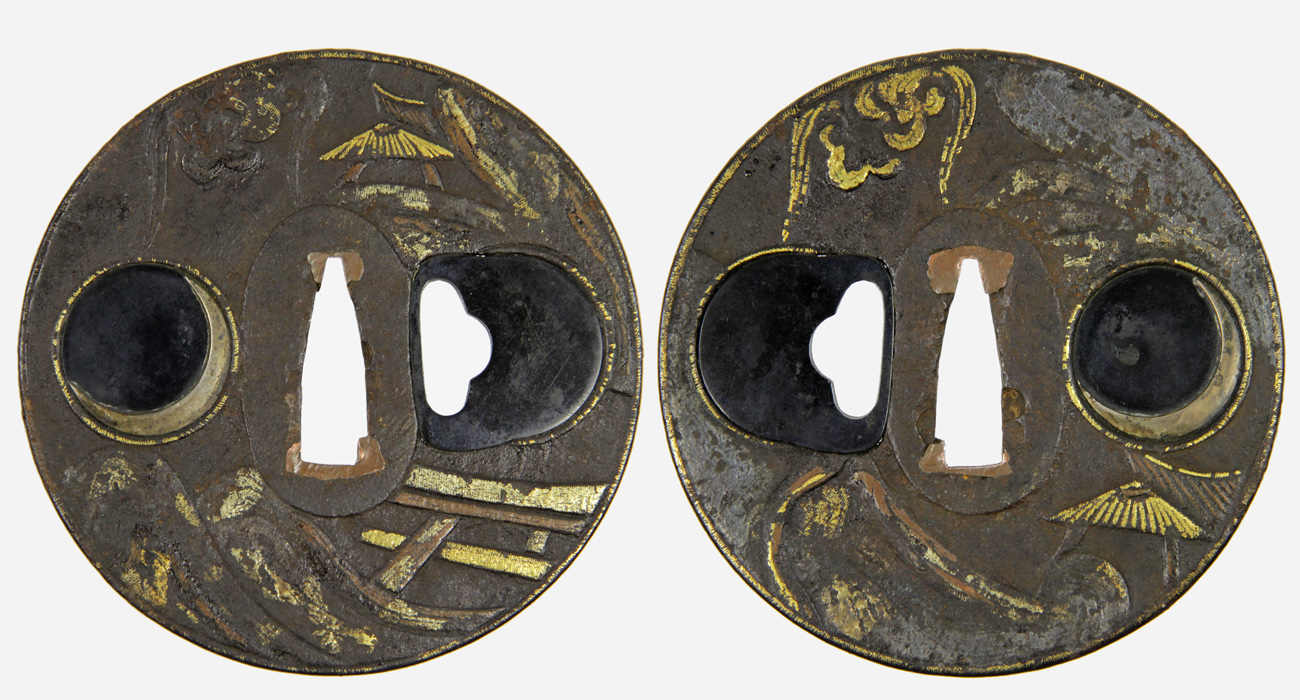
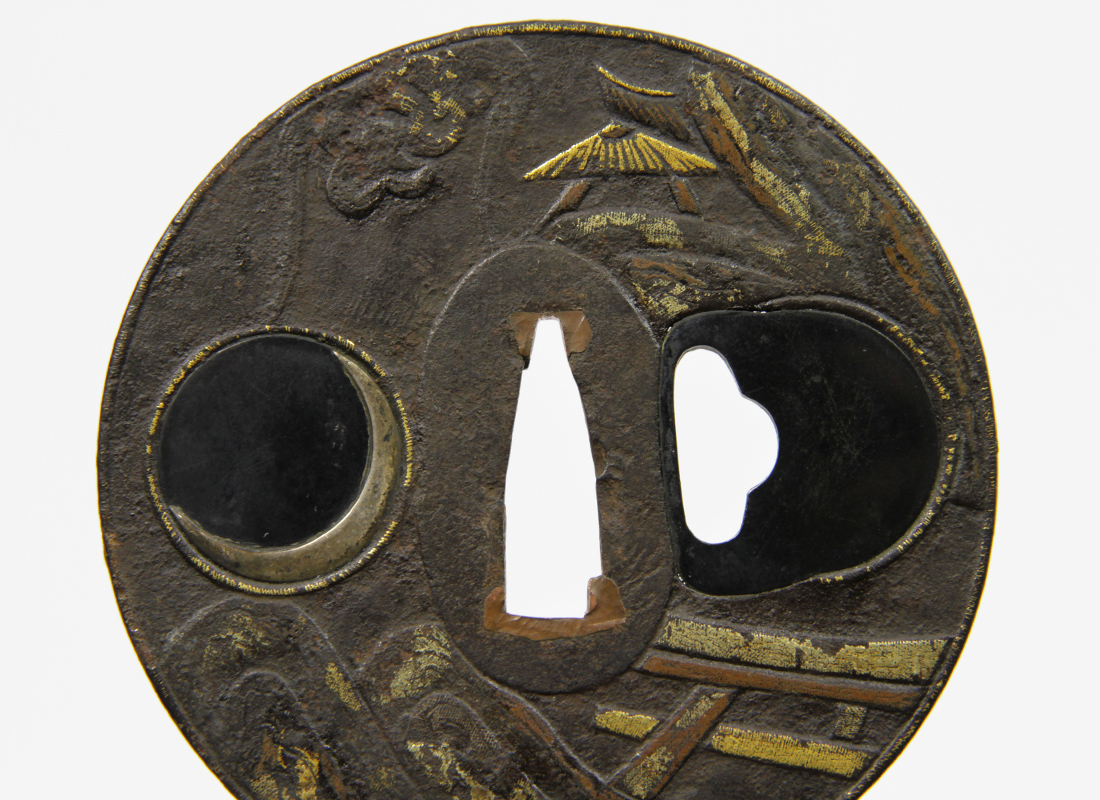
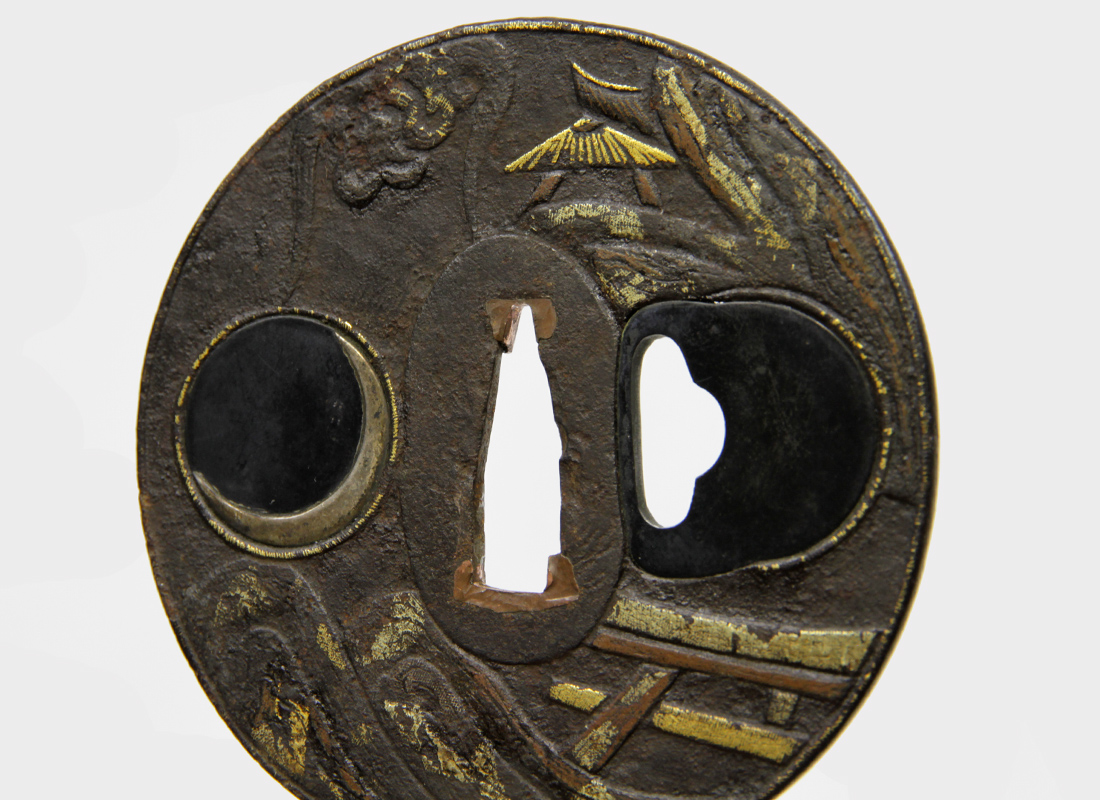
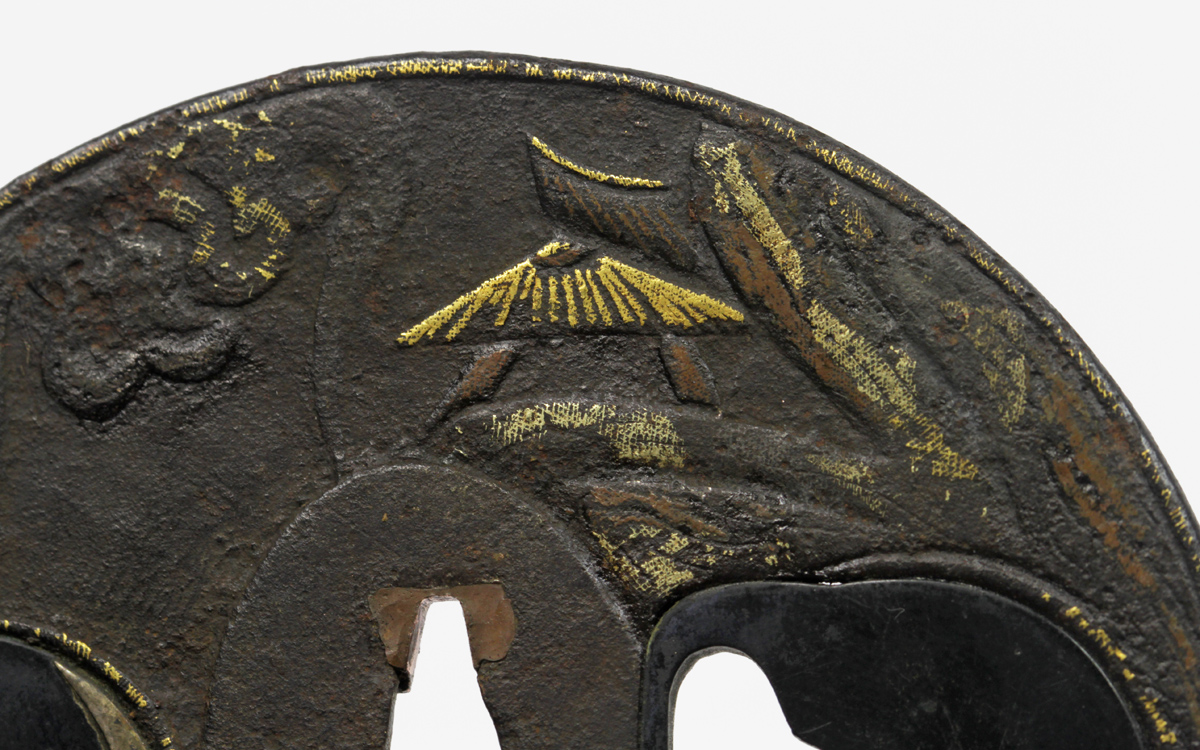
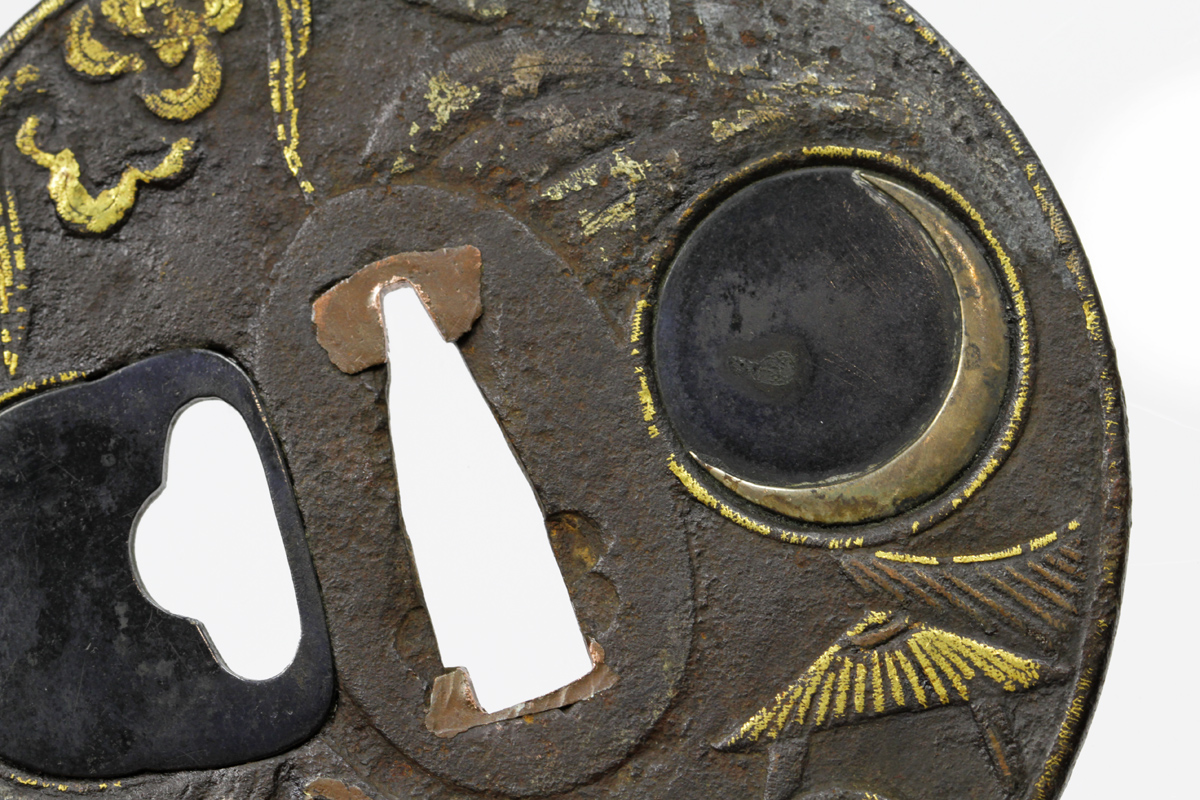
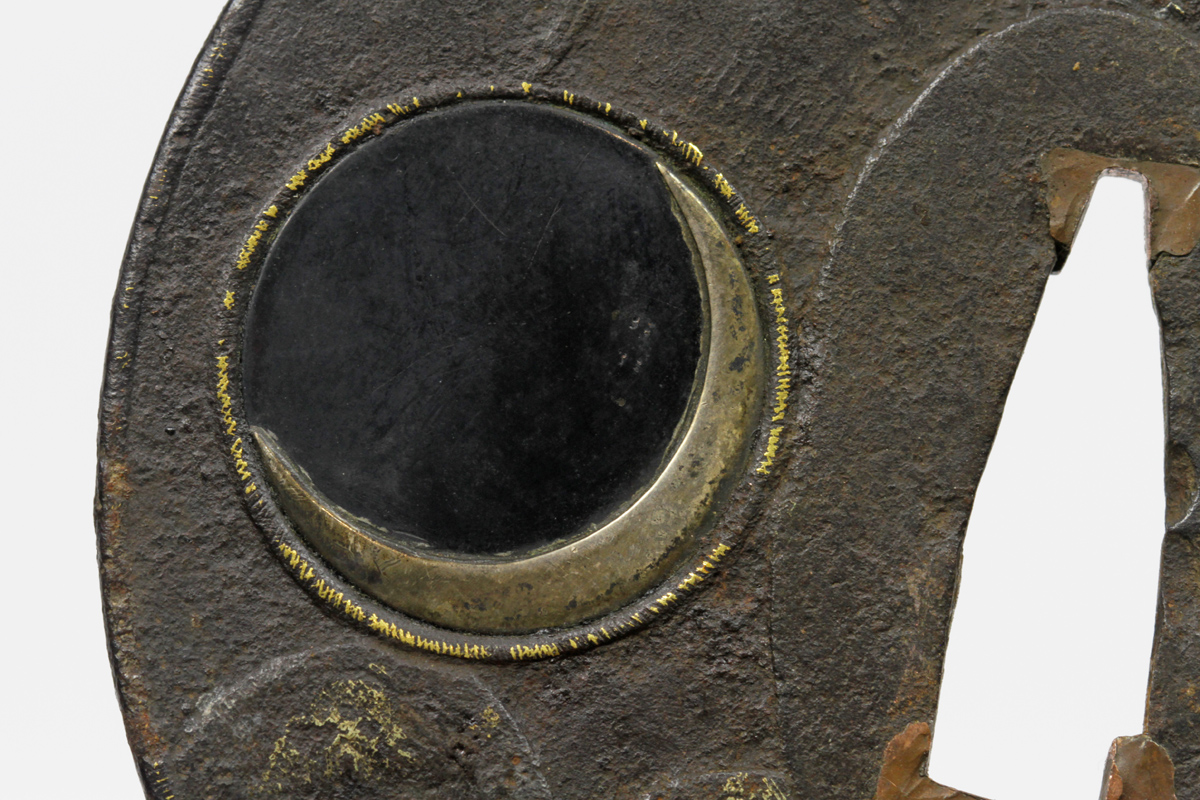
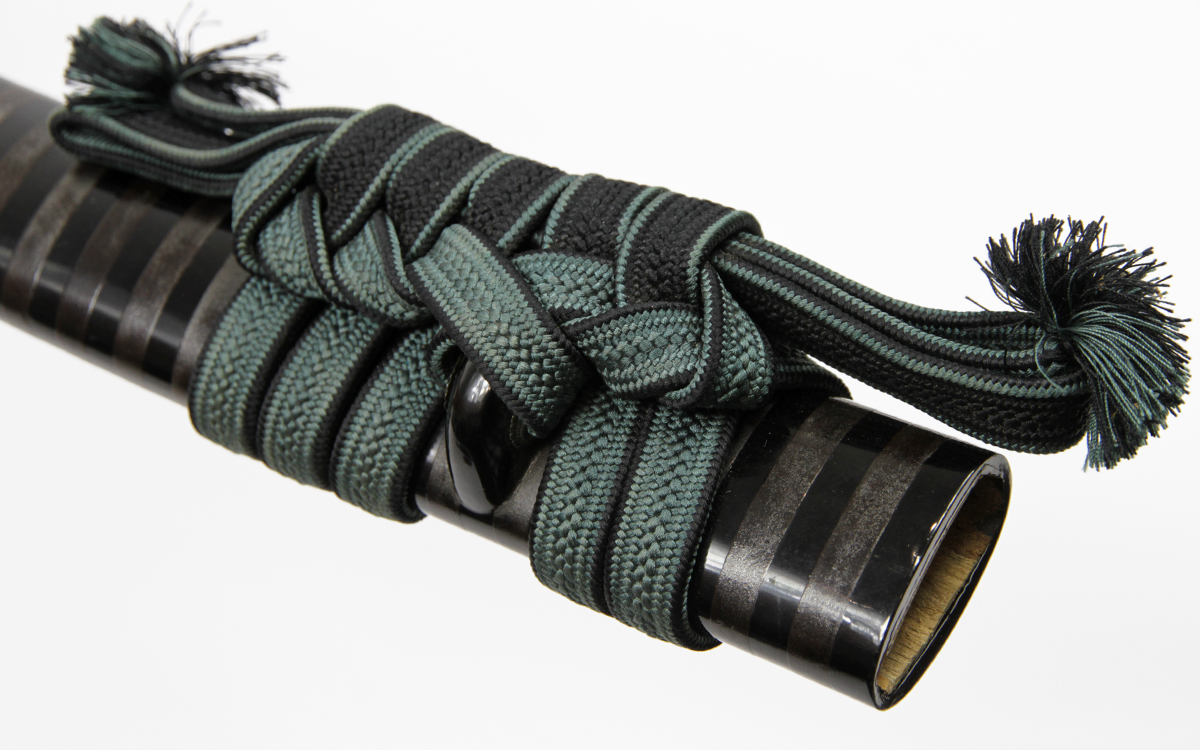
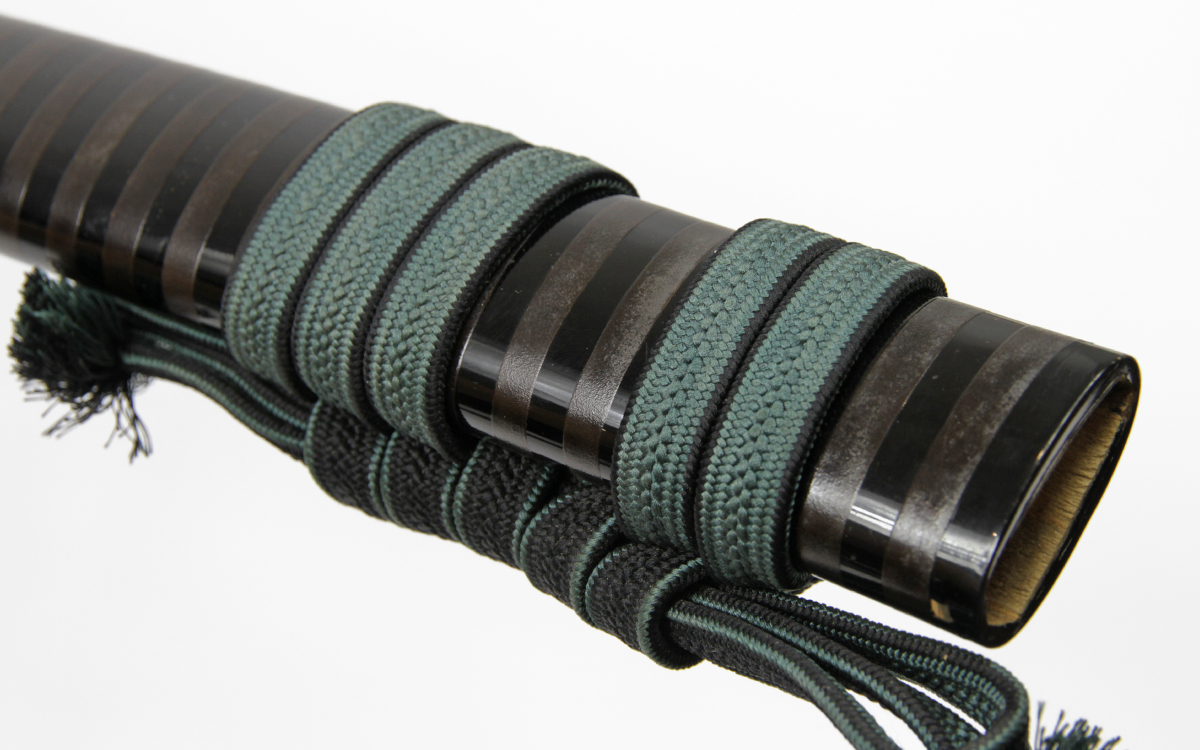
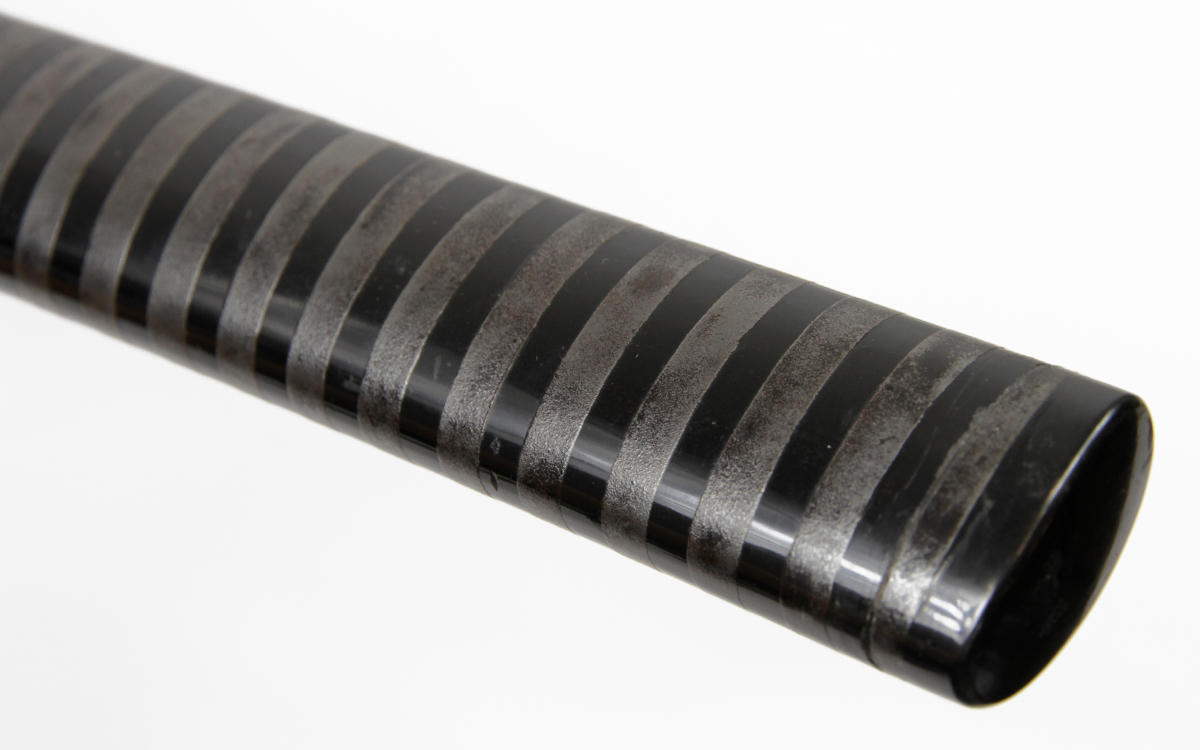
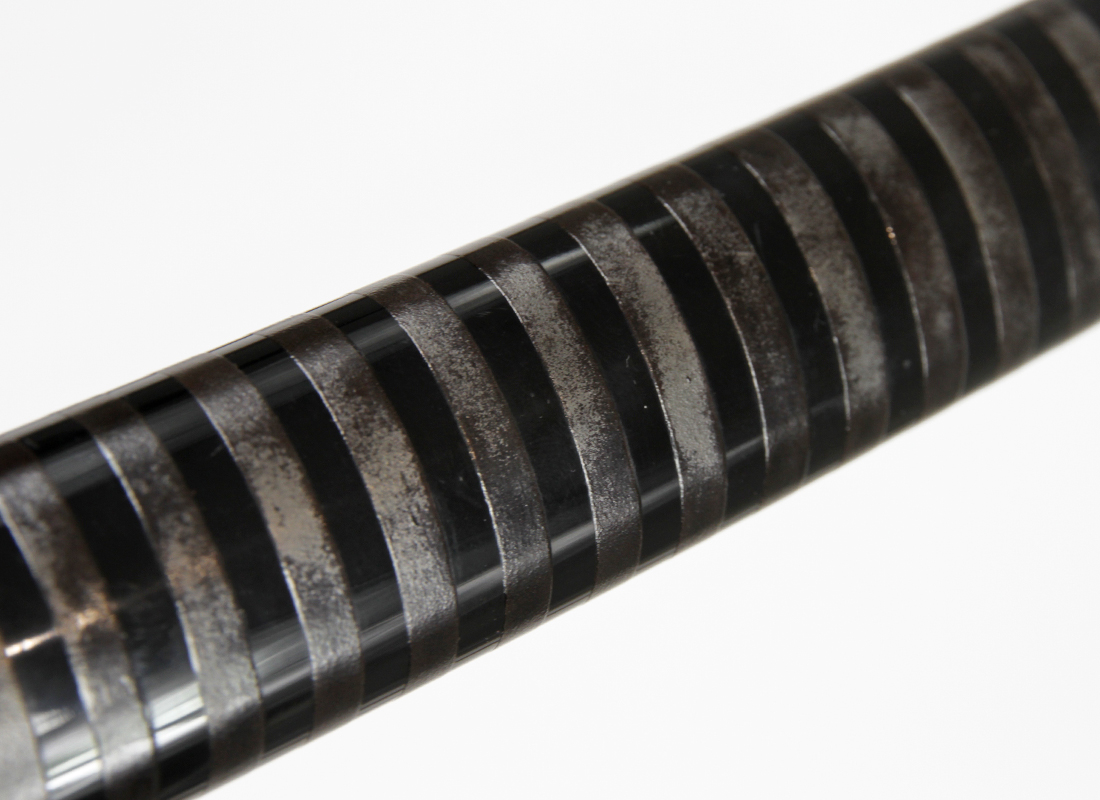
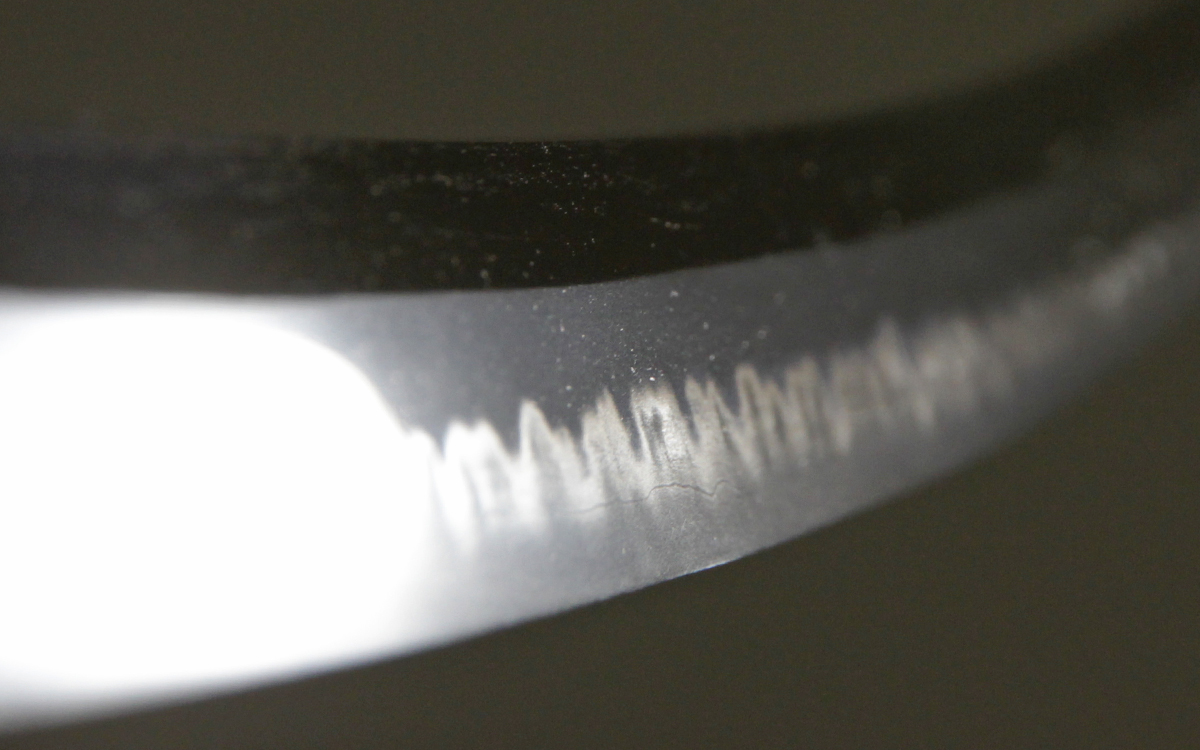
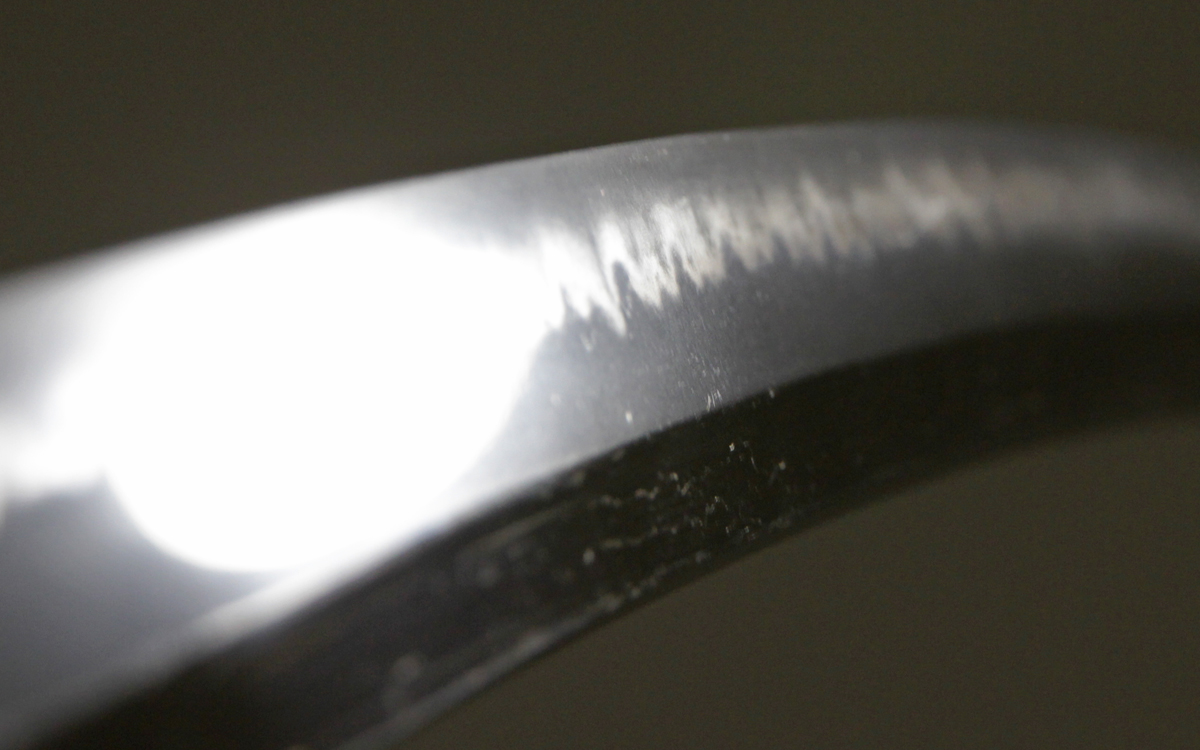
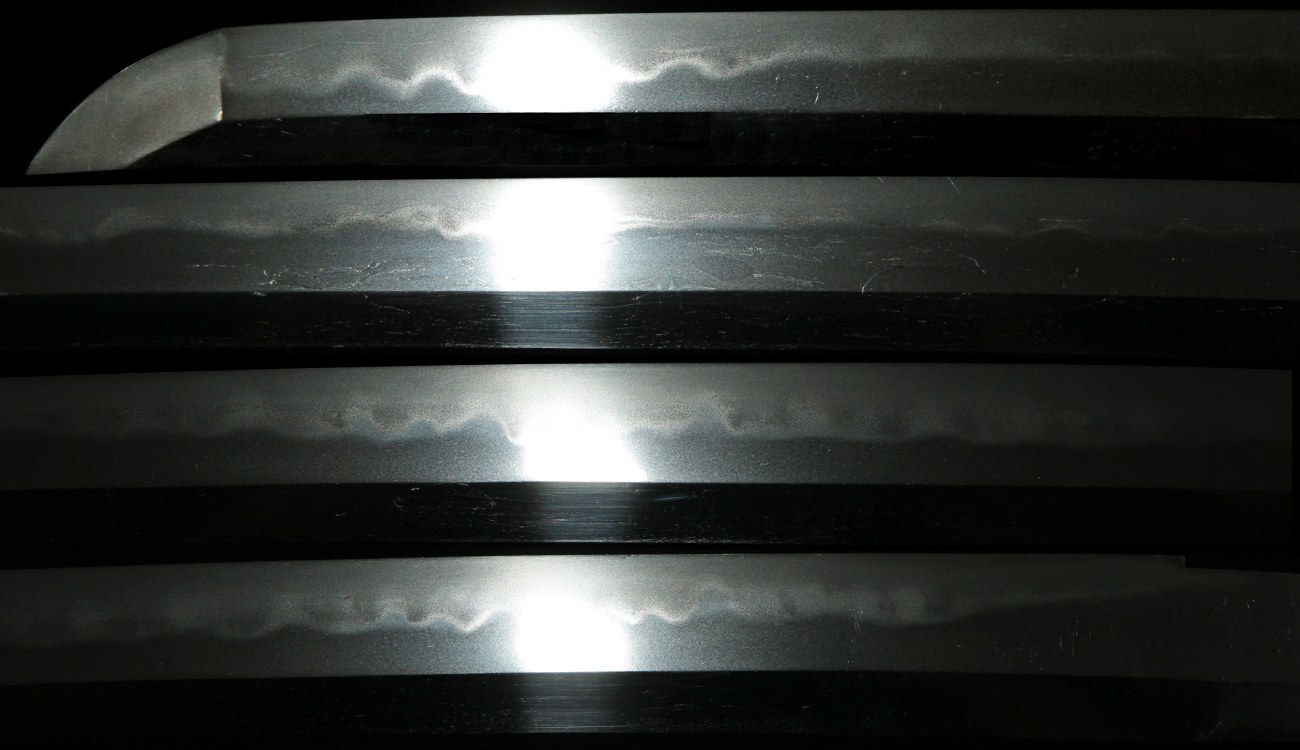
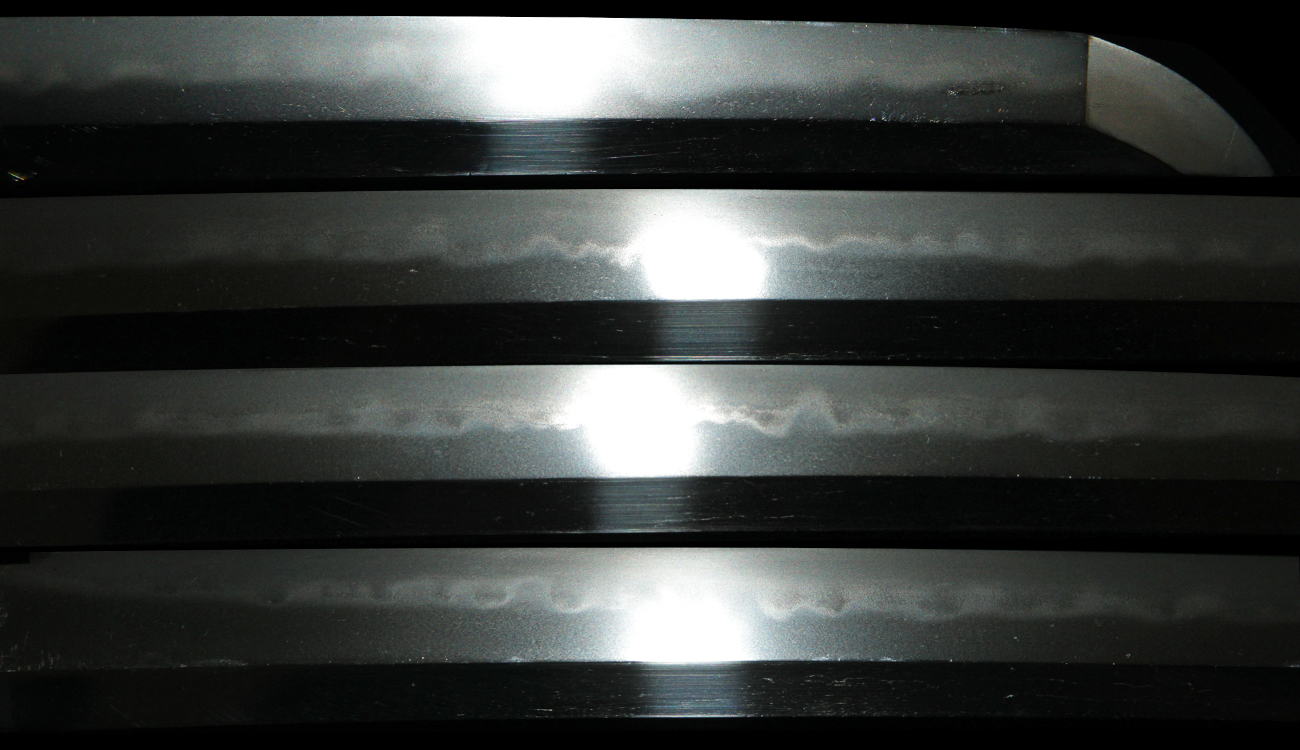
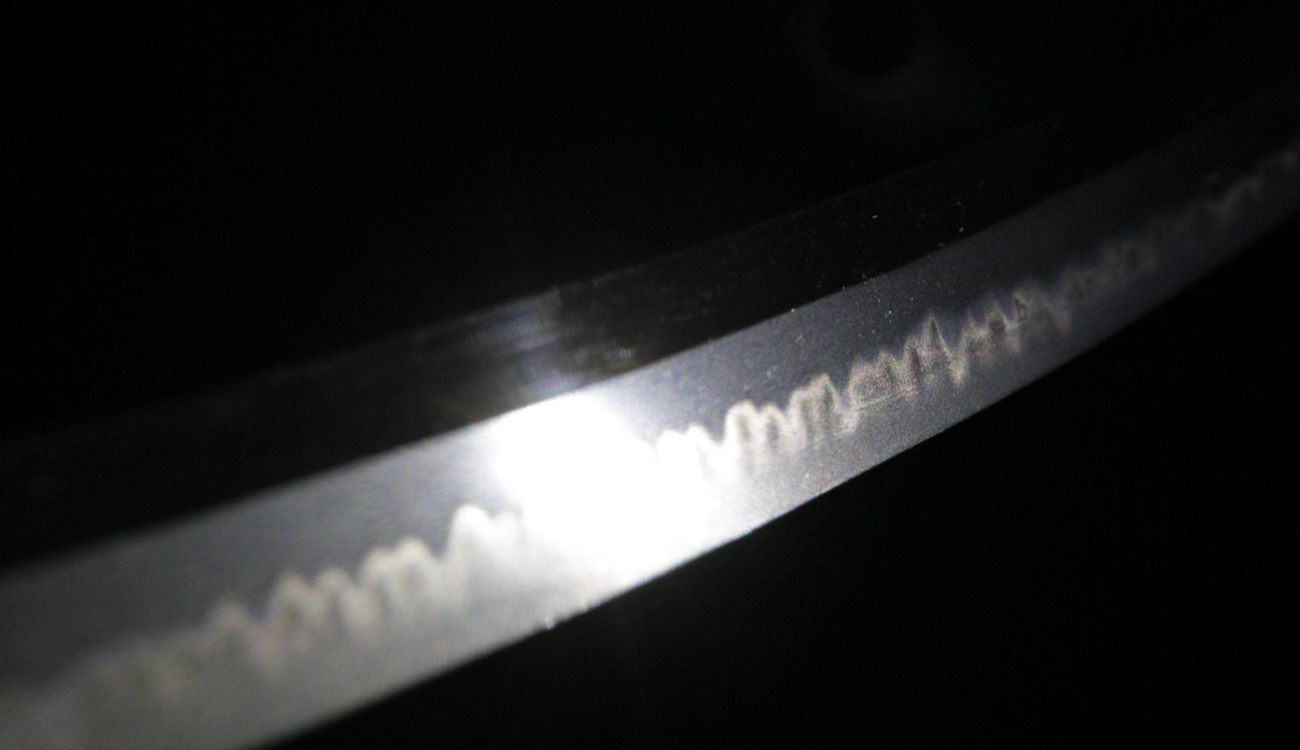
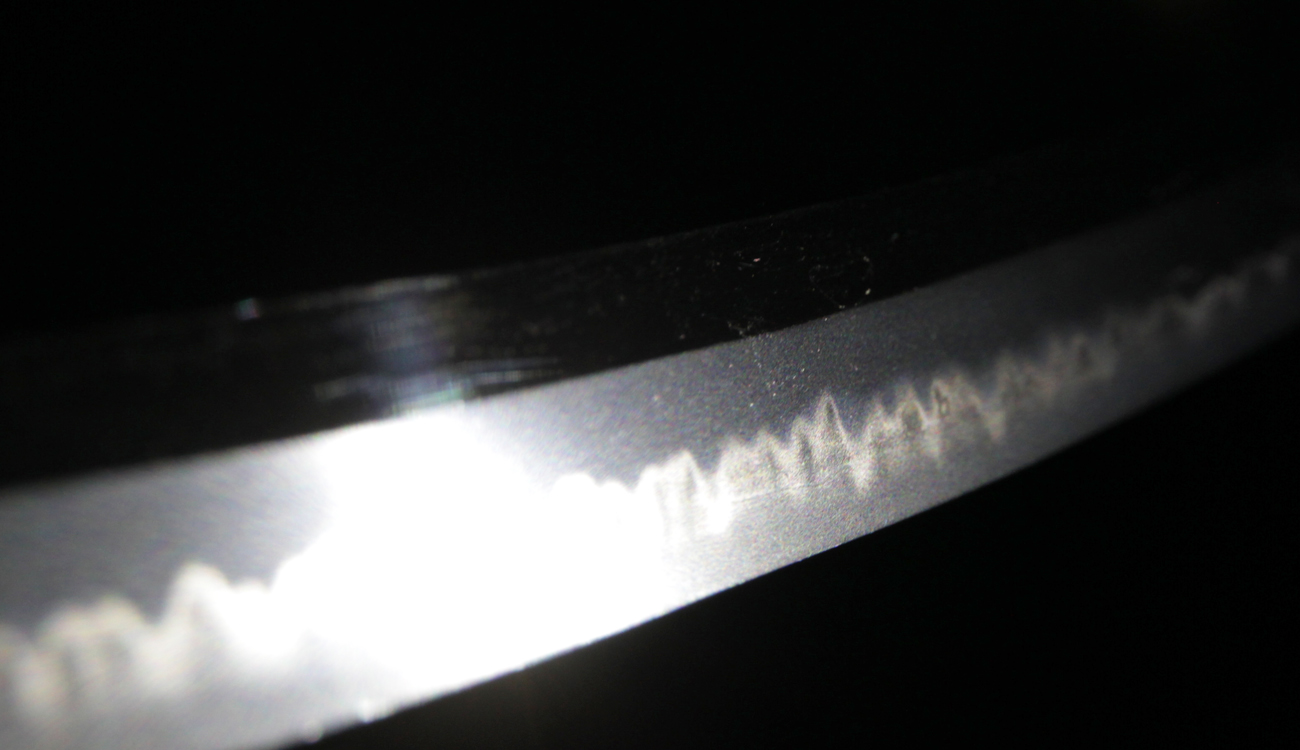
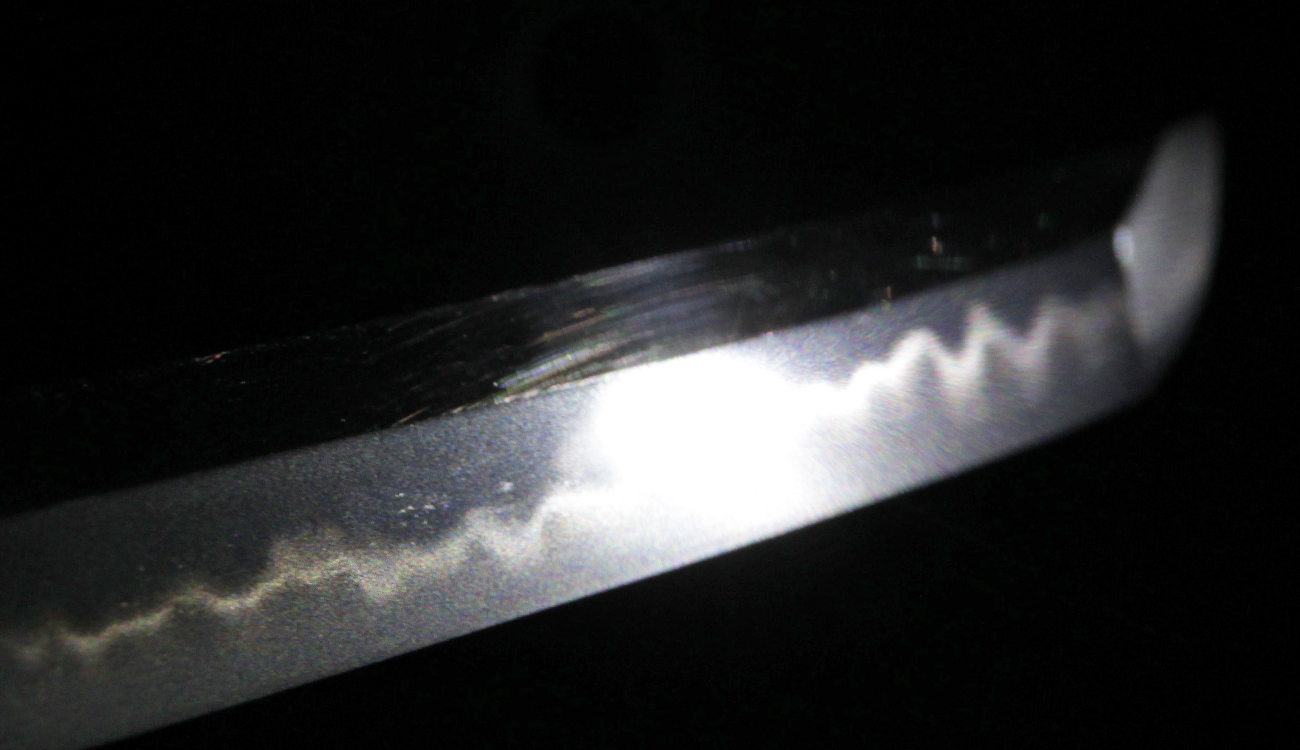
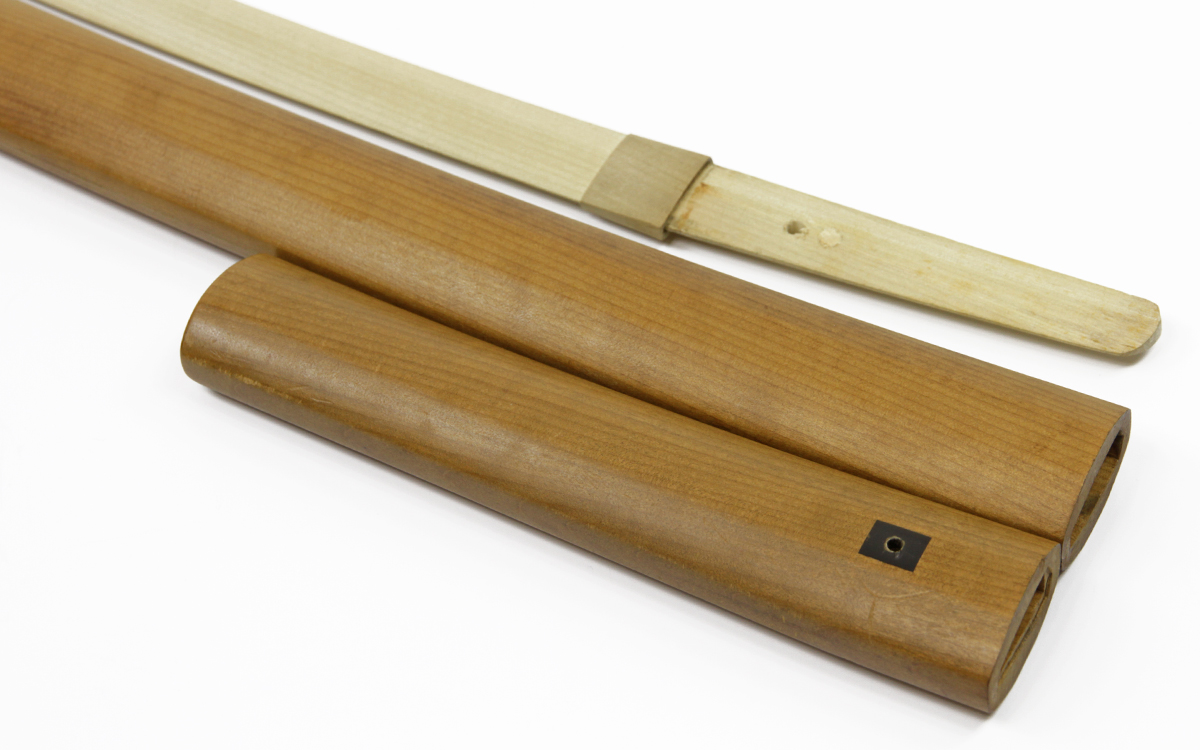
Katana with 2 body Tameshigiri
Katana signed Teruyuki with 2 body Tameshigiri with Gold Inlay inscription accompanied in quality koshirae and NTHK Kanteisho
Description
Additional Information
| Provenance | Japanese |
|---|---|
| Province | Bungo |
| Age | circa 350 years old |
| Cutting Edge | 69.6 cm / 27.4 inches |
| Era | Early Edo period |
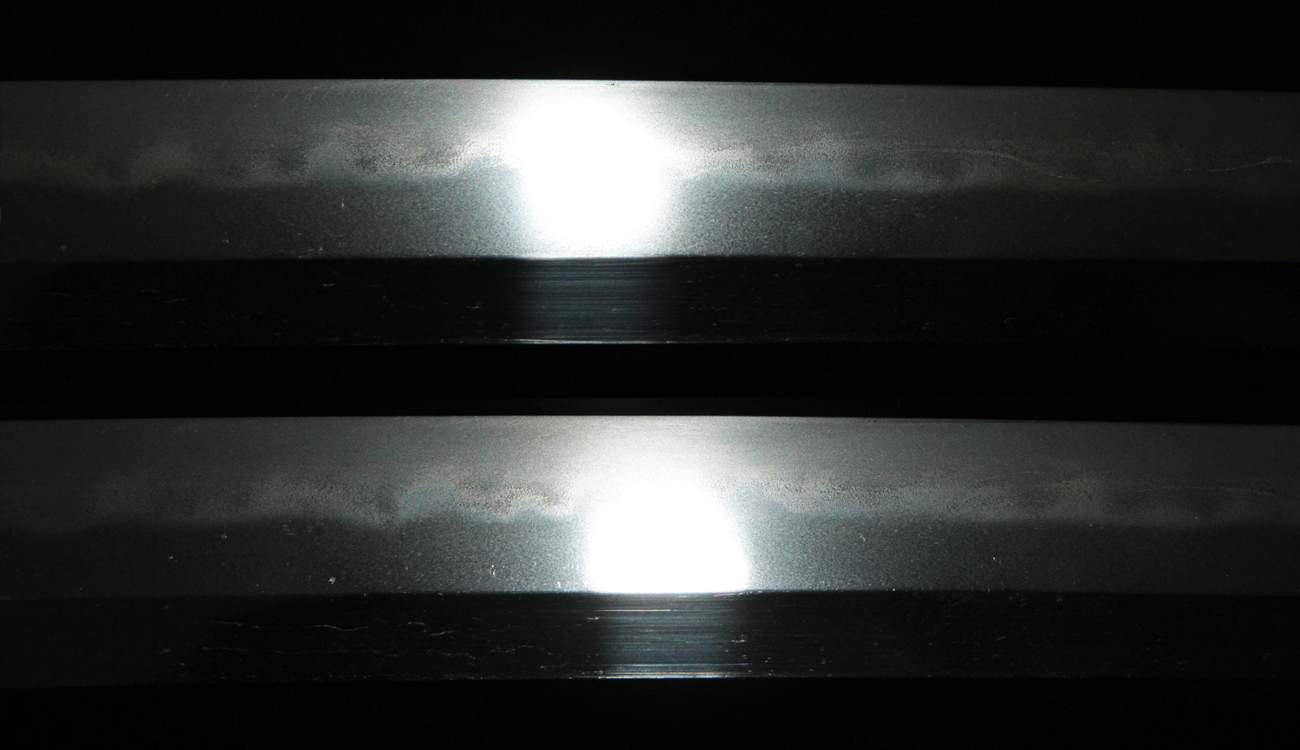
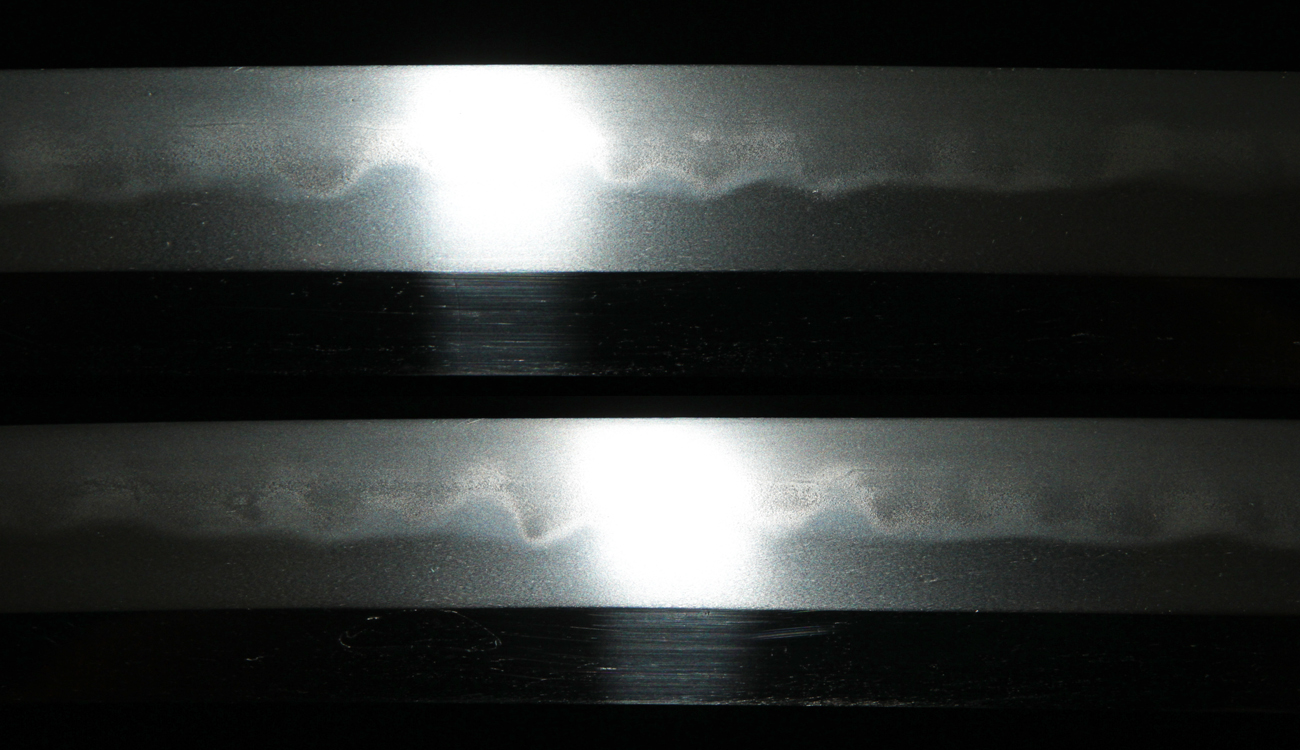
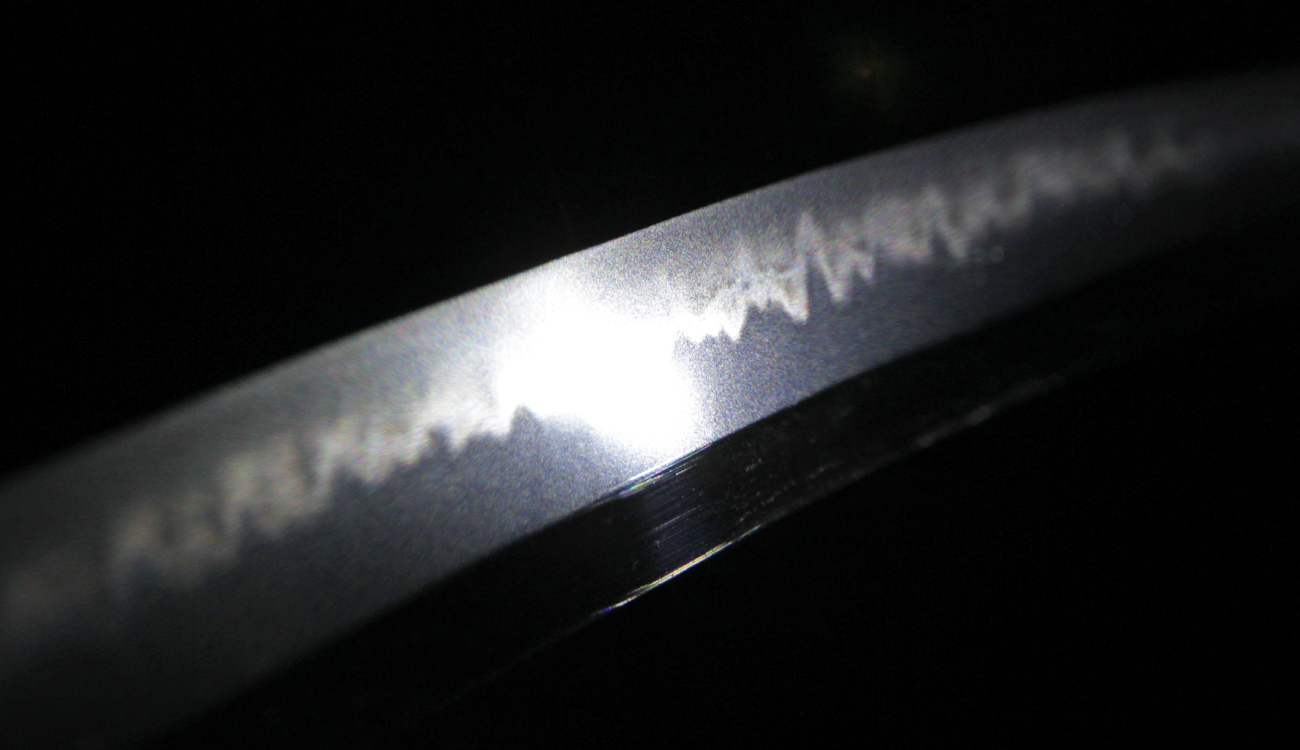
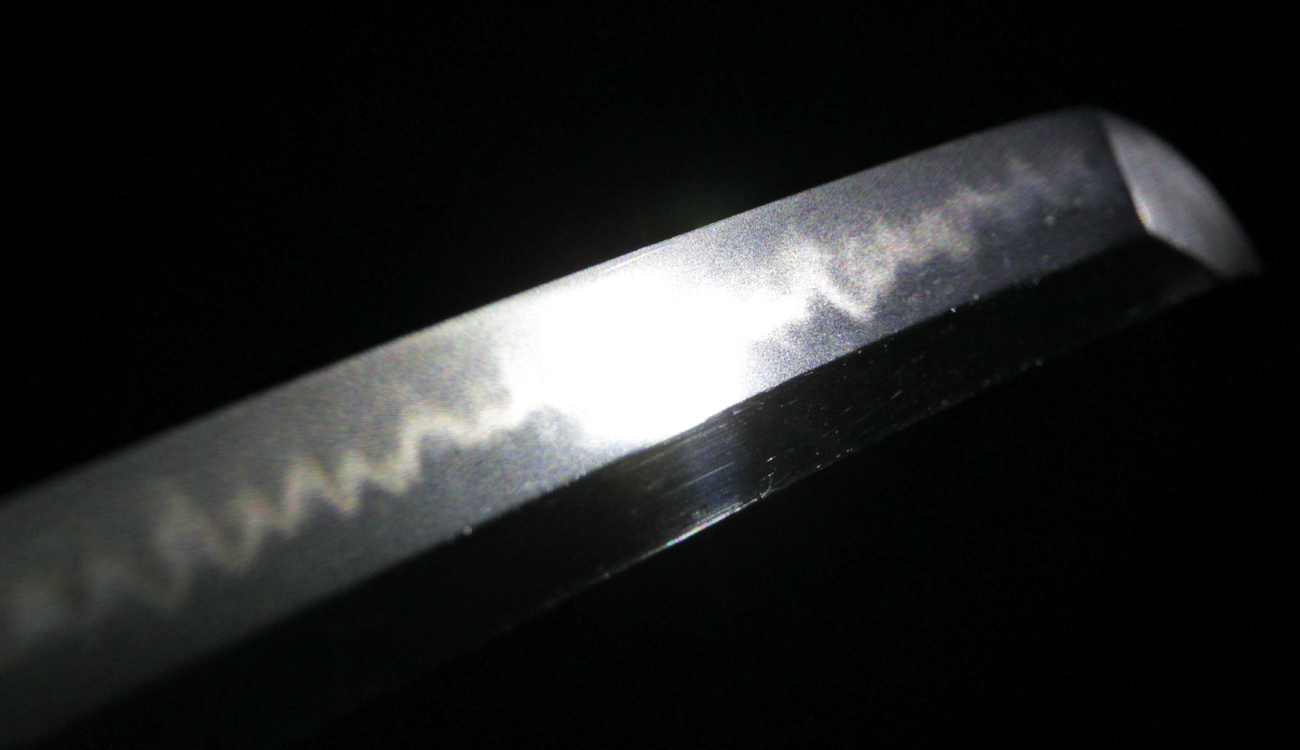
| Hamon | Gunome Midare Nie based |
| Shape | shinogi-Zukuri / Iori-mune |
| Notes | This item successfully cut through 2 human bodies |


