







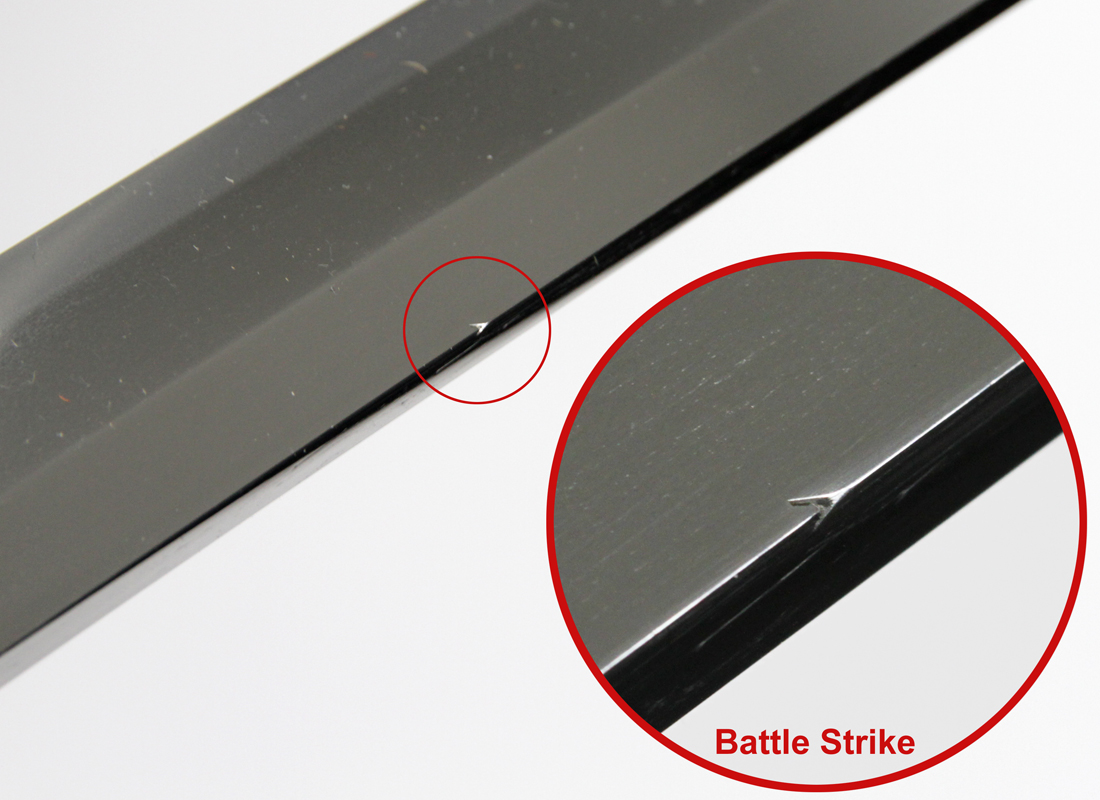
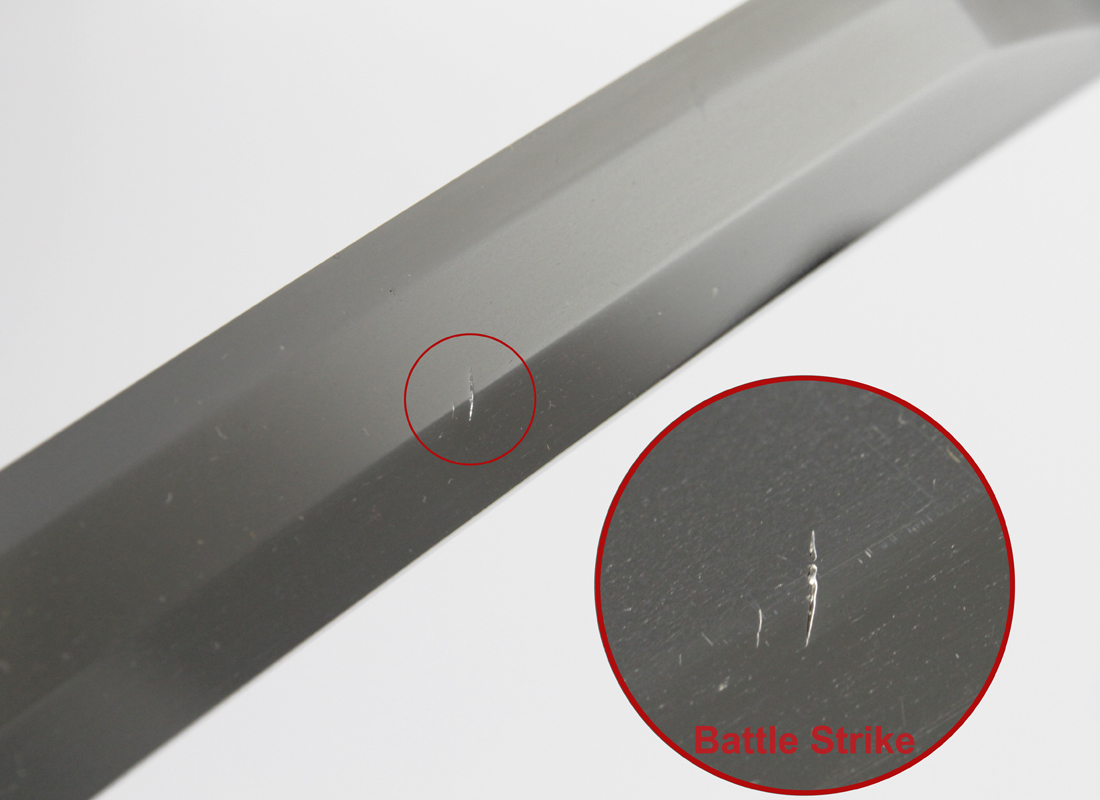
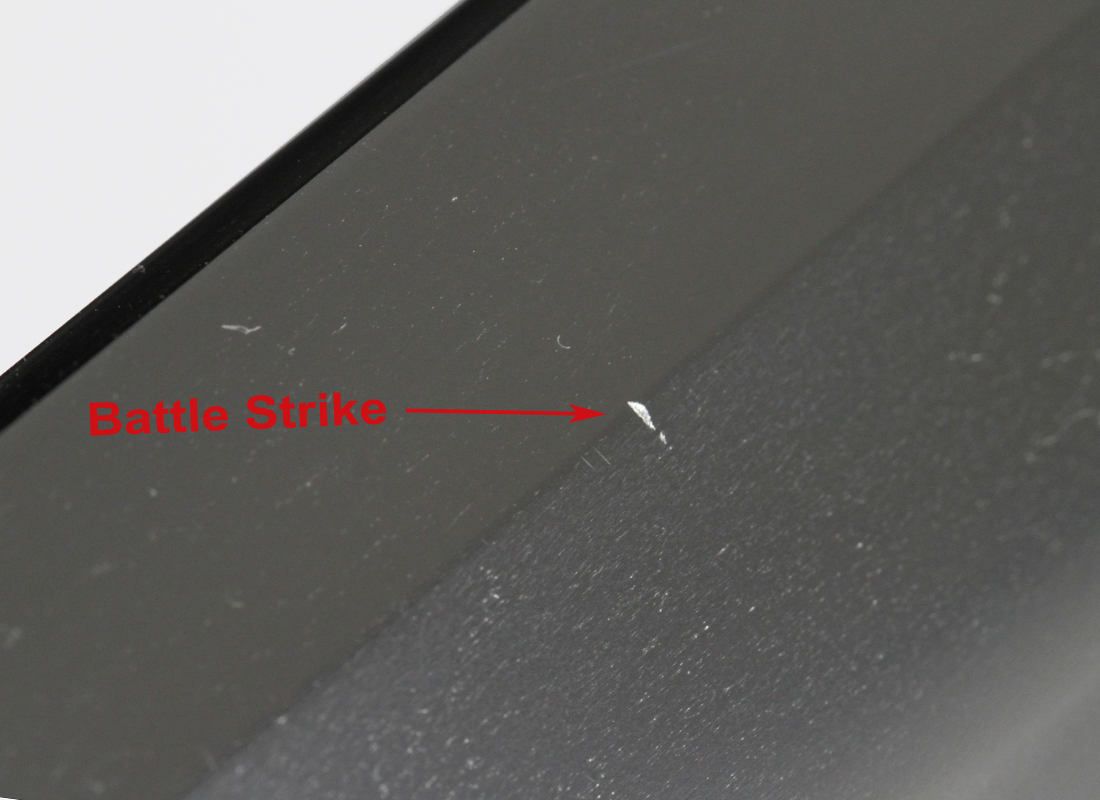
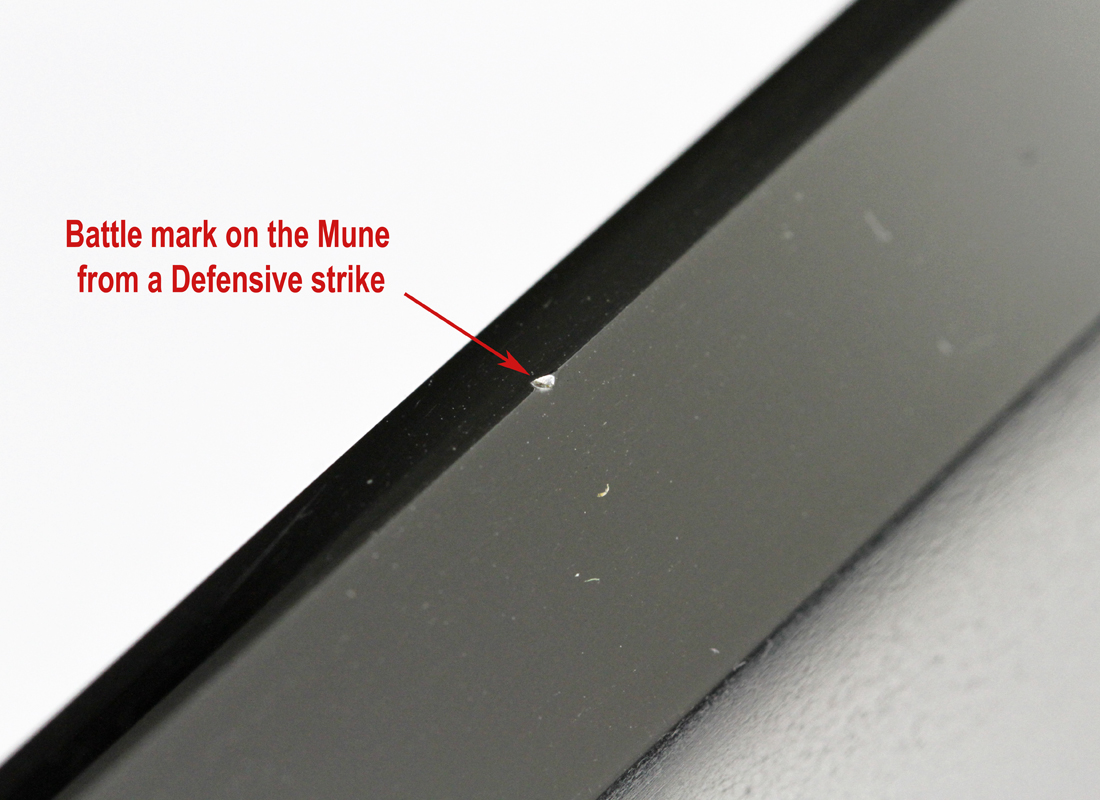
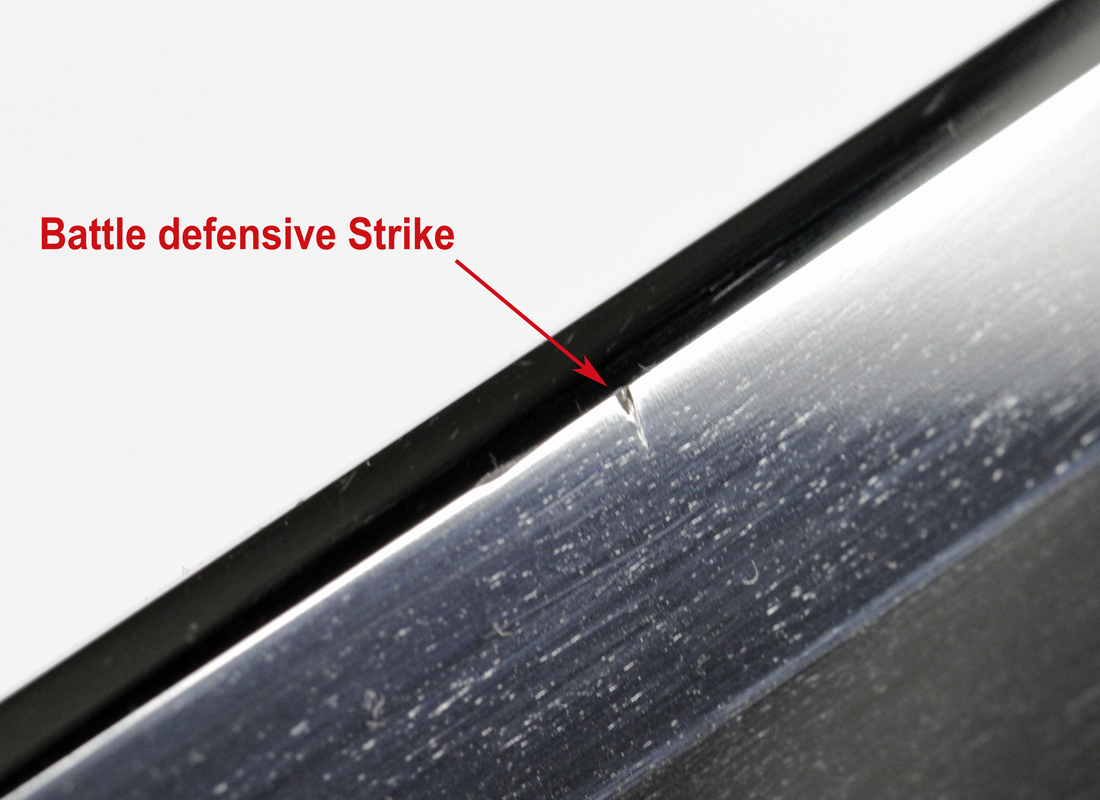
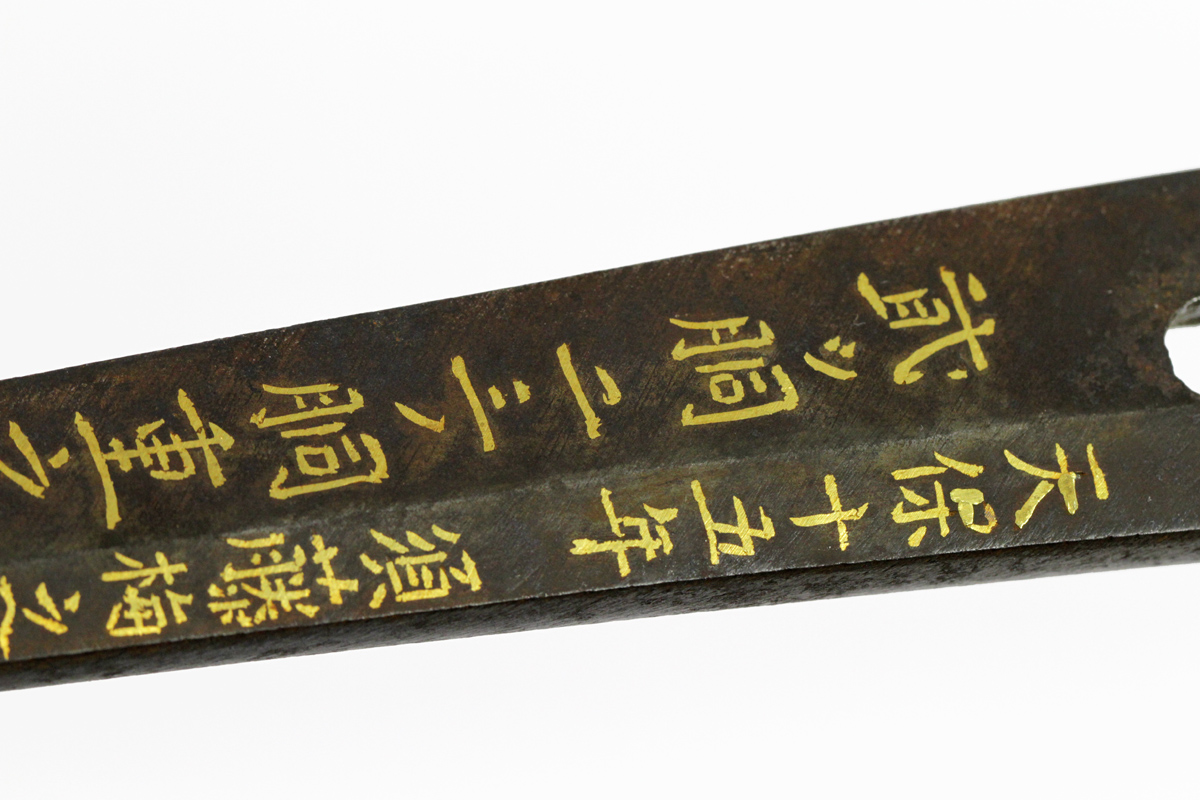
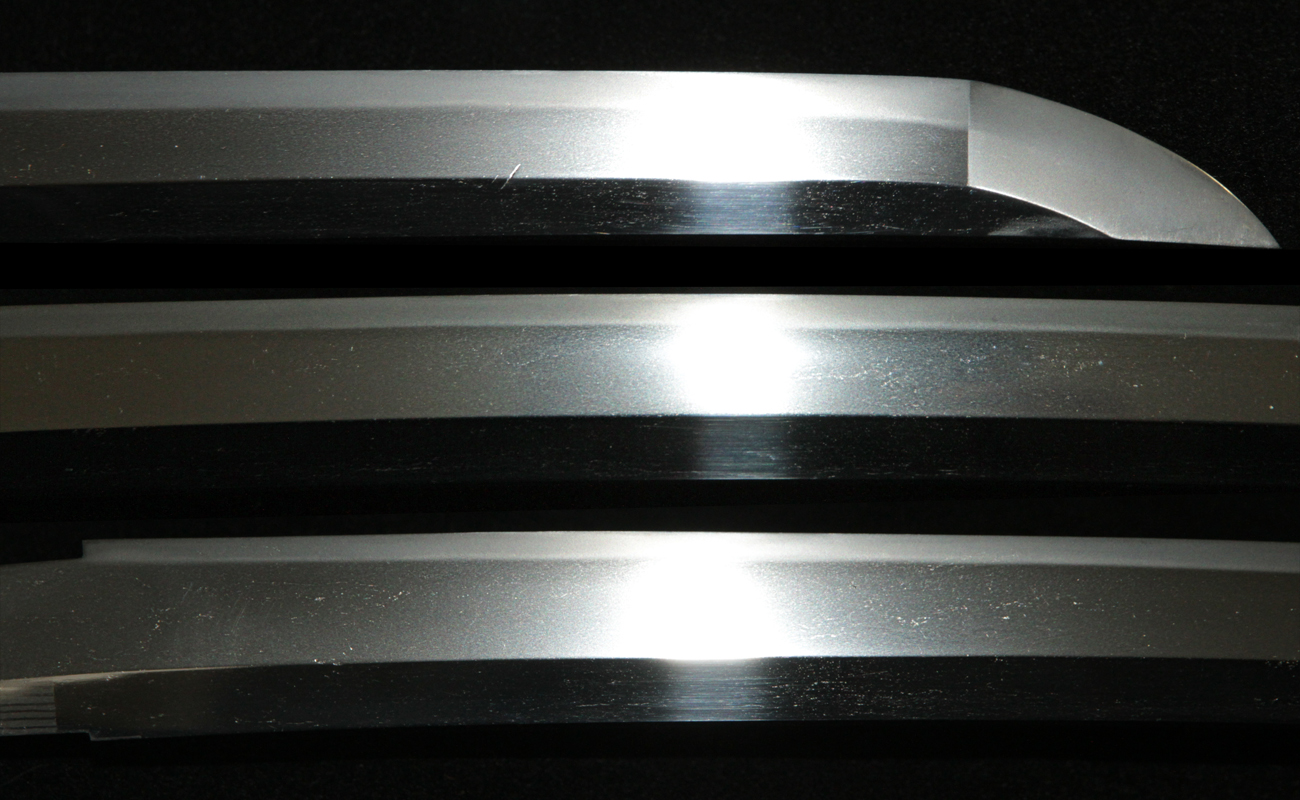
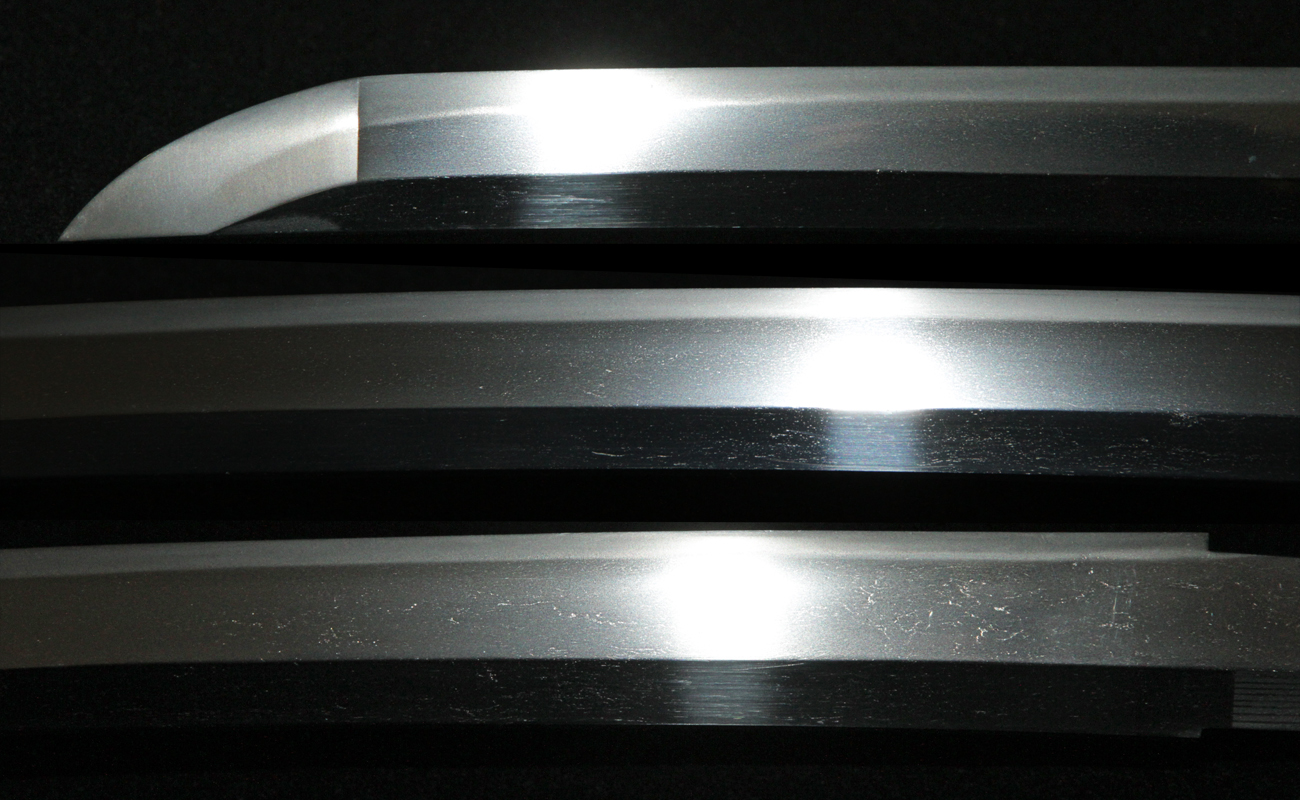
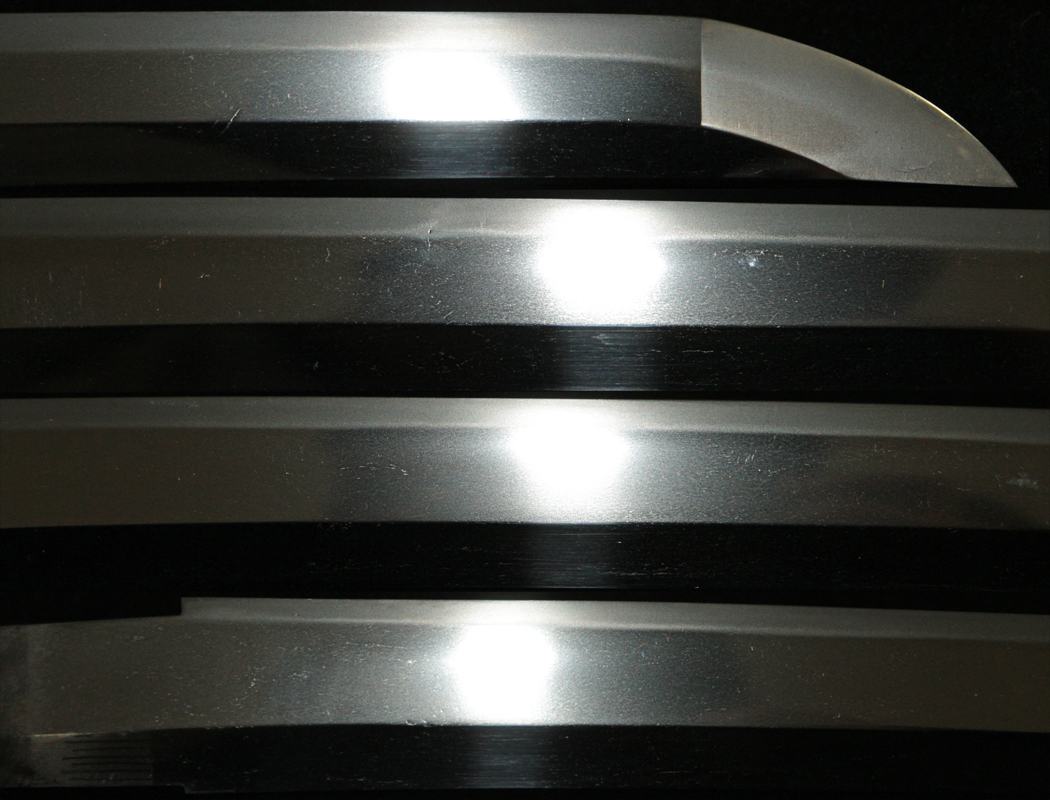
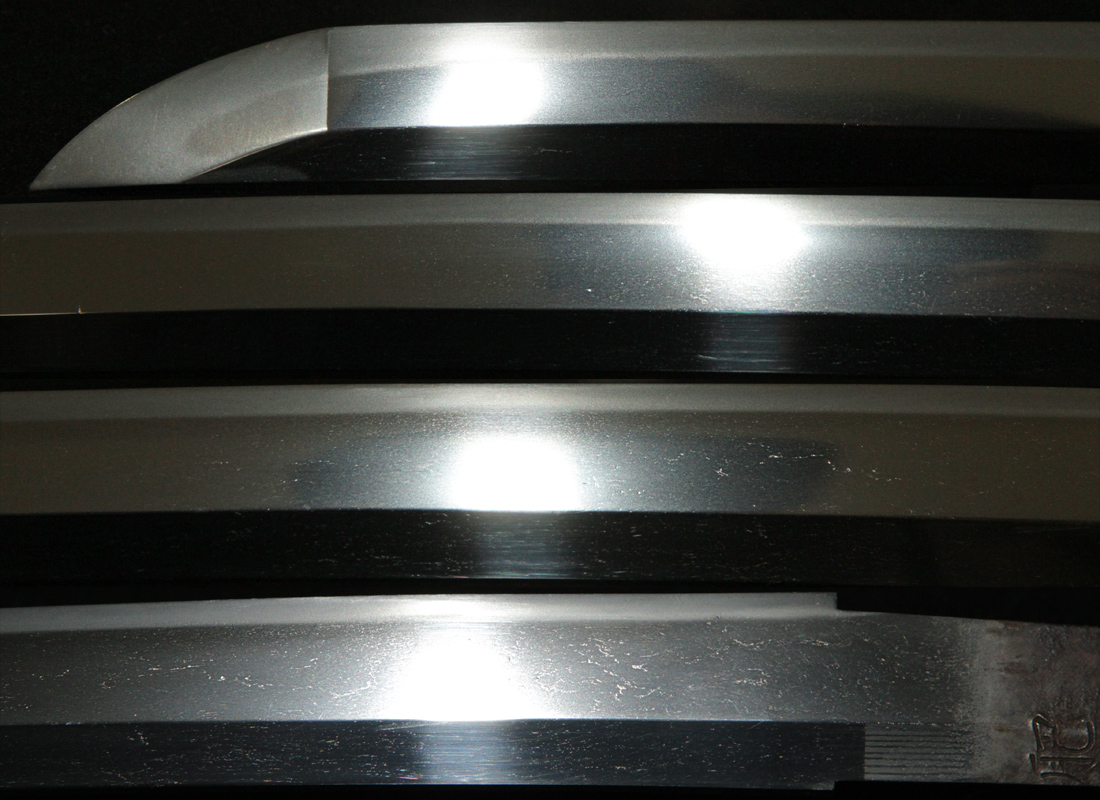
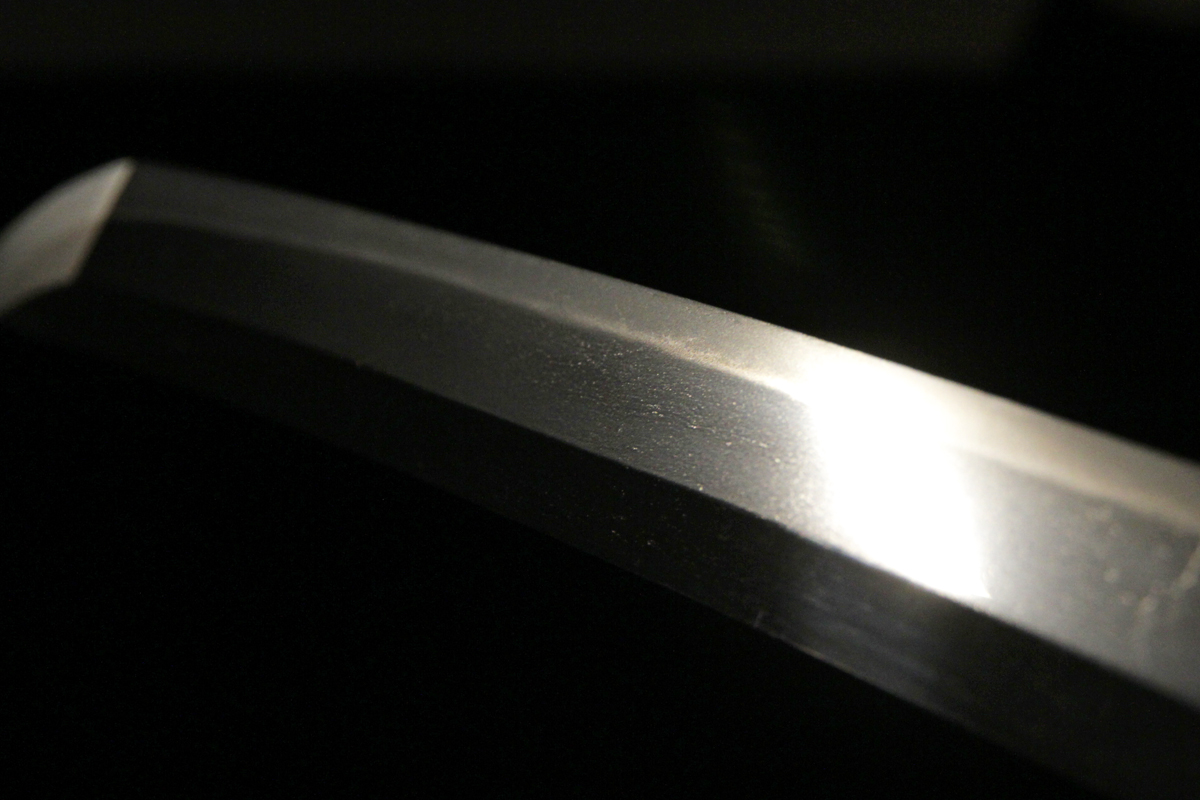
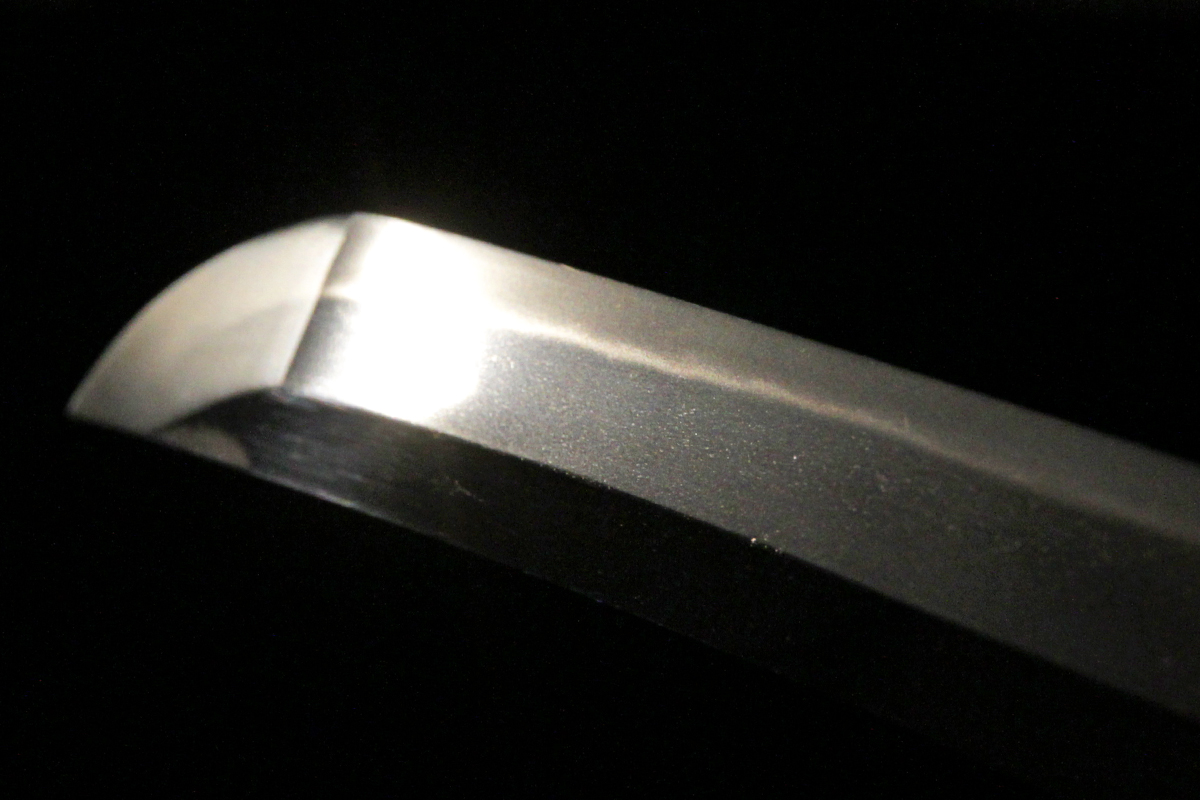
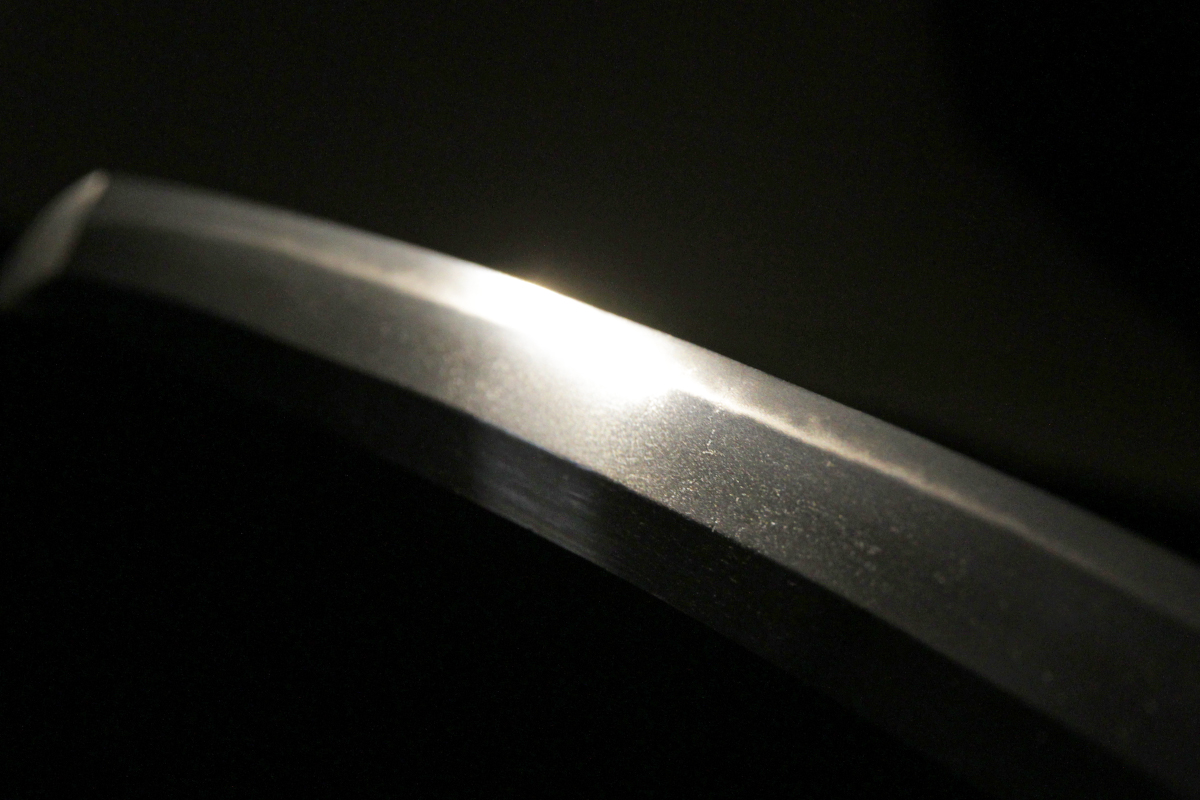
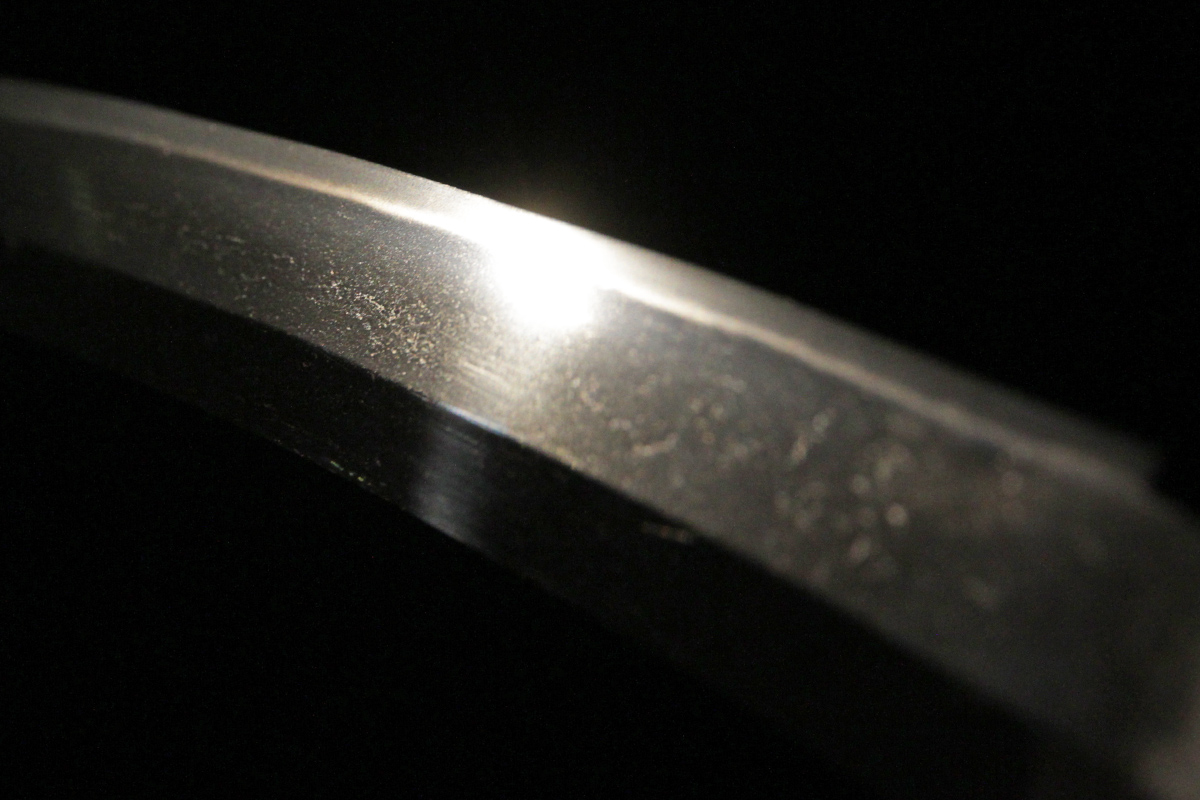
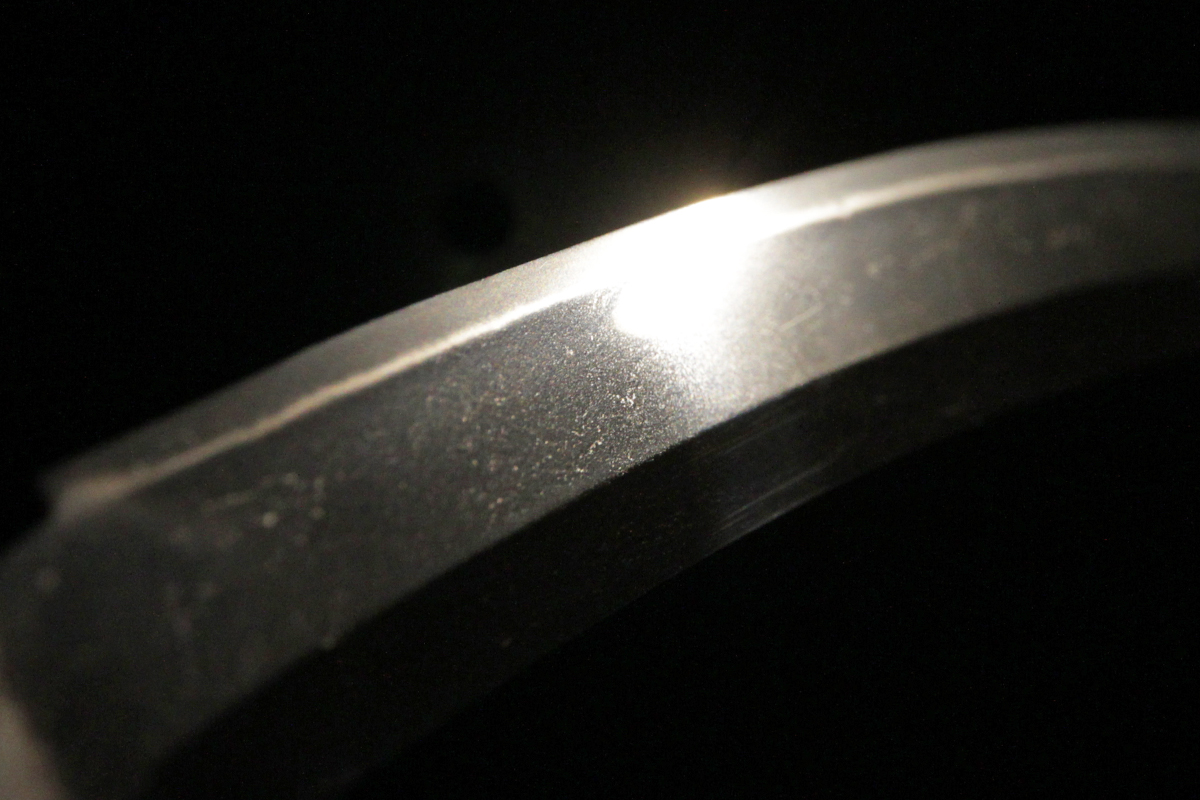
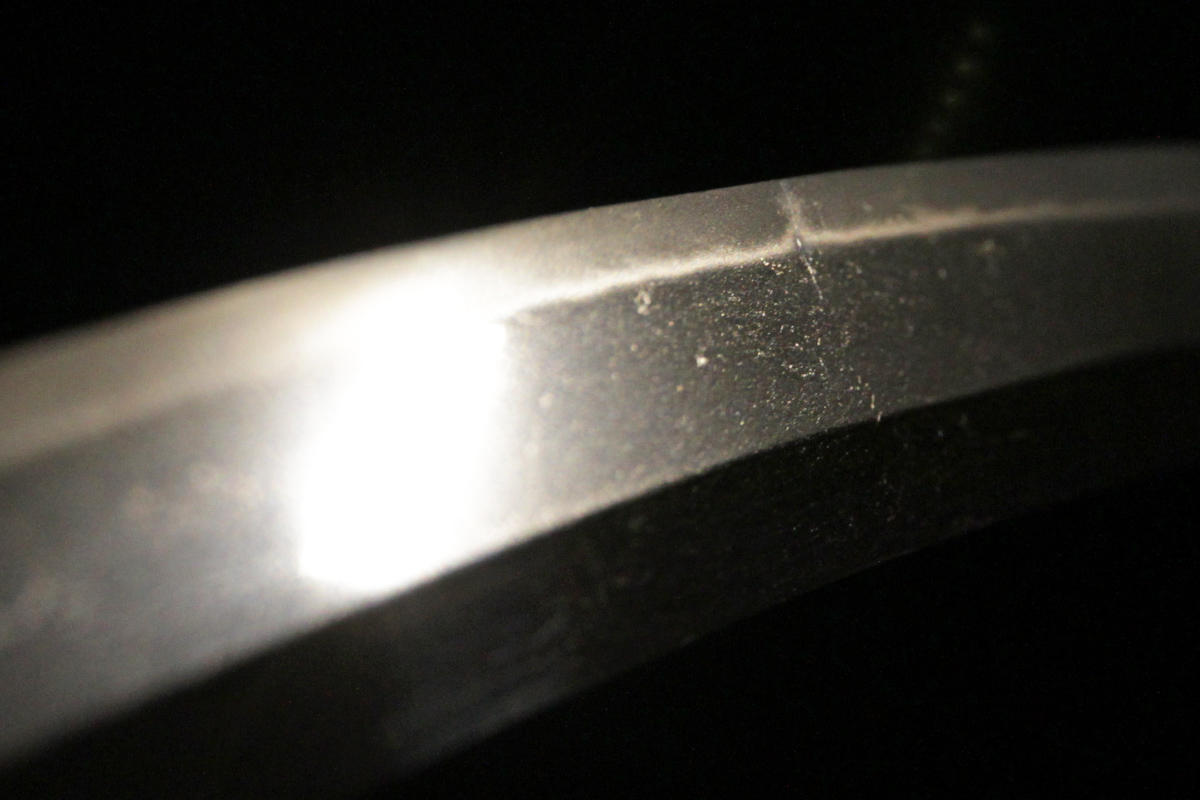
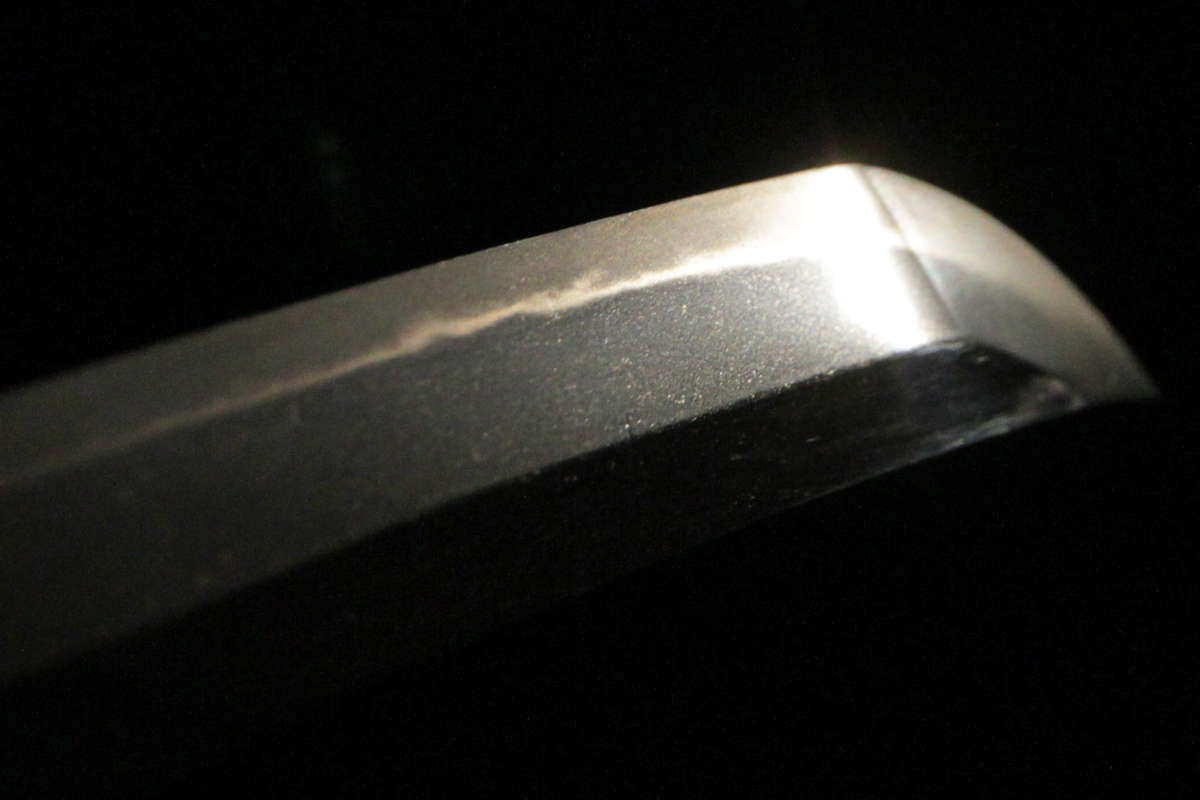
There is much history packed into this piece, you just need to look a little closer. We’ll begin with breaking down the smiths signature along with the gold inlay signature. The smiths Mei reads “Hizen no Kuni Masahiro”, the Masahiro line survived 10 generation starting from the early Edo period all the way to Bakumatsu period, The NBTHK Hozon specifically states this is Shin-Shinto work so this means it was most likely work of the 5th, 6th, or 7th generation Masahiro. Opposite to it is the cutting test inscribed in gold inlay, reads “Futatsu Dou, ni-san no you Kasane O Kiri-Otoshi Yamakita Masanosuke”, meaning Yamakita Masanosuke successfully cut through 2 bodies stacked at the height of Ni no Dou and San no Dou. As the bodies are placed in opposite directions the cut appears higher up the torso on one body over the other, an image is attached in our slideshow. The date of the set cut is also written in gold inlay, Tenpo 15 which is dated to 1844AD, and lastly the name “Suto Umenosuke” which is mostly likely the Samurai owner of this piece. Judging by some historical marking maybe Suto Umenosuke was involved in a very heavy fight, throughout the blade is over half a dozen Kirikomi (strike marks) along the Mune and Shinogi in the Monouchi area. This area is clearly known as the defence zone so we hope that whoever engaged in battle made it out as the winner. Also in the slideshow are several close-up images of the strikes, the blade was repolished and these s strikes of pride are far deeper and imbedded in the history of this piece.
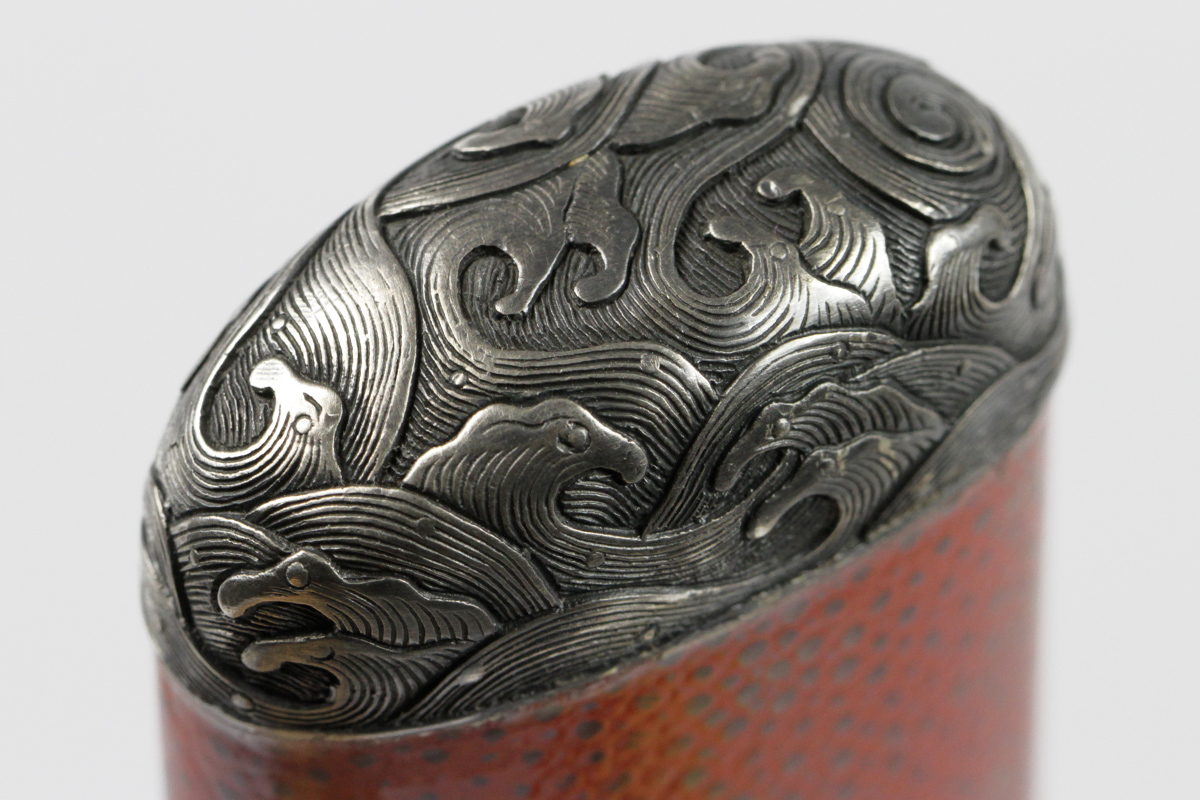
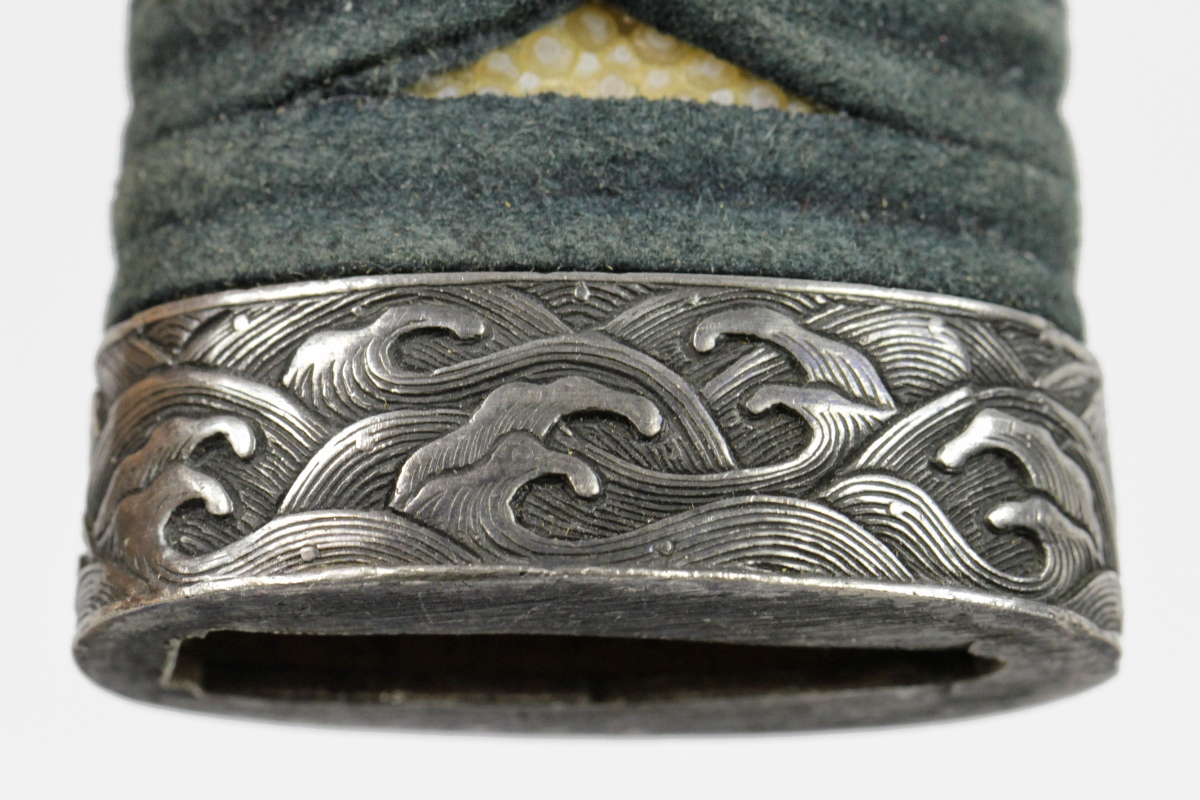
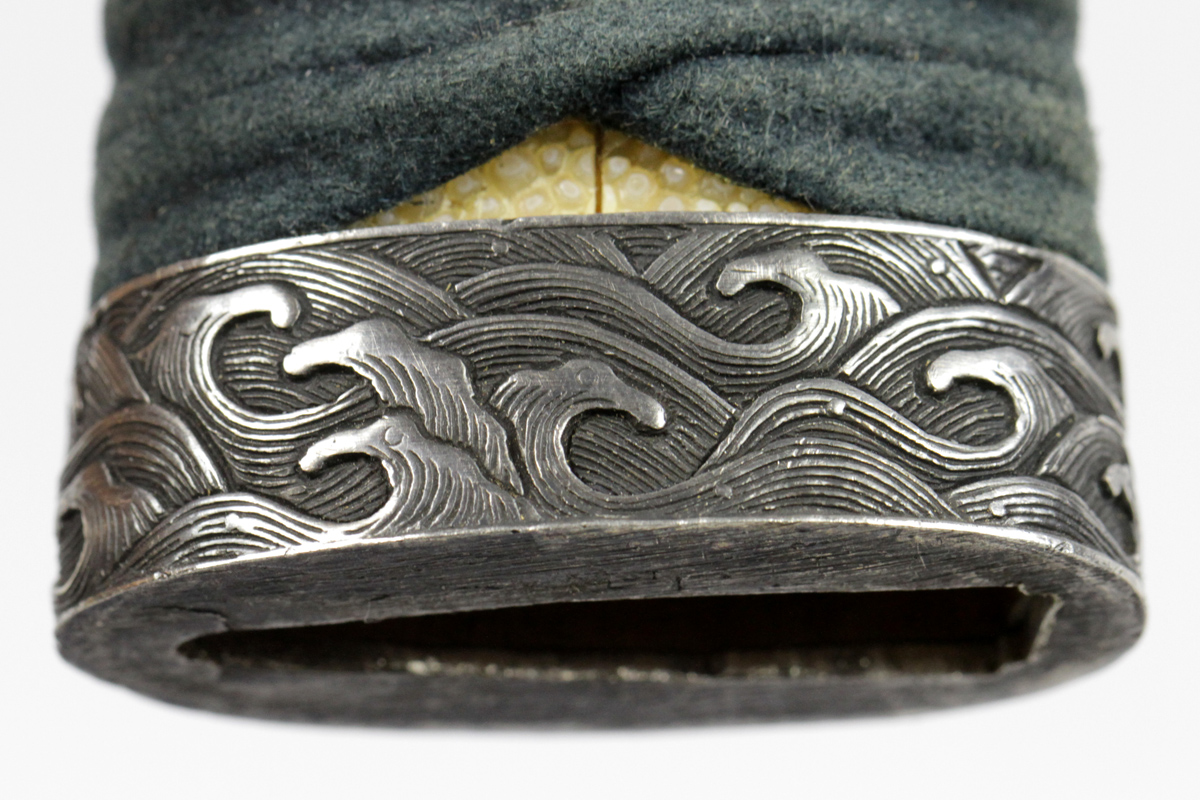
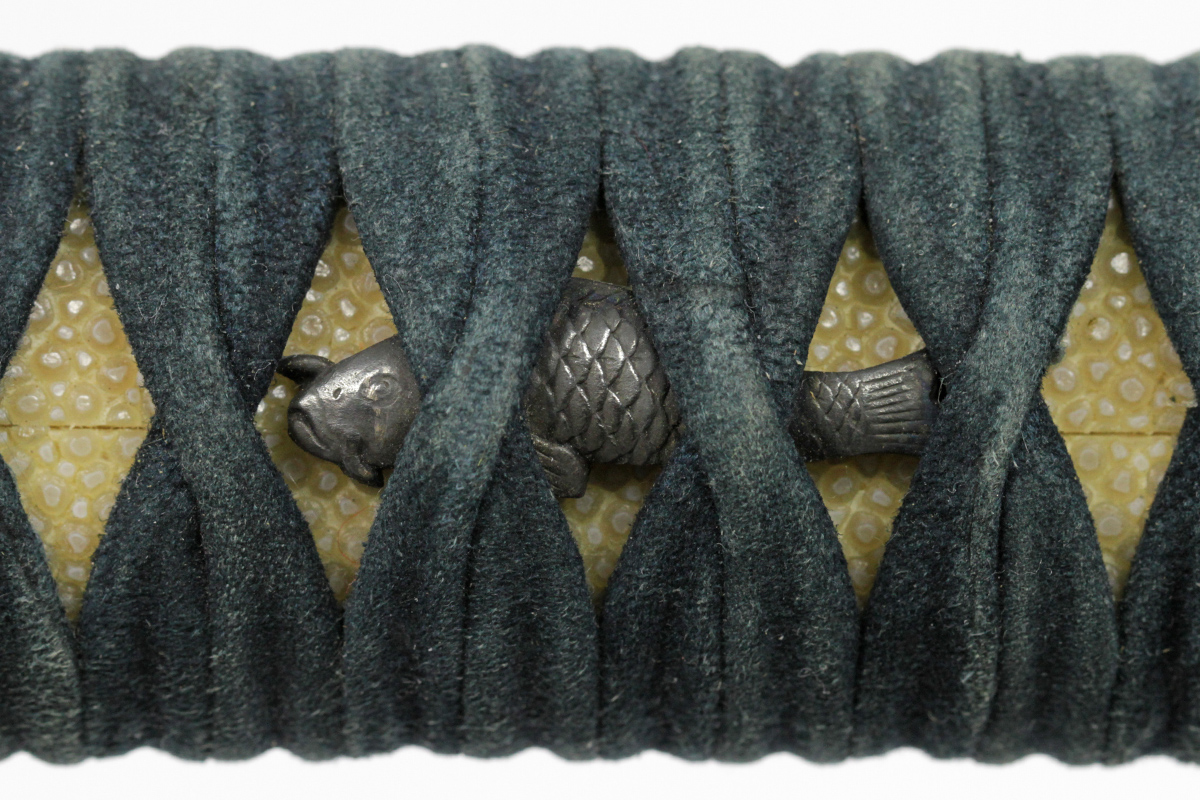
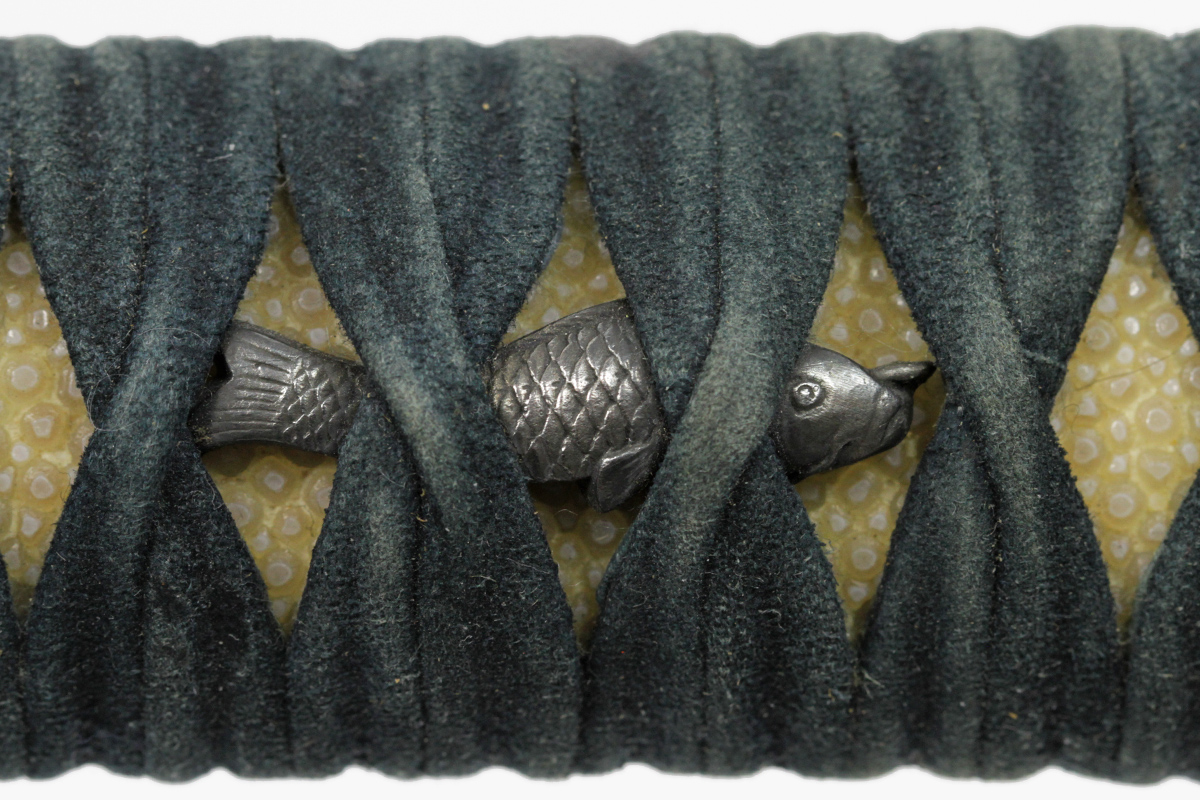
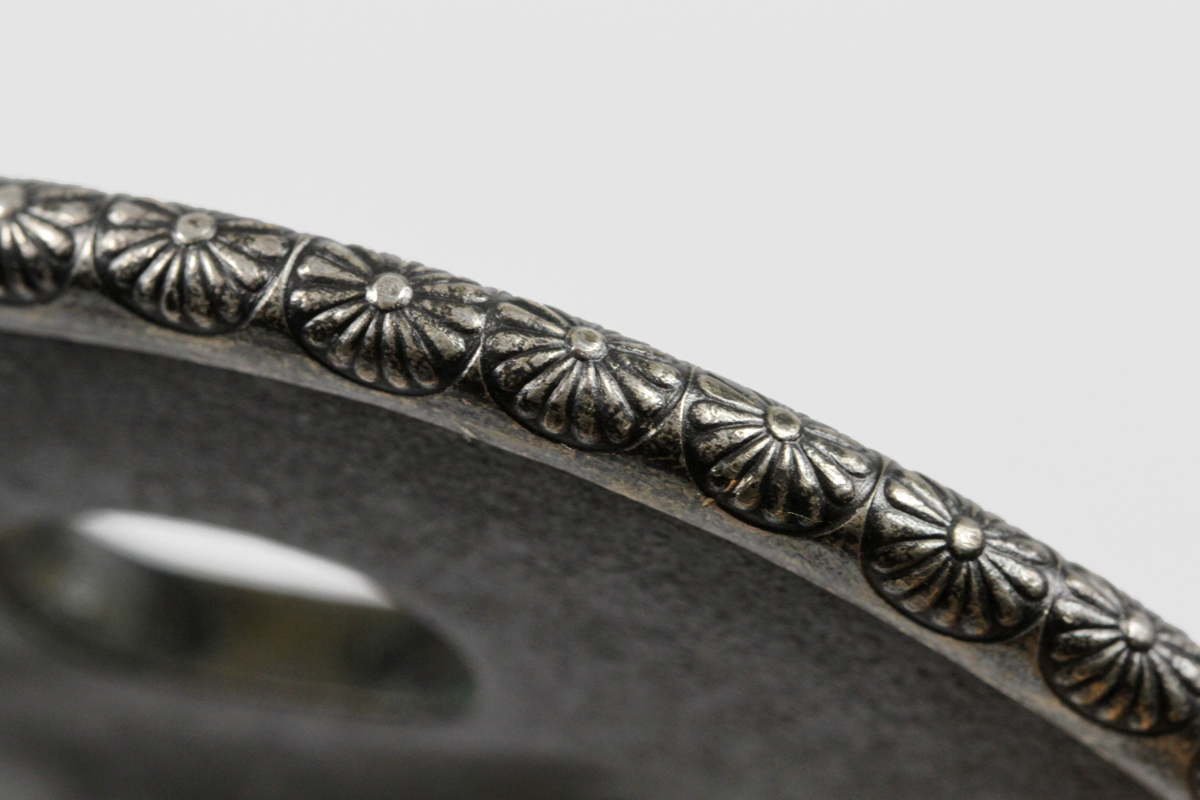
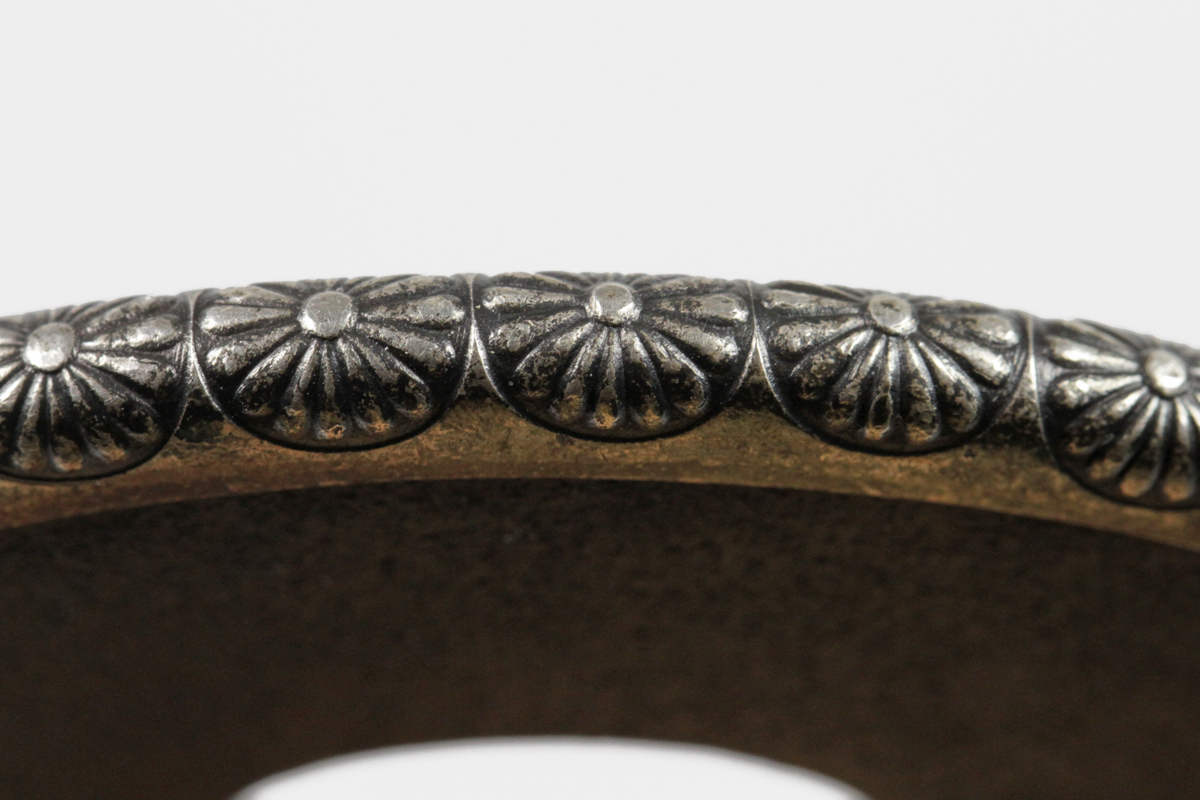
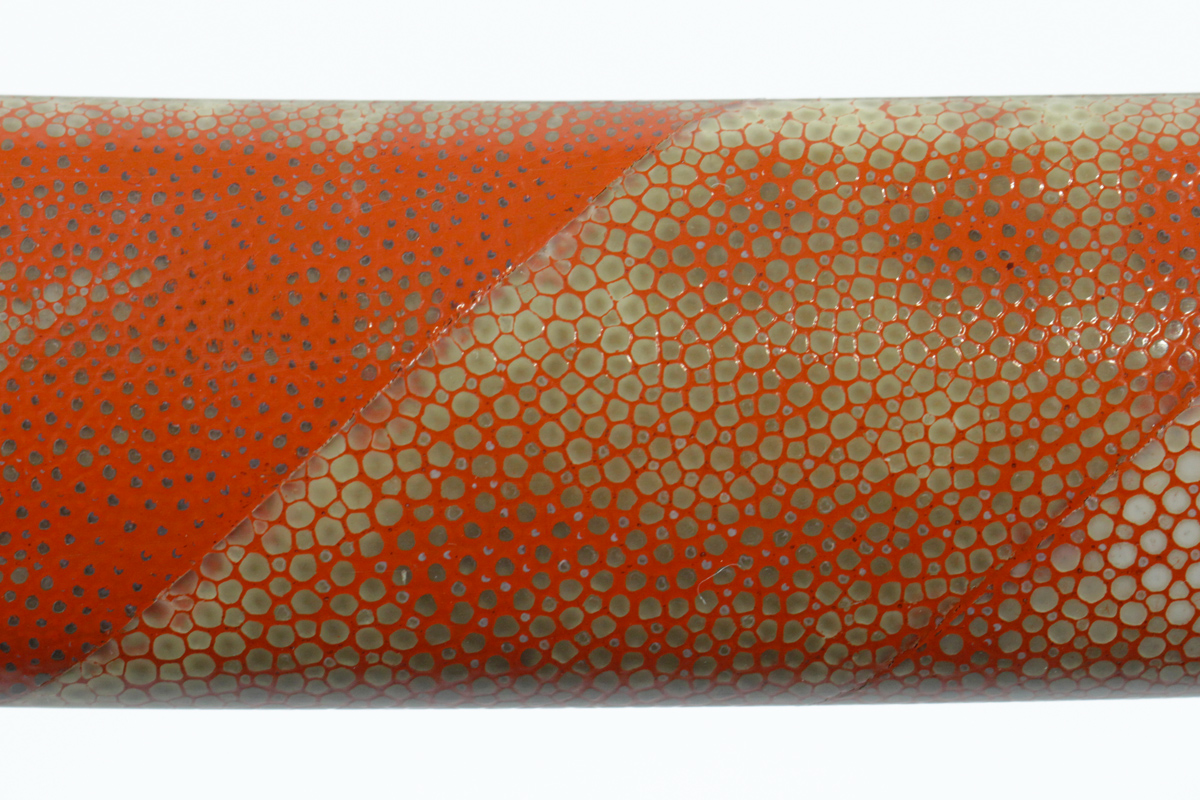
The Koshirae beautifully compliments the blade, fittings styled in the famous Japanese waves, made of silver and found on the Kojiri, Fuchi and Kashira. Following the water theme are a Koi on each side of the Tsuka also in silver, and the very attractive Saya (sheath) that is completely covered in Manta ray skin and lacquered in red. The Tsuba has some finely carved Kamon (family crest) all along the mimi (outer rim).
I highly recommend this piece especially from a historical standpoint but also as a visually pleasing set.


