
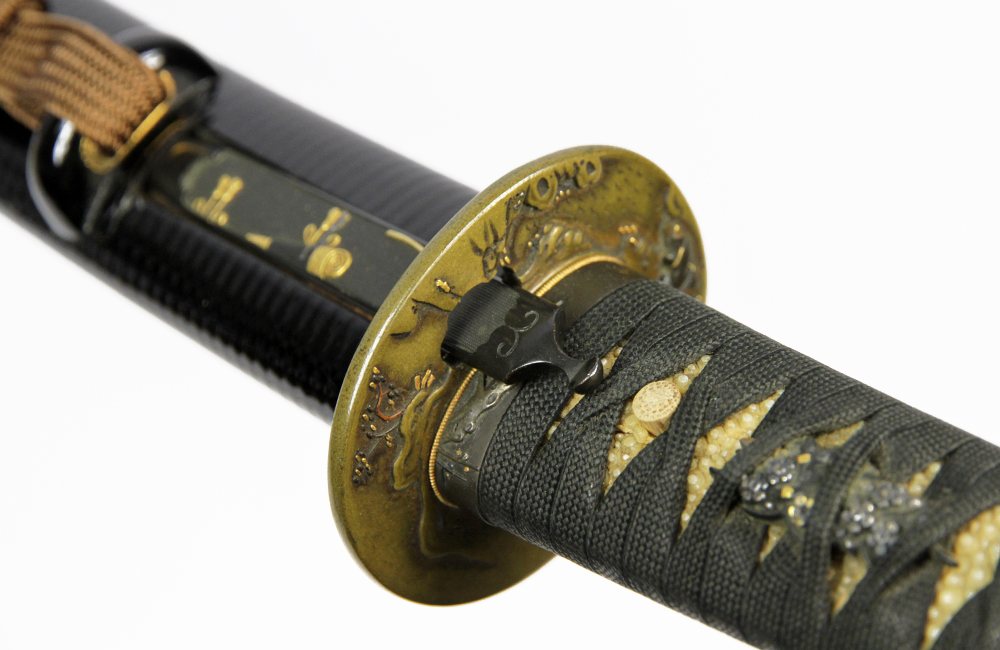
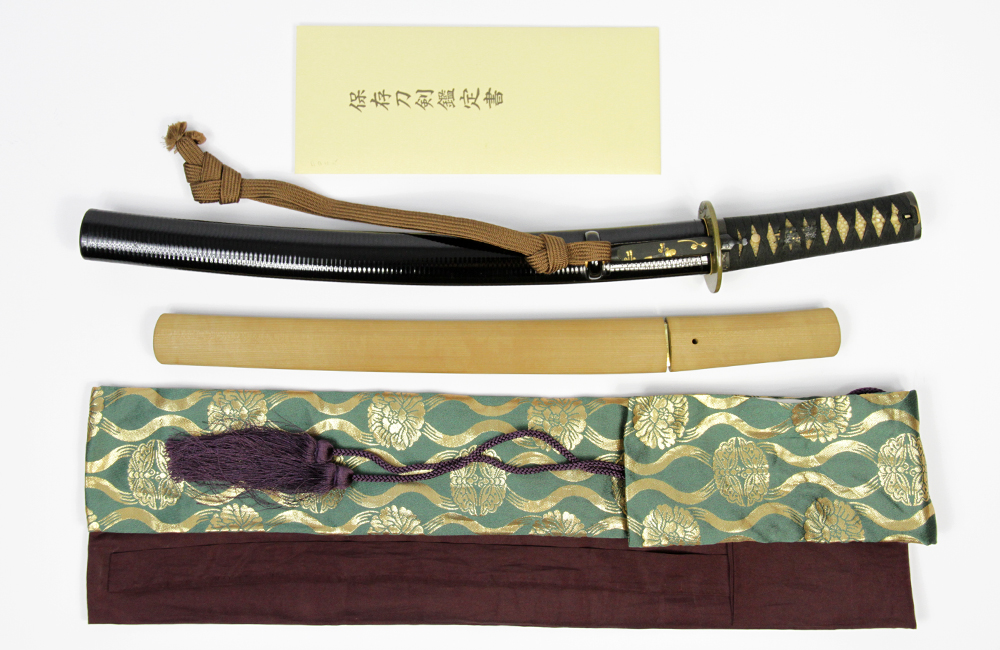
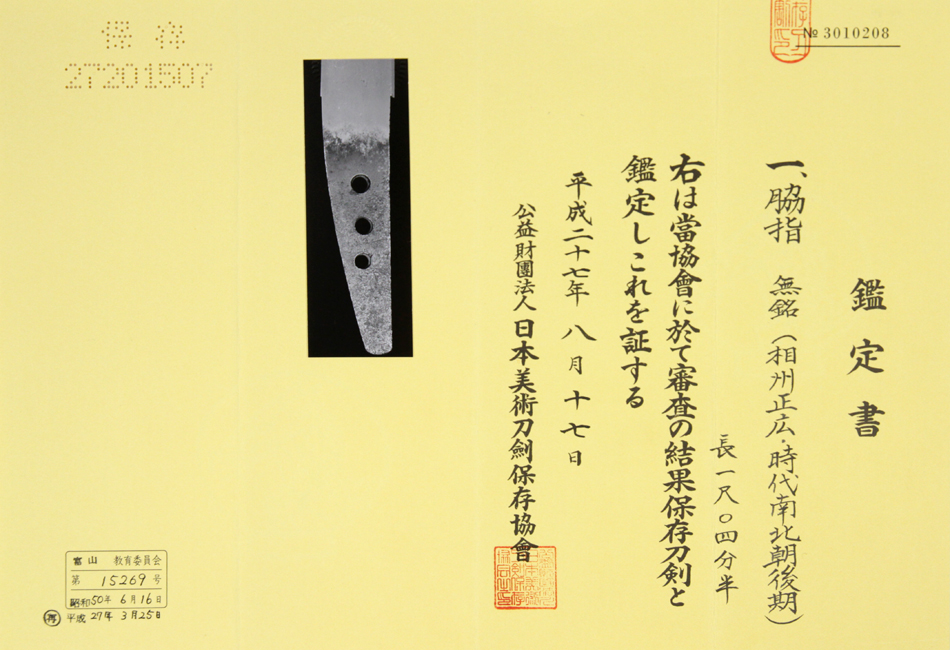
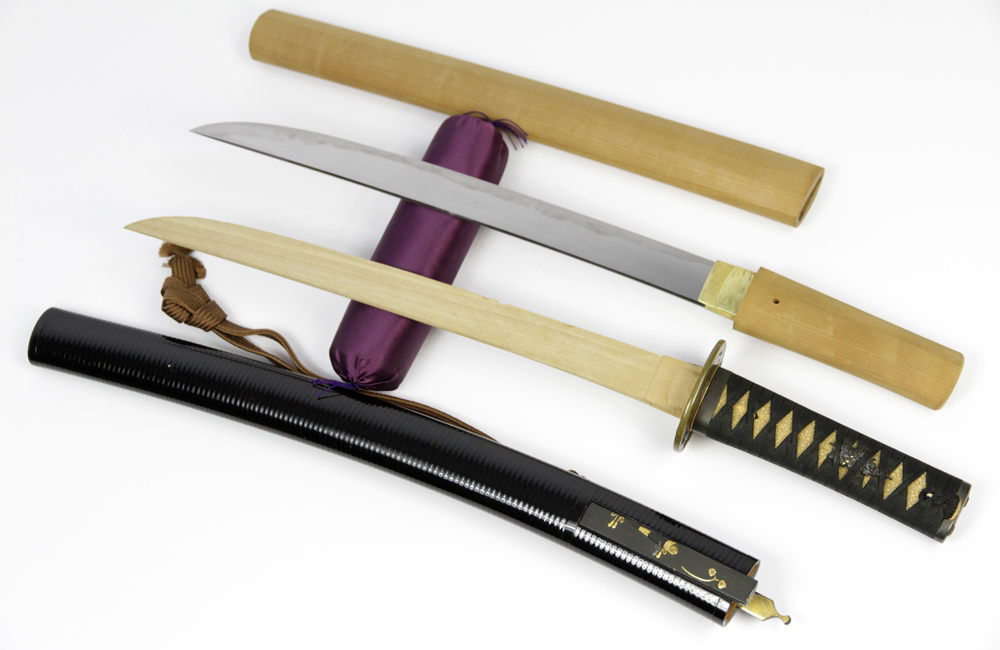
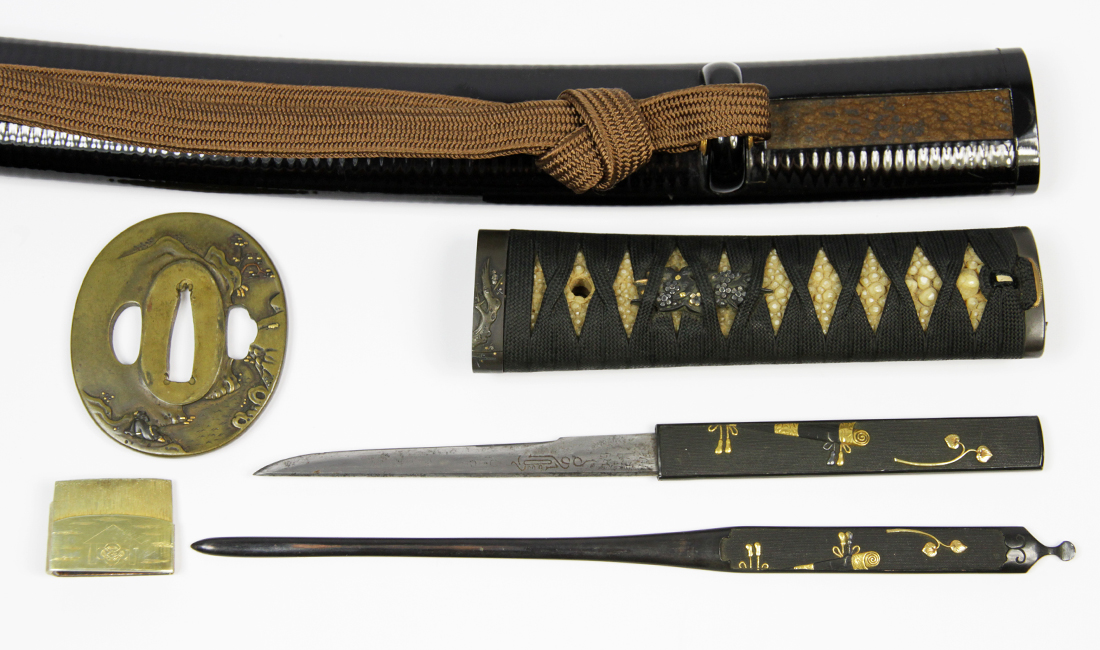
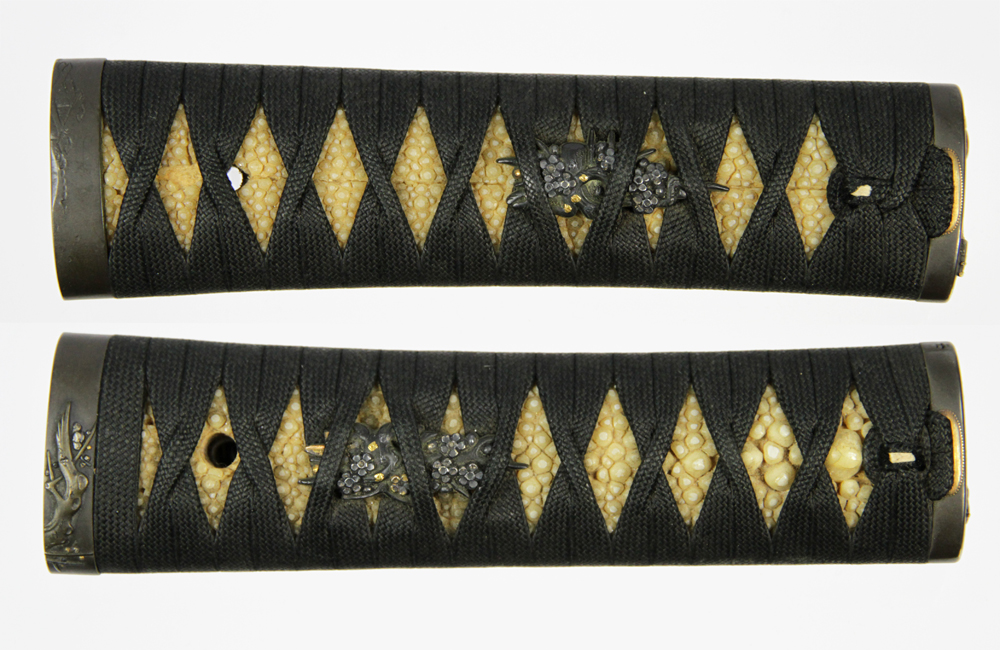
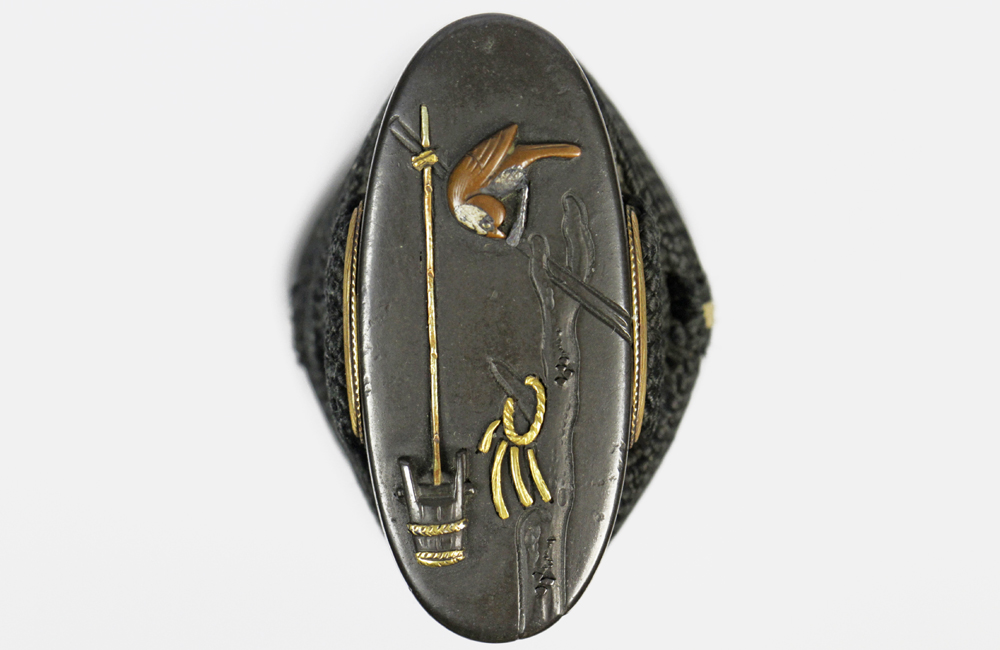
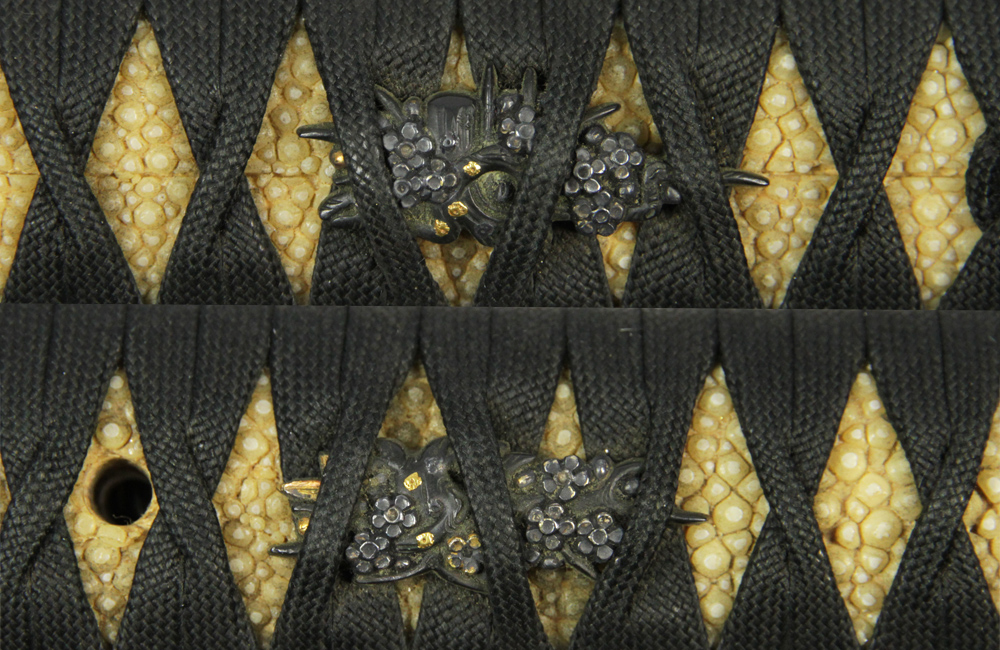
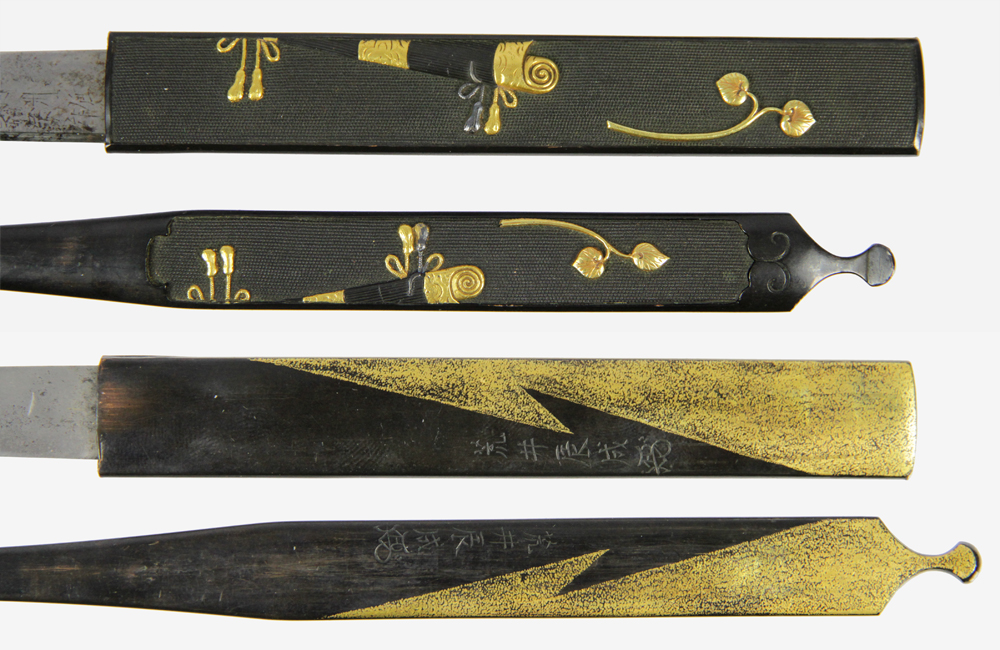
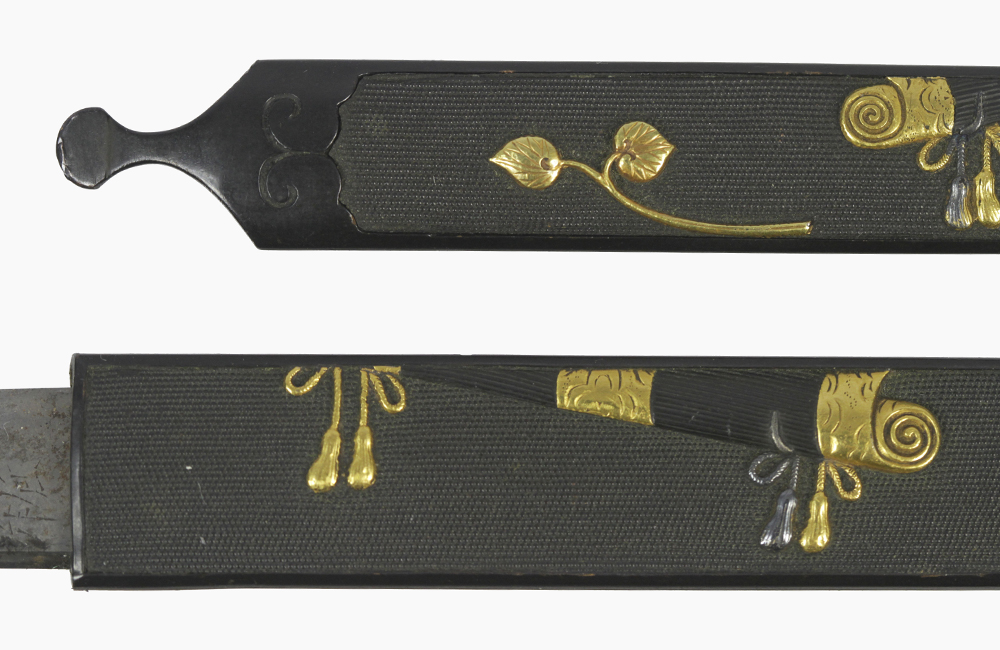
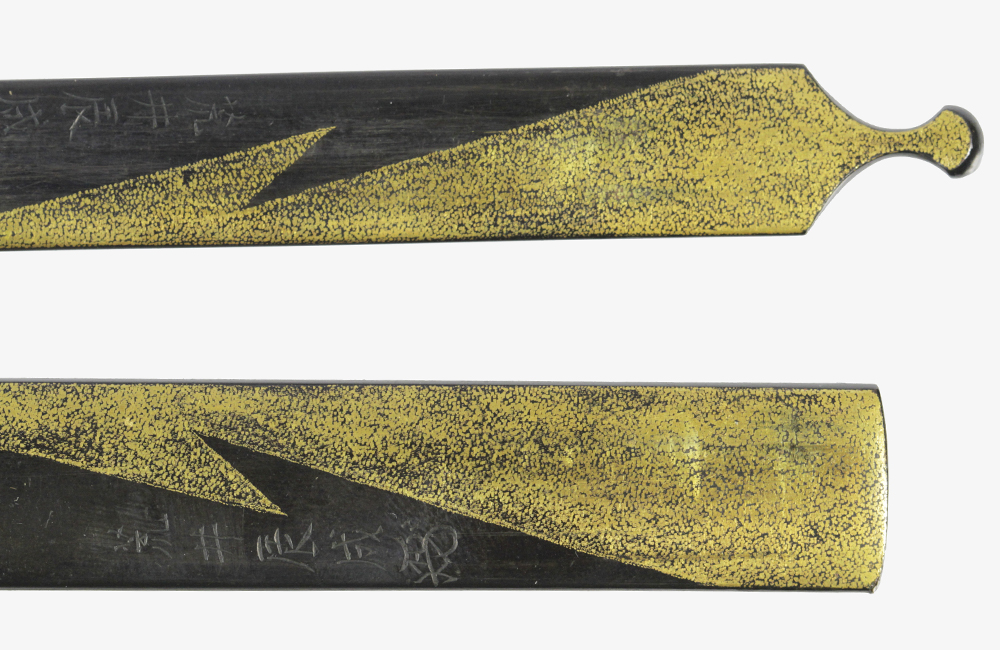
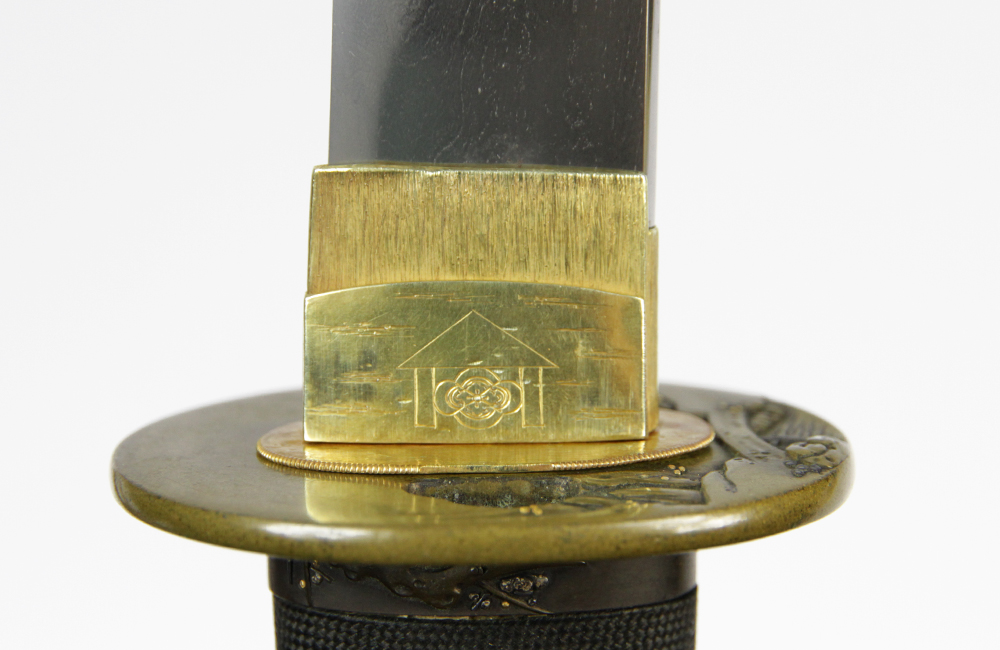
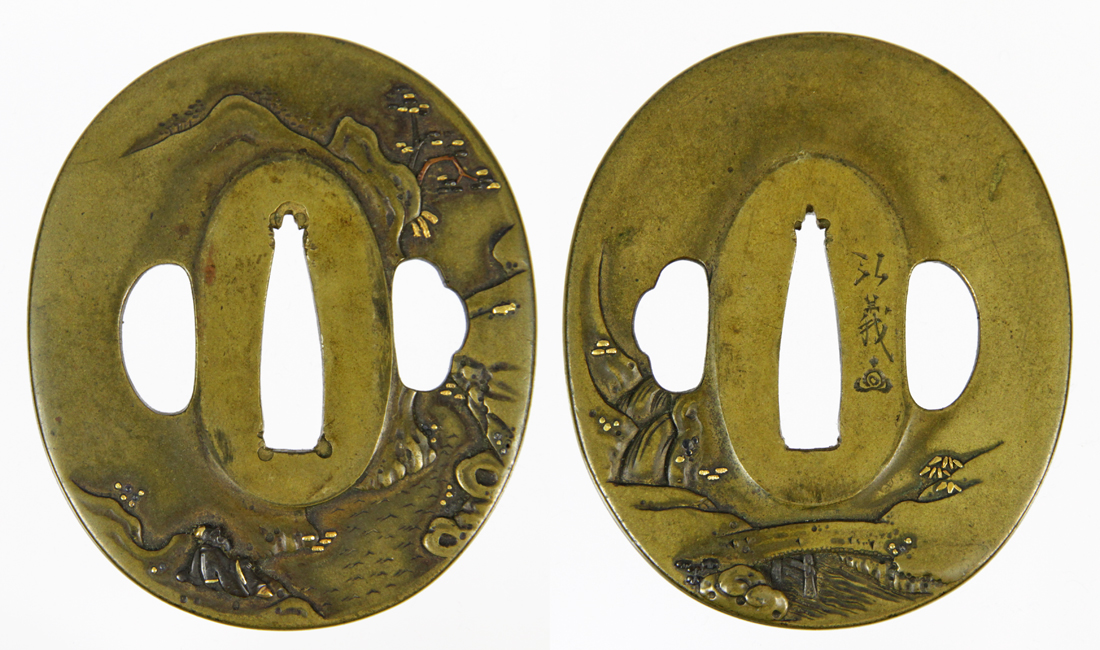
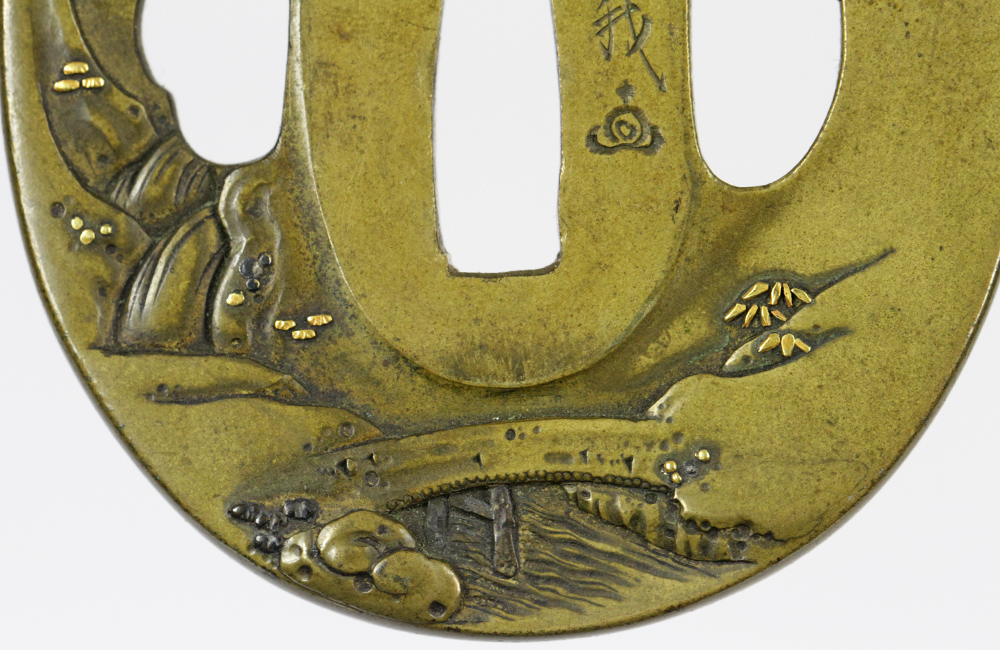
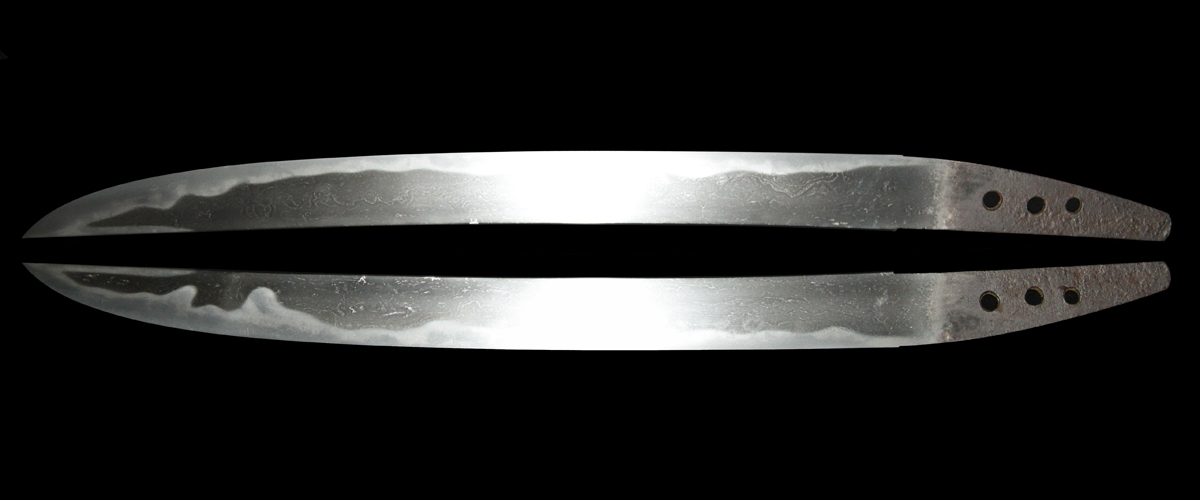
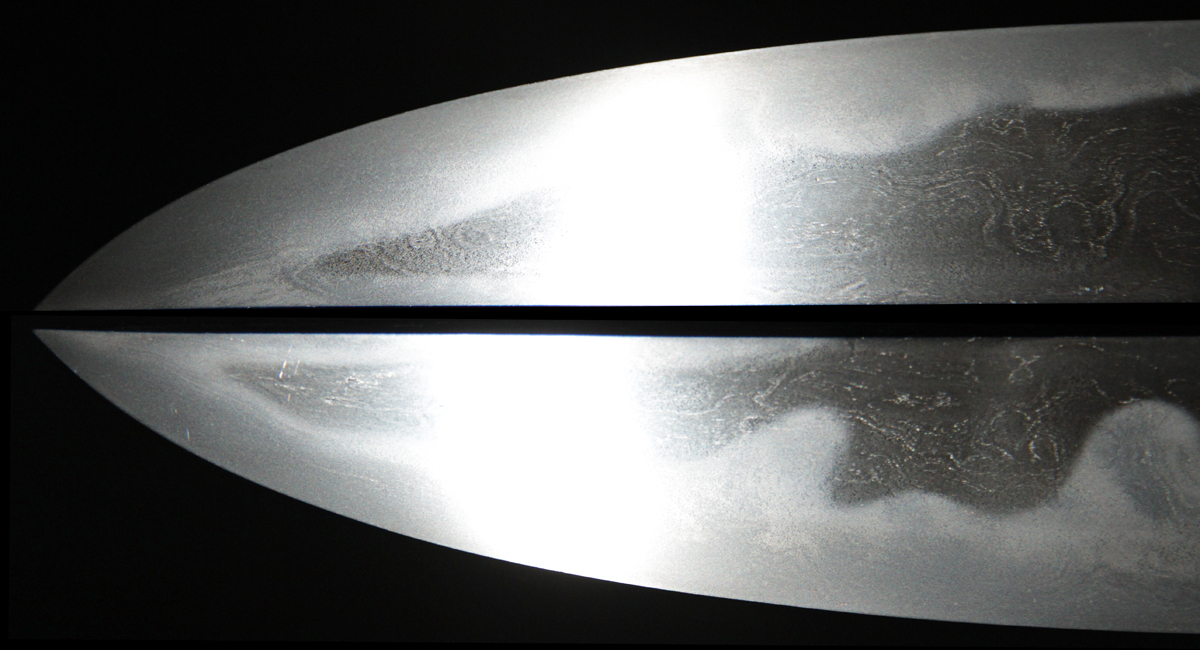
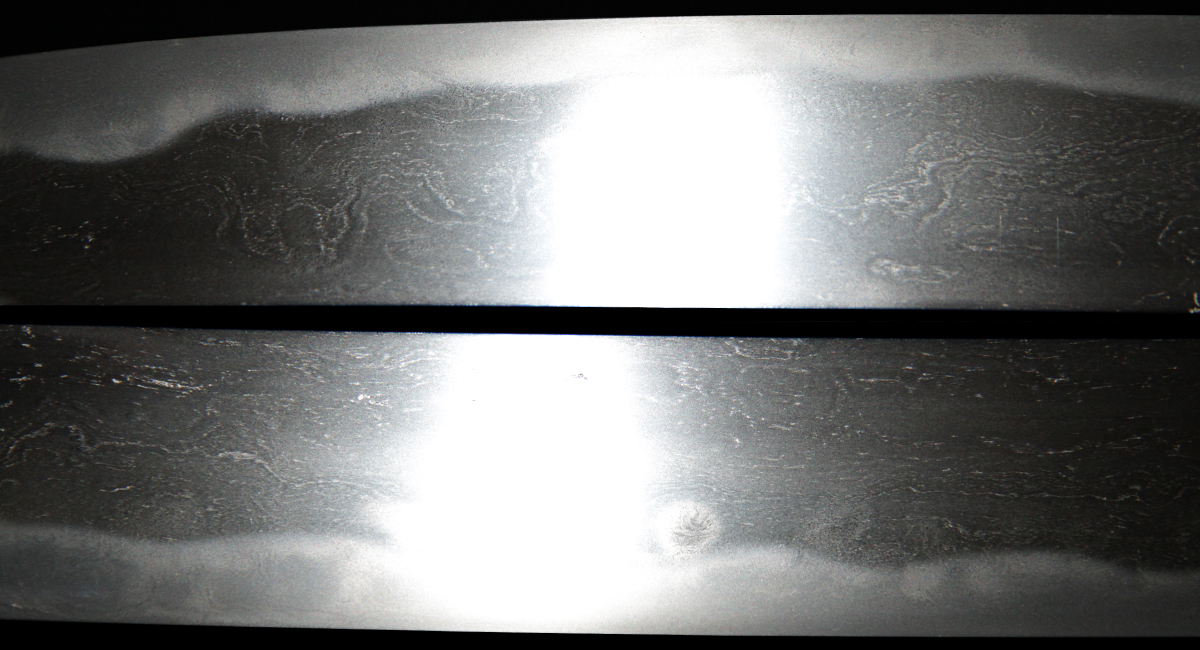
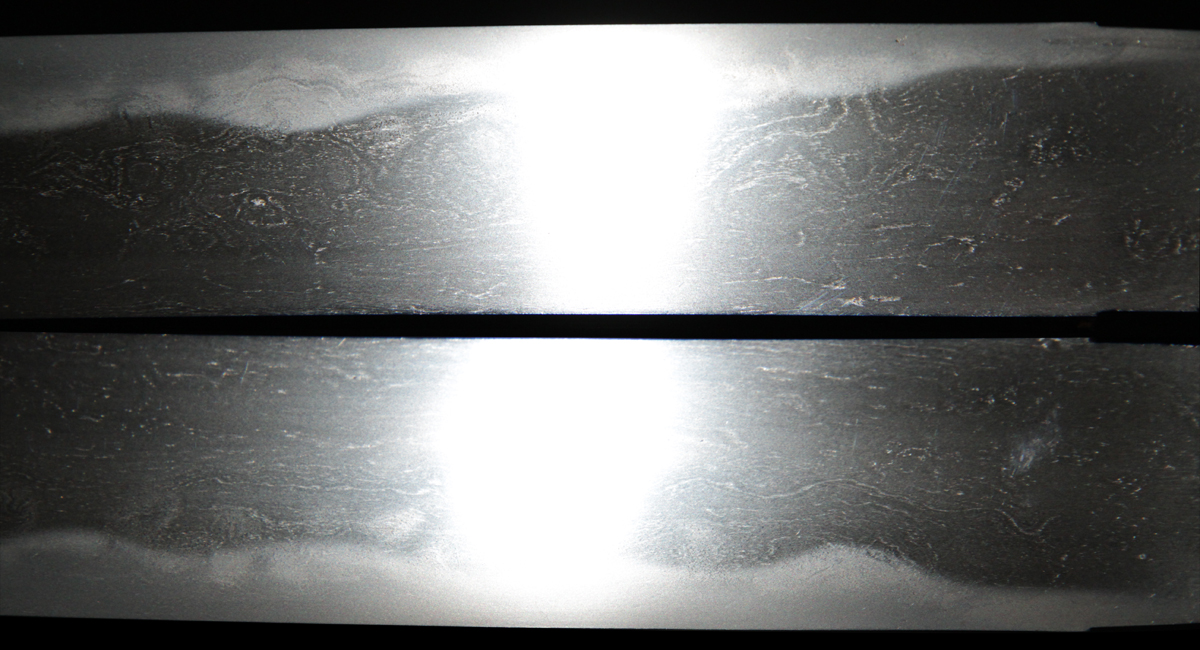
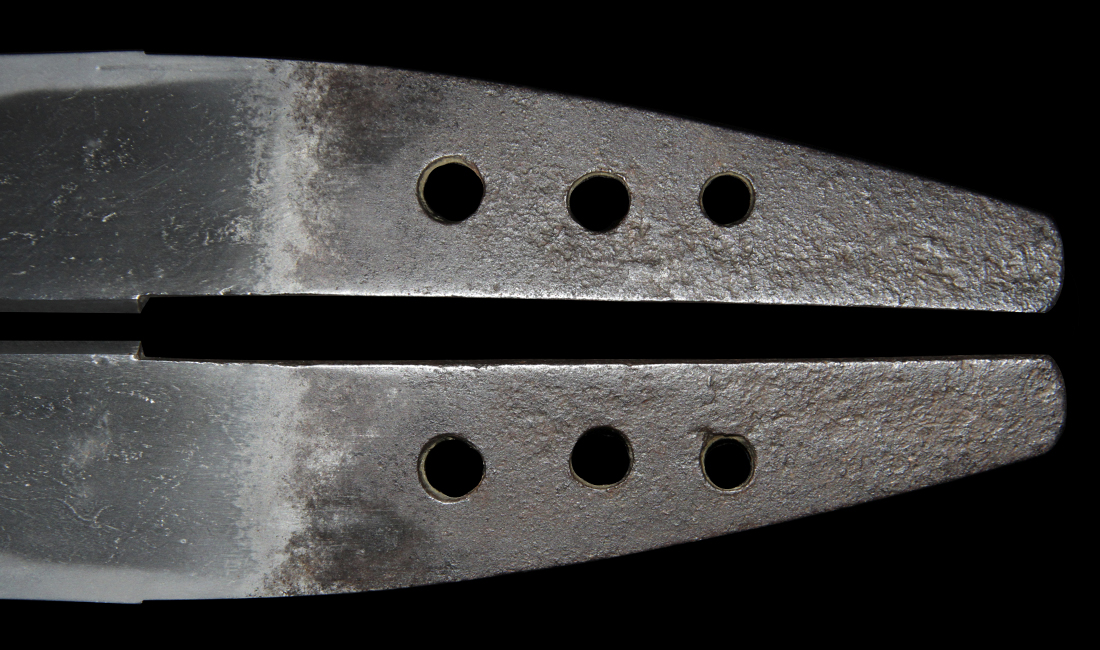
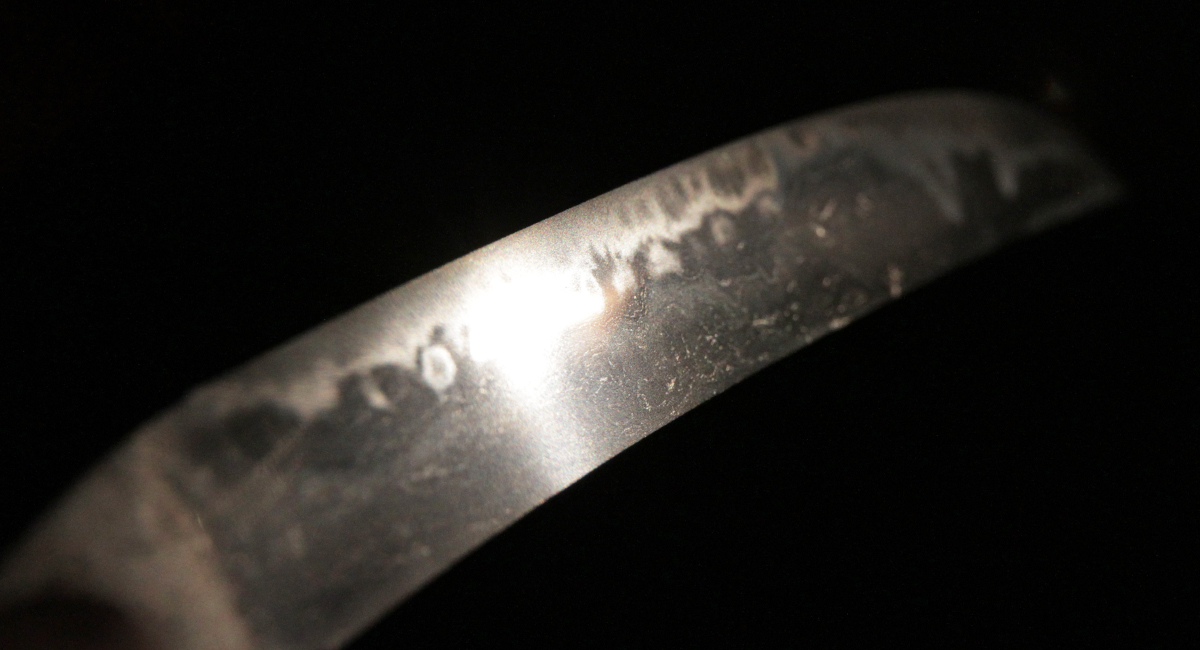
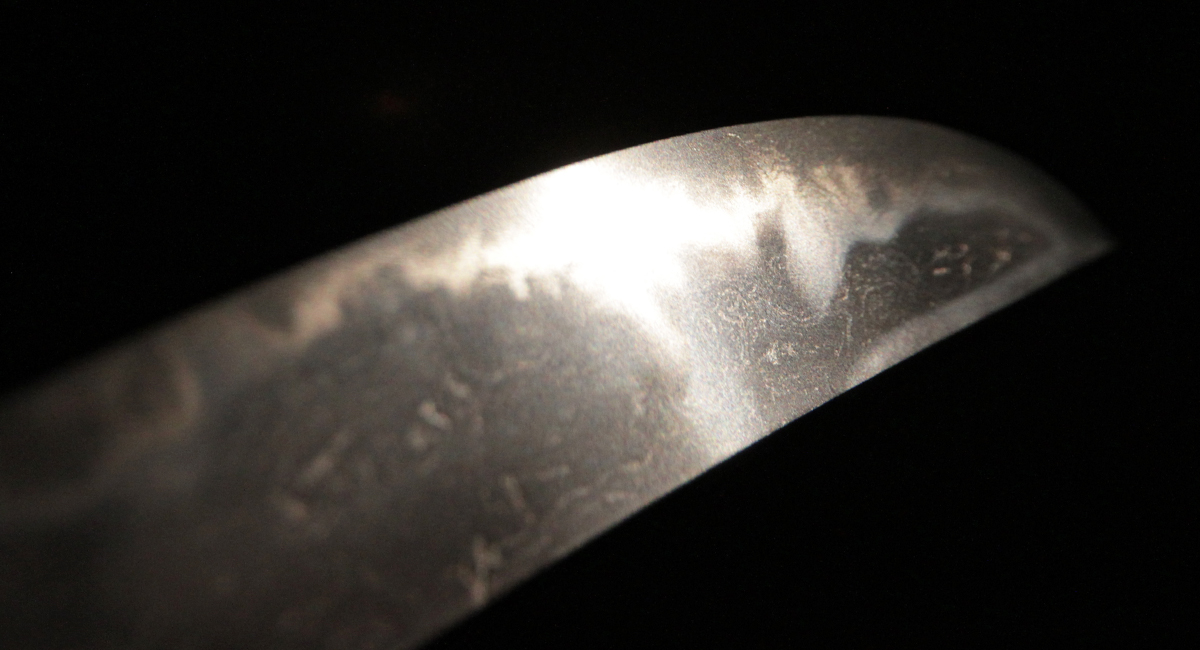
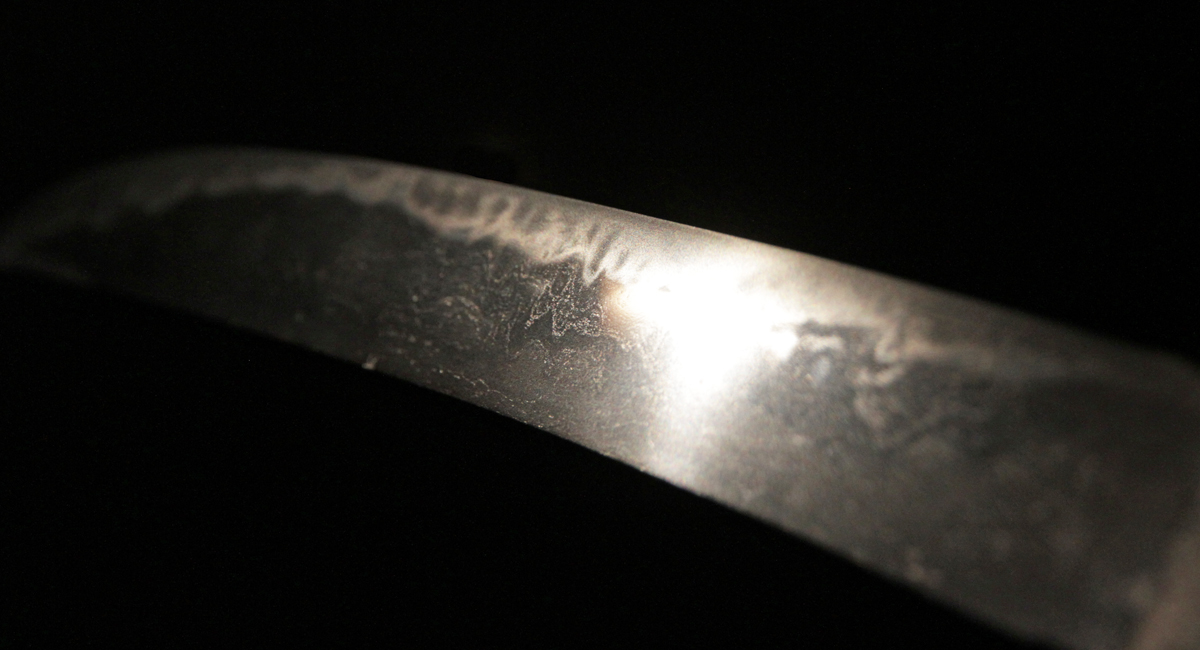
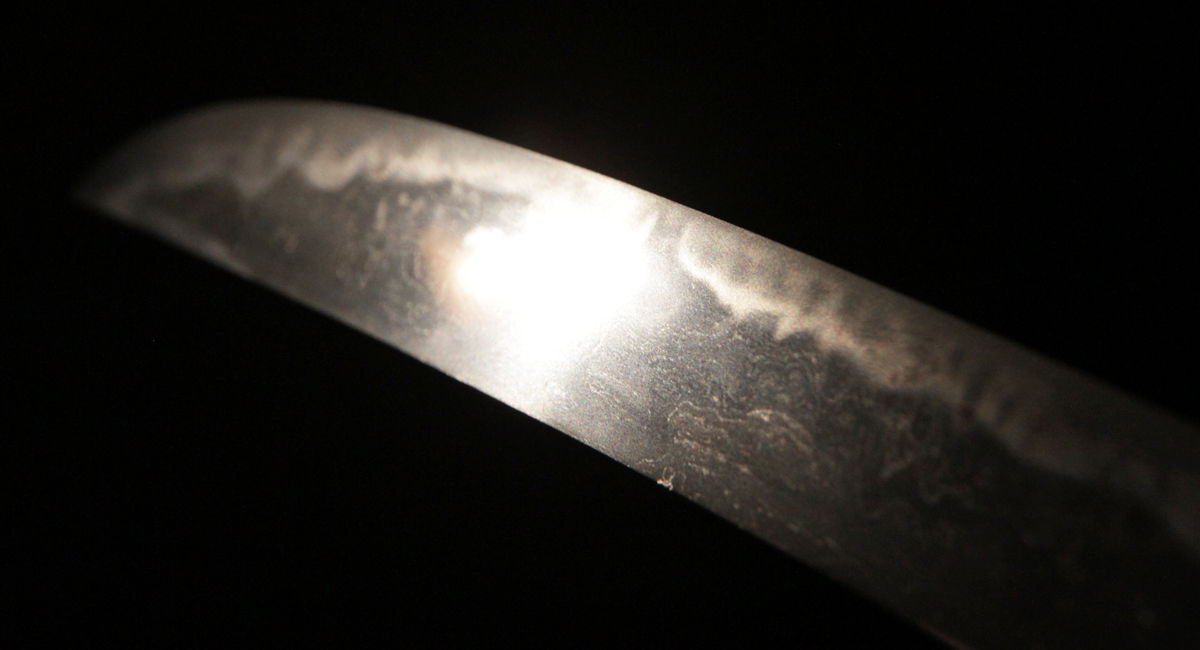
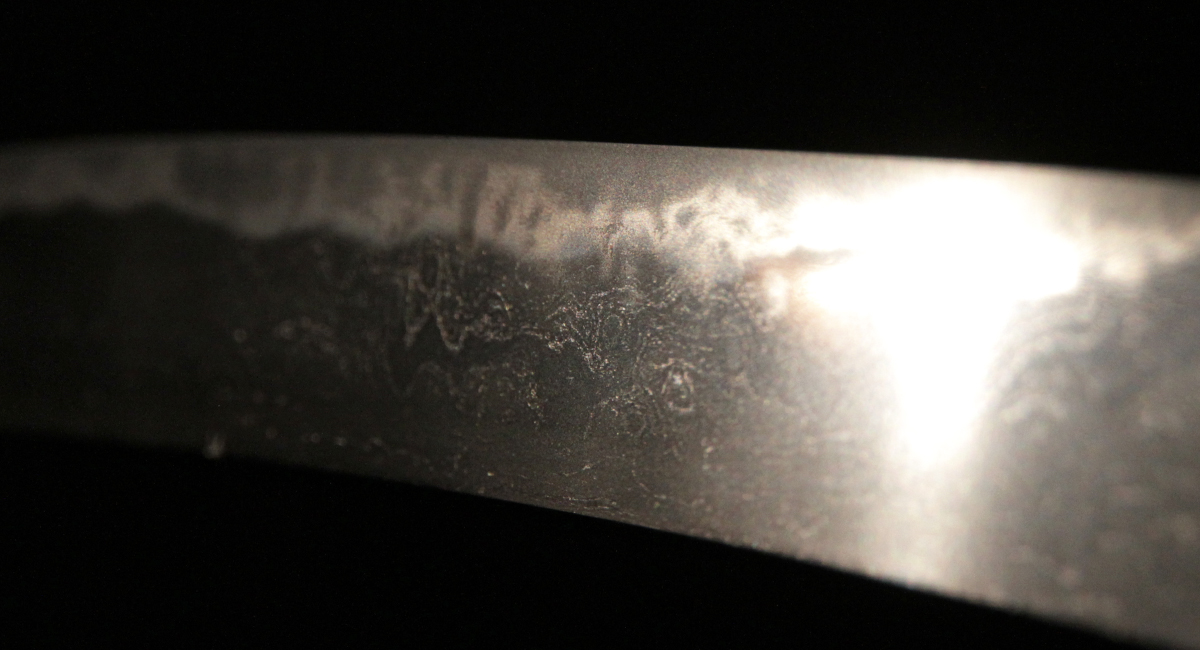
This piece is an absolute pleasure and honour to have in my inventory, a completely unaltered Tanto by the famous Soshu Masahiro, NBTHK have attributed it to later Nanbokucho period, almost 640 years ago. The Soshu tradition highly respected and favoured for many collectors is well demonstrated in this piece, equally active grain and temper line. The Soshu trandition is one of the five Gokaden, in other words the five original traditions of sword making, which is what the we see today is derived from. Normally works of this old experience over polishing which is an accumulation of polishing over the centuries, also referred to as tired blades. This piece exhibits quite the opposite, very healthy and understandably so as such good craftsmanship would have been carefully watched over in the hands of its previous owners. Masahiro was a student of the 1st Generation Soshu Hiromitsu, who was a direct student of the famous Masamune, founder of the Soshu tradition. Hence why it is an honour to have this item. The itame hada is nice and tightly packed, and the hamon displays a very large range of hataraki. It pairs nicely with the Edo period koshirae, all fittings of high quality, signed and matching Kogai – Kozuka, also signed tsuba. Even the Habaki is skillfully done and from Edo period.
I cannot recommend enough this item both for study, pleasure, and investment.


